Division is an essential skill your child will learn in Key Stage 2 maths, and will set them up for daily tasks in life beyond school. In this article:
- Learn about basic division and why your child will learn it
- Watch how-to videos for mental division, short division, and long division
- Download free division worksheets to help build your child's confidence
What is division and why do we learn it?
Division is a mathematical operation we use to split one quantity into equal parts. We can also use division to find out how many times one quantity is contained within another quantity. Division is the opposite of multiplication.
There are four components in a division calculation:
- Dividend: the first number which is being divided
- Divisor: the second number, which is the one the dividend is being divided by
- Quotient: the answer
- Remainder: the leftover number if we cannot divide things exactly
Let's say we have 10 matches and we want to make as many triangles as possible, where each triangle is made up of 3 matches.
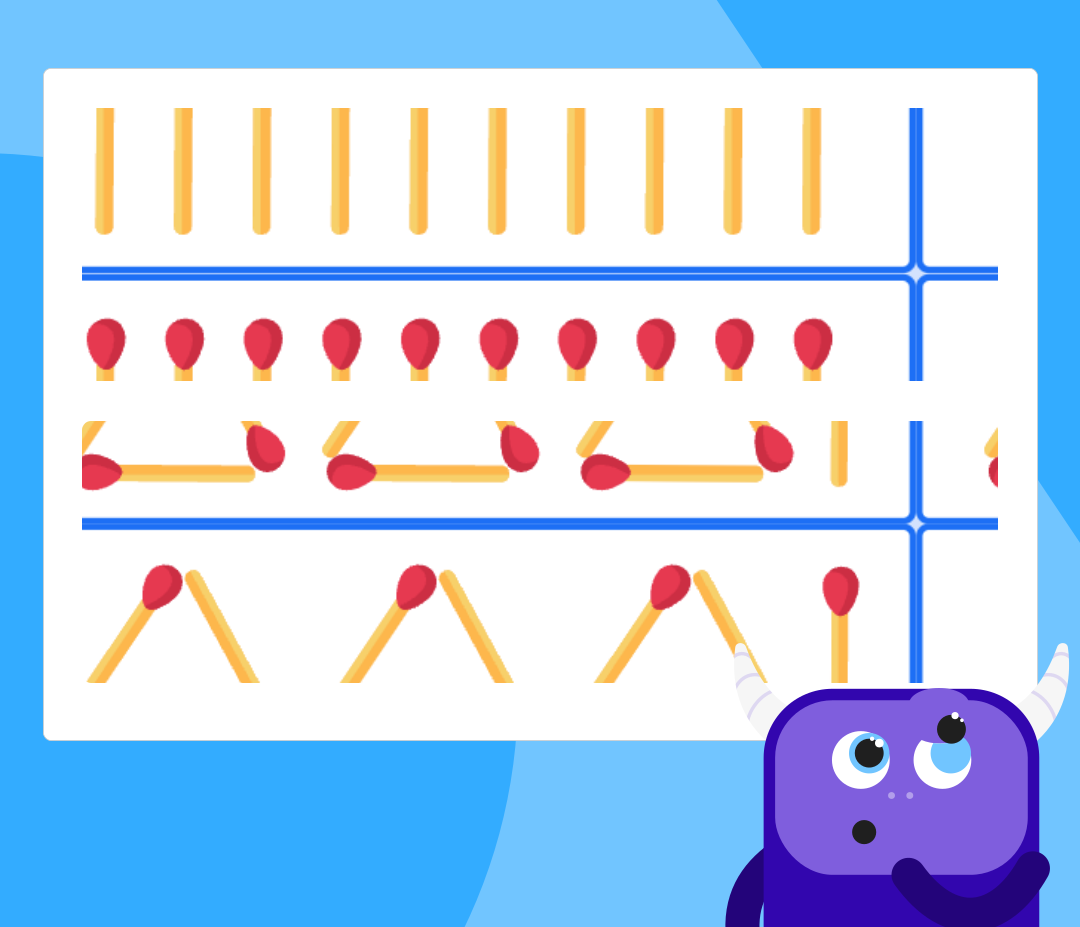
We can make 3 complete triangles, but then we have one match left over.
This means that 10 divided by 3 is equal to 3 with a remainder of 1. In maths, we write 10 ÷ 3 = 3 r 1.
Learning division at school will help your child with other topics in maths. For example, your child will need to have a good understanding of division before attempting fractions questions. We also use division in real-life tasks, such as:
- Working out distances and making equal stops on a long journey
- Dividing meals or ingredients into equal portions
- Splitting a restaurant bill with friends
- Creating a monthly budget
How to introduce your child to division
Here are our top tips to help your child understand division and build their confidence.
Use objects at home
Using objects from around your home is a simple way to introduce your child to the concept of division. Anything you have on hand, such as books, food, or stationery, can help your child understand how to split things into equal groups.
Playing with lego bricks is a fun and popular way to learn division. Children who are struggling to work out division problems mentally may find it helpful to visualise the process using bricks. If they have 25 bricks to share with their two siblings, how many bricks do they have each? What's the remainder (the number of bricks left)?
Use a multiplication square
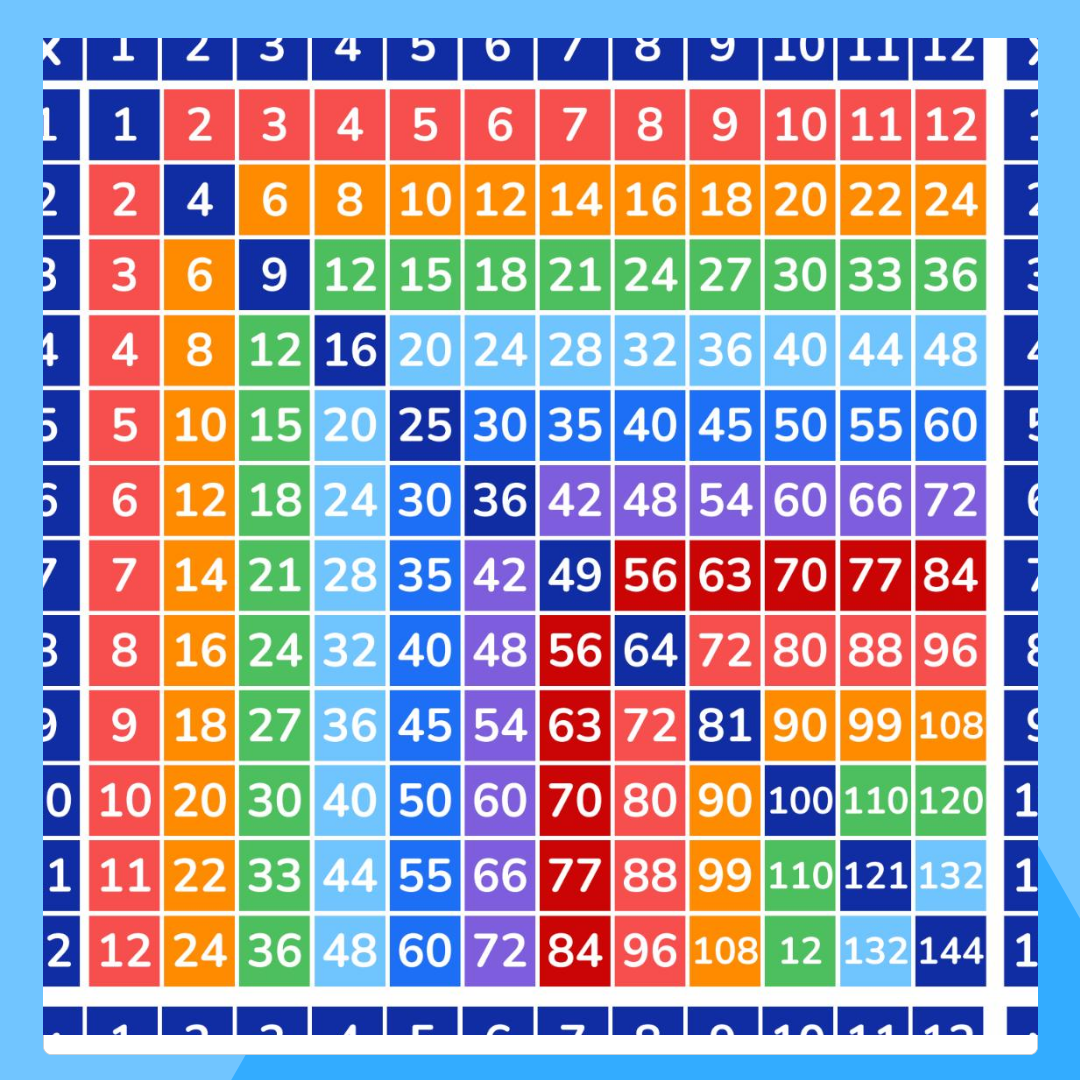
Multiplication times table charts are a great way to visualise division problems. Print out this poster and put it somewhere visible in your home to help your child keep division facts fresh in their mind!
Introduce division in finances
Teaching your child about money can help them build key skills and a strong foundation for managing their finances later in life. Division is a necessary skill that you can help your child learn at the same time.
If your child receives pocket money, help them work out how much money this gives them on a weekly or daily basis. If they earn £20 each month and there are 4 weeks in one month, how much money can they spend each week to stay on budget? Make the calculation slightly more advanced by asking them to calculate how much money they have each day, if the average month lasts 30 days.
How is division taught at primary school?
Year 3
In Year 3, your child will be taught to:
- recall division facts for the 3, 4 and 8 multiplication tables
- use mental division, progressing to formal written division methods
- solve division calculations containing a missing number
Year 4
In Year 4, your child will learn how to:
- recall division facts for multiplications up to 12 x 12
- use place value to solve mental division problems (e.g. dividing by 1)
- learn about remainders in division
Year 5
By the end of Year 5, your child should be able to:
- solve more mental division problems using increasingly larger numbers
- use the written method of short division to divide numbers up to 4 digits
- divide whole numbers, and numbers involving decimals, by 10, 100 and 1000
- solve division questions using their knowledge of factors and multiples, squares, and cubes
- solve problems involving a combination of addition, subtraction, multiplication, and division
Year 6
When your child finishes Key Stage 2, they will have learnt how to:
- use the long division method to divide 4-digit numbers by 2-digit numbers
- solve more complicated division word problems
- solve mental calculations with mixed operations (e.g. addition, subtraction, multiplication and division) and large numbers
- use their knowledge of the order of operations to solve problems using the four operations