Want to bring science to life for your child? Hands-on activities are the perfect way to spark curiosity and develop their desire to learn more about the world around us. However, as busy parents, we don’t always have the time to make a potato battery, build a working rocket or set up a state of the art science lab!
Bringing science to life with your child doesn’t have to be another item on your ever-growing to-do list. Instead, it can be easily built into your everyday life. After all, science is everywhere! This blog focuses on bringing science into your everyday home: science in the kitchen.
Mixing it up in the kitchen is a brilliant way to see science in action. With minimal effort beyond your family meal prep, you can explore the water cycle, spot reversible and irreversible changes, discuss nutrition and even grow some microbes! The key with all hands-on science is to talk to your child about what’s happening using the scientific vocabulary that you want them to learn.
The water cycle
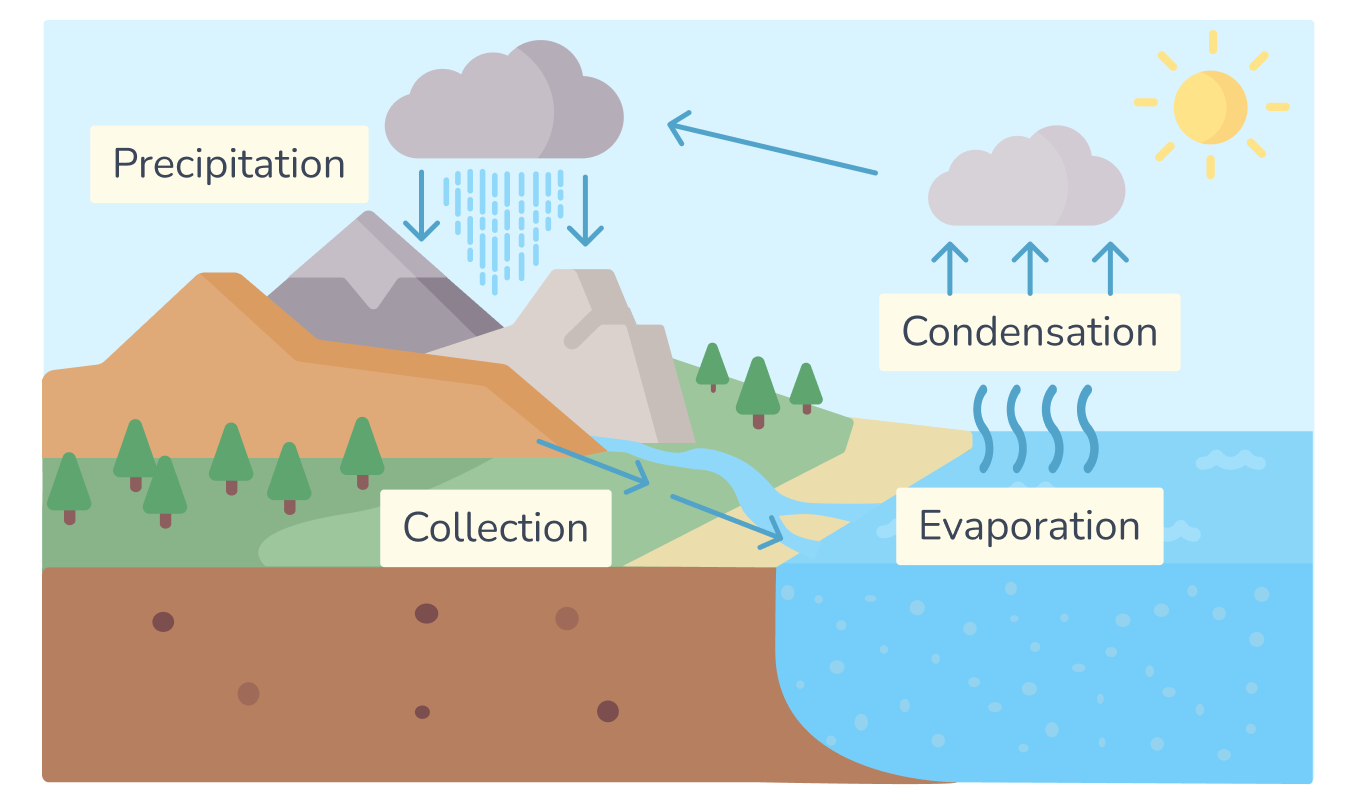
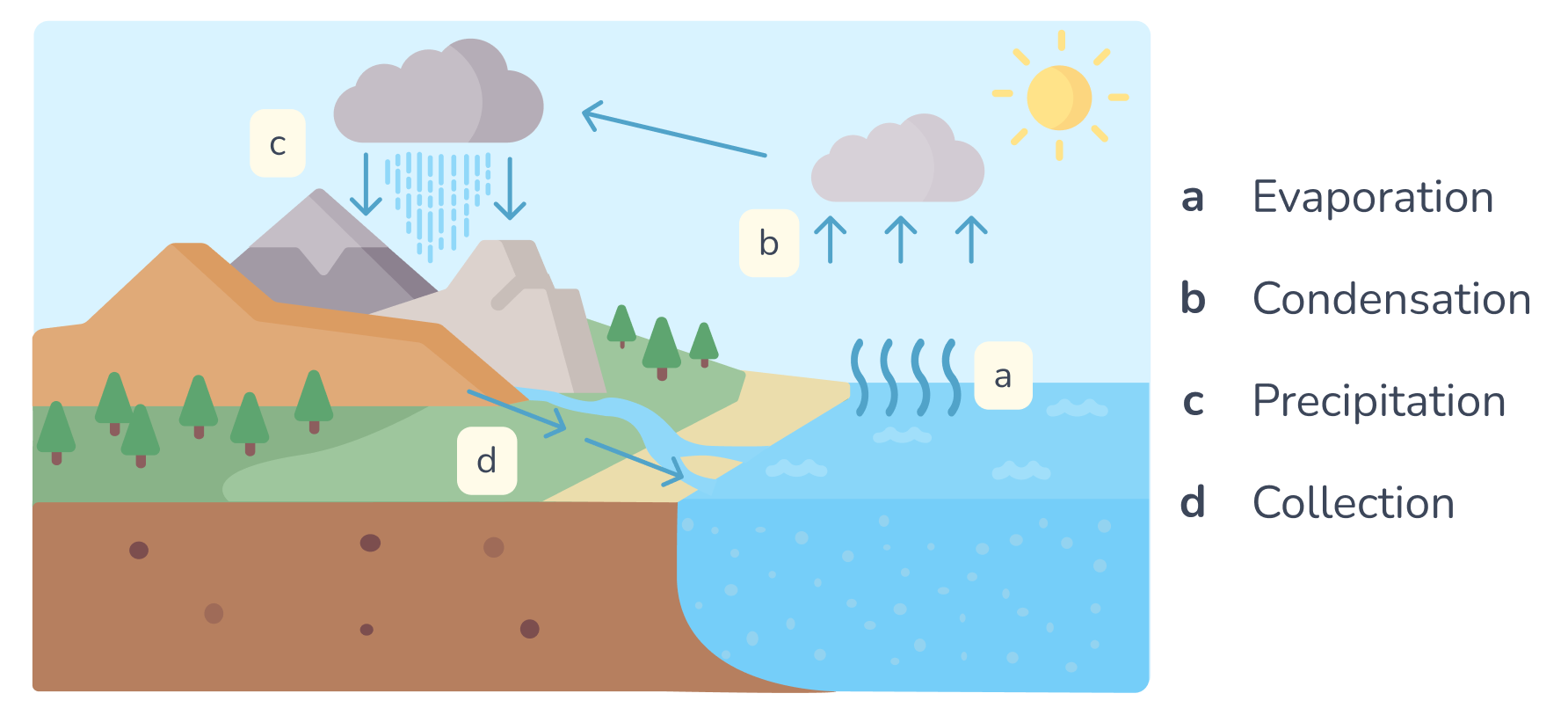
Make ice pops or simply melt and refreeze ice cream to show the processes of melting and freezing. Boiling a pan of water for pasta is a great way to consider evaporation and condensation.
Talk to your child about what’s happening to the molecules in the substance as it melts, freezes and boils. Can they connect their new vocabulary to this diagram of the water cycle? (The answers are at the bottom of this article!)
Dissolving drinks
Dissolving is one of the trickiest concepts to grasp in Key Stage 2 science. Surely the solute just disappears into the solvent? Teach your child how to make a hot chocolate (with supervision on that boiling water) and let them experience dissolving for themselves. How do we know the solute hasn’t just disappeared into the water? We can taste it of course!
Reversible and irreversible changes
Whenever we are cooking, changes are taking place. Understanding the difference between reversible, physical and irreversible chemical changes is essential Key Stage 2 science knowledge. Get your child to answer these questions. Can they identify reversible and irreversible changes? (Answers at the bottom of this article!)
Question 1
When some changes happen, we are not able to get the original materials back. These are irreversible changes.
Which one of the following images shows an irreversible change?

Question 2
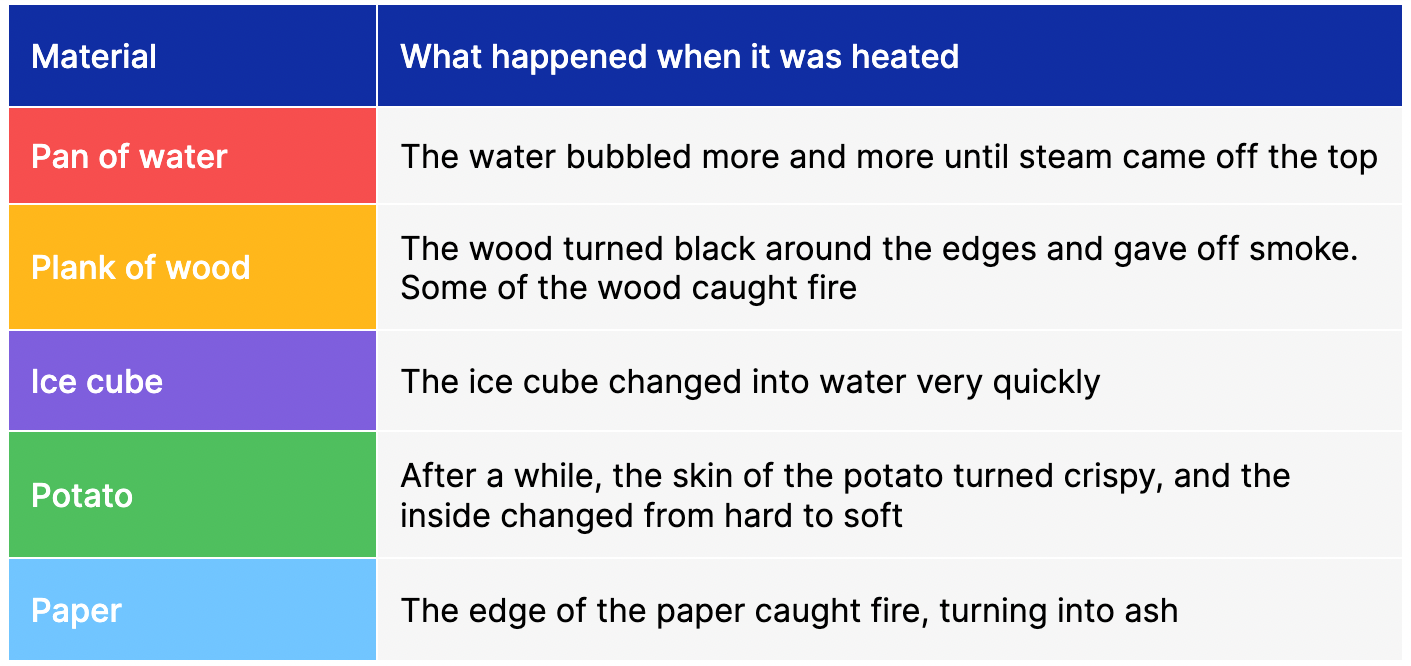
Kawhi has conducted an experiment on heating and burning. He is sharing his findings with his chemistry class using the following table.
How many of the materials that Kawhi tested cannot be changed back to their original state?
Question 3
Sami is making a salad to serve to his friends who are coming over for a dinner party. He combines lettuce, tomatoes, and egg in a large bowl.
What sort of reaction takes place when making a salad? Write down all answers that apply:
Irreversible, Chemical, Reversible, Physical
Nutrition
Most children in Key Stage 2 know that a balanced diet is important to stay healthy. However, trying to identify which foods belong to which food groups can be pretty abstract! It is the type of knowledge that comes with repeated experience and exposure to technical language. With that in mind, make protein, carbohydrates, fibre, fat, vitamins and minerals part of your family’s mealtime lexicon.
Microbes
Why do we clean our kitchens after preparing food? What would happen if we didn’t do the washing up? Why shouldn’t we chop meat and vegetables on the same chopping board? Why does bread rise? Why do we cover food? What is mould?
If your child can answer these questions, they are likely to have a good understanding of what microorganisms are and how they behave. Improve their understanding by asking them to help with the washing up or even clean and tidy the fridge. What can they find? What would happen if we didn’t clean the fridge once in a while?
Free science resources
Experiments
Download these simple science experiments to try together with your child: