Back to blog

Parents’ guide to poetry for primary school

By
Atom
|
November 27, 2025

Here are our free poetry resources and activities for 7–11-year-olds. Find out what your child will learn in primary school and discover ways to inspire them at home!

What is poetry?

A poem is a piece of fiction writing which expresses ideas with intensity. Poems can tell stories like novels, but they are much shorter. They use powerful descriptive language to cause an emotional response in the reader or listener.

Why do we learn poetry at school?

Learning poetry has so many literacy benefits for primary school children. It helps them to become fluent readers, writers, speakers and thinkers.

  • Listening to and performing poetry teaches children about tone, emphasis and volume. This helps their own speech development and reading aloud.
  • Reading and discussing poetry develops their comprehension skills and understanding. It boosts their vocabulary and knowledge of how language is used, aiding their own writing.
  • Writing poetry helps to exercise their imagination and creativity. It can give them an outlet for emotions and a way to practice self-expression.
  • Reading and hearing poetry from across the globe helps children understand perspectives and experiences that are different from theirs.

Poetry: what will my child learn at primary school?

Poetry is part of the national curriculum for English throughout primary school. From the time they start school, younger children are encouraged to appreciate rhymes and recite some by heart.

From Year 1 (age 5–6) children are taught to listen to and discuss poems at a level beyond their independent reading ability. By the end of their time at primary school children will be confident exploring and discussing the features of a range of poetry, as well as writing poems to perform out loud.

Learning poetry in Key Stage 1

Year 3 poetry

At school in Year 3 (age 7–8) children are encouraged to:

  • Listen to, read and discuss a wide range of poetry
  • Develop their understanding and enjoyment of poetry
  • Recognise some forms of poetry
  • Form opinions about a poem, with support
  • Prepare their own poems to read aloud and perform

Year 4 poetry

In Year 4 (age 8–9) children build on the skills they learnt in Year 3 with more complex texts. They’re encouraged to independently express their views on what they have read and heard.

The class rehearses poems to perform, giving them opportunities to discuss vocabulary. This helps to develop children’s interest in the meaning and origin of words. They're encouraged to use approaches from drama when performing poems to support their understanding.
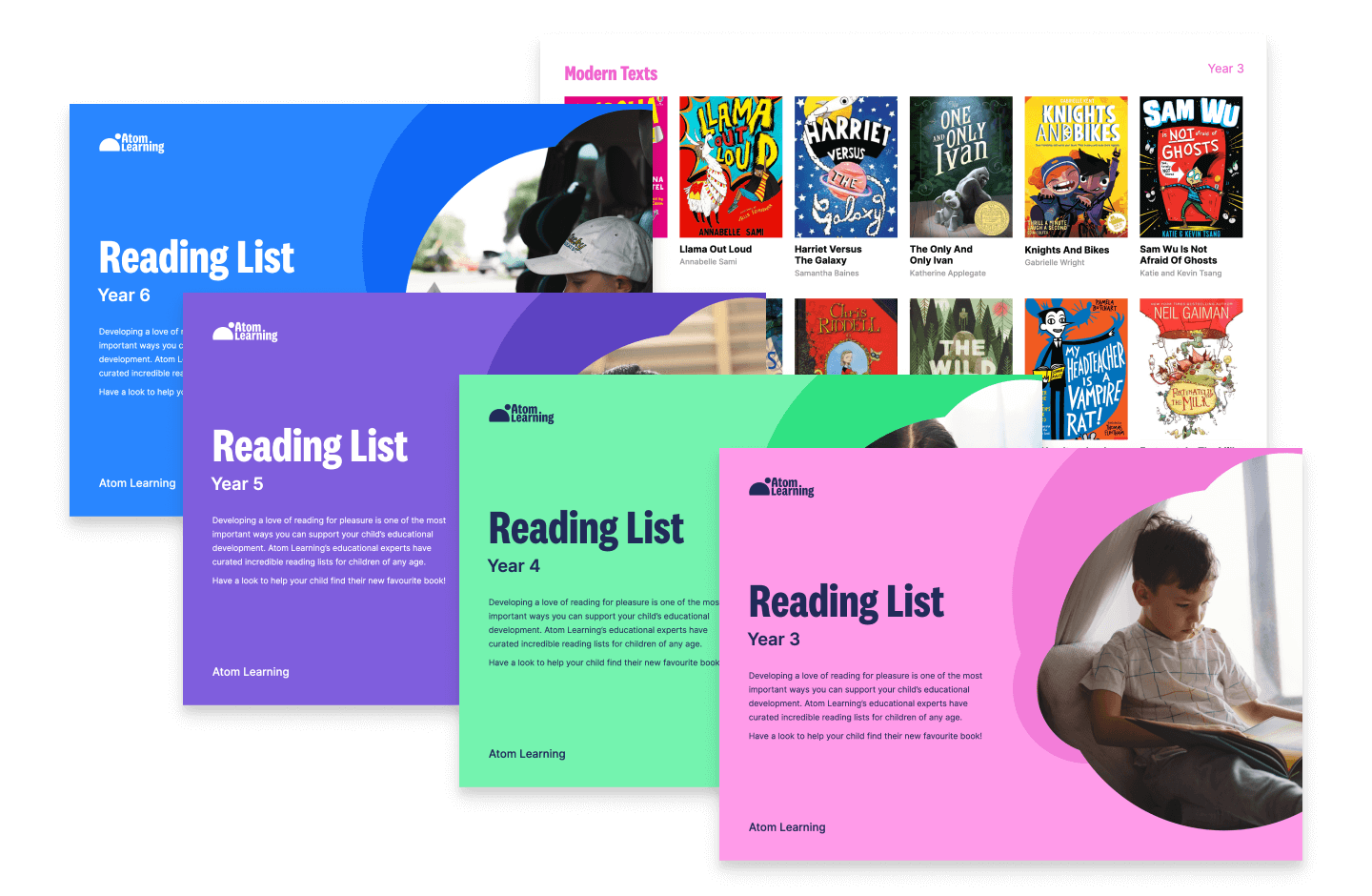

Download free Key Stage 2 reading lists

Find your child’s next great read. Atom’s free KS2 reading lists include carefully chosen books to help children aged 7–11 build comprehension, expand vocabulary and develop a genuine love of reading. Perfect for reading at home or alongside school learning.

Send me the lists

Year 5 poetry

During Year 5 (ages 9–10) the curriculum focuses on the enjoyment and understanding of language that can be gained from poetry.

Children learn to identify and discuss themes and conventions across a wide range of poetry. They learn a broad range of poetry by heart. They create their own poems to read aloud, enhancing their performance with intonation, tone and volume so that the meaning is clear.

Learning poetry in Key Stage 2

Year 6 poetry

In their last year at primary school (ages 10–11), children continue to explore poetry in the classroom. By the time they’re ready to start secondary school, children are expected to provide reasons for their views during discussions. They're able to identify poetic devices and use the proper terms for discussing what they hear and read – such as metaphor, simile, analogy, imagery, style and effect.

What types of poetry will my child study at school?

The choice of poems to study is down to the school and the teacher. Teachers will make sure your child gets familiar with a broad range of poetry types during Key Stage 2. Your child will learn to spot features of each type and have opportunities to write their own.

Types of poem in Key Stage 2

Acrostics

A poem where the first letters of each line spell out a word or phrase. The word is the subject of the poem.

Calligrams

A poem where the design and layout of the letters creates an image related to the meaning of the poem. For example, a poem about a butterfly might be laid out on the page in the shape of a butterfly.

Cinquains

A five-line poem with a syllable pattern:

  • Line 1 has 2 syllables
  • Line 2 has 4 syllables
  • Line 3 has 6 syllables
  • Line 4 has 8 syllables
  • Line 5 is back to 2 syllables

Free verse

Free verse has no rules! It doesn't have to rhyme or follow a certain structure like other types of poem. They often follow the rhythms of natural speech.

Haikus

A traditional Japanese poem that follows a strict syllabic structure:

  • One line of 5 syllables
  • One line of 7 syllables
  • A final line of 5 syllables

They don't usually rhyme and are often in the present tense.

Kennings

A ‘kennings’ is a two-word phrase that describes an object in an interesting way. Kennings poems are made up of any number of kennings.

Limericks

A short, funny poem with a strict AABBA rhyme scheme.

Narrative poems

Nonsense poems

They use made up words mixed in with real words. They don’t have to make sense, and they often describe a fantasy setting or event, or just make a nice sound.

Riddles

Works like a puzzle and often has a double meaning, requiring you to guess the answer.

Sonnets

A technical form of poetry with a complex rhyme scheme (ABAB, CDCD, EFEF, GG). Loved by Shakespeare.

How can I get my child interested in poetry?

Here are some fun ways to inspire your child’s interest in poetry at home!

  • Start with poetry they already enjoy and find relatable. Song lyrics count as poetry! Can your child get inspired to create their own song or rap about a topic they love?
  • Read and perform poems out loud to your child. Act them out with emphasis. Use gestures and intonation to get the meaning across. As well as your child likely finding this hilarious (and cringe), it will help them develop their own speaking skills.
A child listening to music and singing
  • Swap the bedtime story for a bedtime poem. Pick a wide range of different poets from different time periods. Afterwards, talk about what you both liked or didn’t like about the poem and why.
  • Model an interest in reading poetry yourself. Many of us had bad experiences with poetry at school, but try picking up a modern poetry book next time you’re at the library. You might be surprised!
  • Find a poem and challenge your child to continue it by writing another verse. See if they can match the style, for example by using the same rhyme scheme or syllable structure. Afterwards, ask them how they did that and talk about the features they used.
  • Get some word magnets that your child can arrange and keep creating new poems on the fridge. Or, ask them to cut out some interesting words and phrases from magazines which they can mix and match to make poems.
A child cutting out words from a magazine
  • Move away from the traditional view of poems as something to be ‘decoded’. Instead, emphasise how poetry gives us a window into the way someone else sees the world. This will help poetry feel less like a difficult chore and more genuinely interesting!
No items found.
No items found.
No items found.
No items found.

Build strong English, maths and science skills.

Want to support what your child is learning at school, or help them stretch beyond it? Atom gives them the right blend of challenge and support. Help them strengthen foundations, deepen understanding, and grow confident in the subjects that matter most for Key Stage 2 and beyond. 

  • Follow personalised weekly learning plans that adapt to your child’s level and keep them progressing in English, maths and science. 
  • Learn through interactive lessons that stretch their thinking and reinforce key skills. 
  • Track progress topic by topic. See their strengths and pinpoint where they need to improve. 
Strengthen foundations and build confidence.

Start your free trial and help your child make real school progress today.

Try Atom for free

Contents