Back to blog

Key Stage 2 spelling

By
Atom
|
December 18, 2025

Spelling is an essential skill for school and life. As your child progresses through Key Stage 2, they will be introduced to more complex words and language patterns.

Looking to help boost your child’s spelling skills? Keep reading to:

  • understand the importance of spelling
  • learn which spelling words your child should know
  • find out how to support your child’s spelling development at home
  • plus, download free worksheets spelling lists for Years 3–6

Why does spelling matter?

Spelling is an important part of your child's early education. Being able to spell is a foundational skill that will support them throughout their school and working life.

Learning how to spell improves skills such as:

  • Written communication: being able to spell helps children communicate their ideas effectively.
  • Creativity: as your child increases their vocabulary, they'll be able to write more creatively.
  • Verbal articulation: spelling teaches children how to articulate particular sounds. This makes it easier to pronounce words accurately and make an informed guess when they come across an unfamiliar word.
  • Reading comprehension: spelling helps children interpret new words. When they recognise words, they can understand and process the information quickly and accurately.
  • Memory retention: spelling helps to solidify a word's meaning in your child's long-term memory. This boosts their capacity to recollect words, facts and concepts in the future.
  • Attention to detail: understanding how words are built and spotting spelling mistakes helps children refine their attention to detail.
  • Self-esteem: every new word your child learns how to spell is a small win! Boosting their self-esteem helps them become a more confident reader and writer in the long term.

KS2 spellings

In Key Stage 2, your child will be taught particular spelling rules and patterns in the classroom, but will need to learn their spelling words at home. Many primary schools assess pupils’ progress with weekly spelling tests.

Year 3 and 4 spellings

In Year 3 and Year 4, children will be taught the following spelling patterns and rules:

  • words with suffixes (letters added to the end of a word): -ation, -ly, -ous
  • words with prefixes (letters added to the start of a word), like dis-, mis-, in-, il-, im-, ir-, re-, sub-, inter-, super-, anti-, auto-
  • words with a y in the middle: 'myth' and 'mystery'
  • words containing ou (young, double)
  • words ending with sure (measure) and ture (nature)
  • words ending with -tion (invention), -sion (comprehension), -ssion (expression), and -cian (musician)
  • words spelt ch but sound like 'k' (scheme) or ‘sh’ (chef)
  • words spelt sc but sound like 's' (science, scene)
  • words ending with gue (tongue) and que (unique)
  • homophones (words that sound the same but are spelled differently, such as ‘grate’ and ‘great’)

Year 5 and 6 spellings

In Year 5 and Year 6, children revise the work learned in previous years and learn these new spelling patterns:

  • words ending with -cious (precious) and -tious (nutritious)
  • words ending with -cial (official) and -tial (essential)
  • words ending with -ant (observant), -ance (substance) and -ancy (hesitancy)
  • words ending with -ent (innocent), -ence (confidence) and ency (decency)
  • words ending with -able (adorable) and -ably (adorably)
  • words ending with -ible (possible) and -ibly (possibly)
  • words containing ough and noticing how they sound differently (bought, tough, borough)
  • using hyphens (co-ordinate, re-enter, co-operate)
  • words with ei (ceiling) and ie (piece)
  • words with silent letters (doubt, island, knight)
  • more homophones (advice/advise, morning/mourning, led/lead)
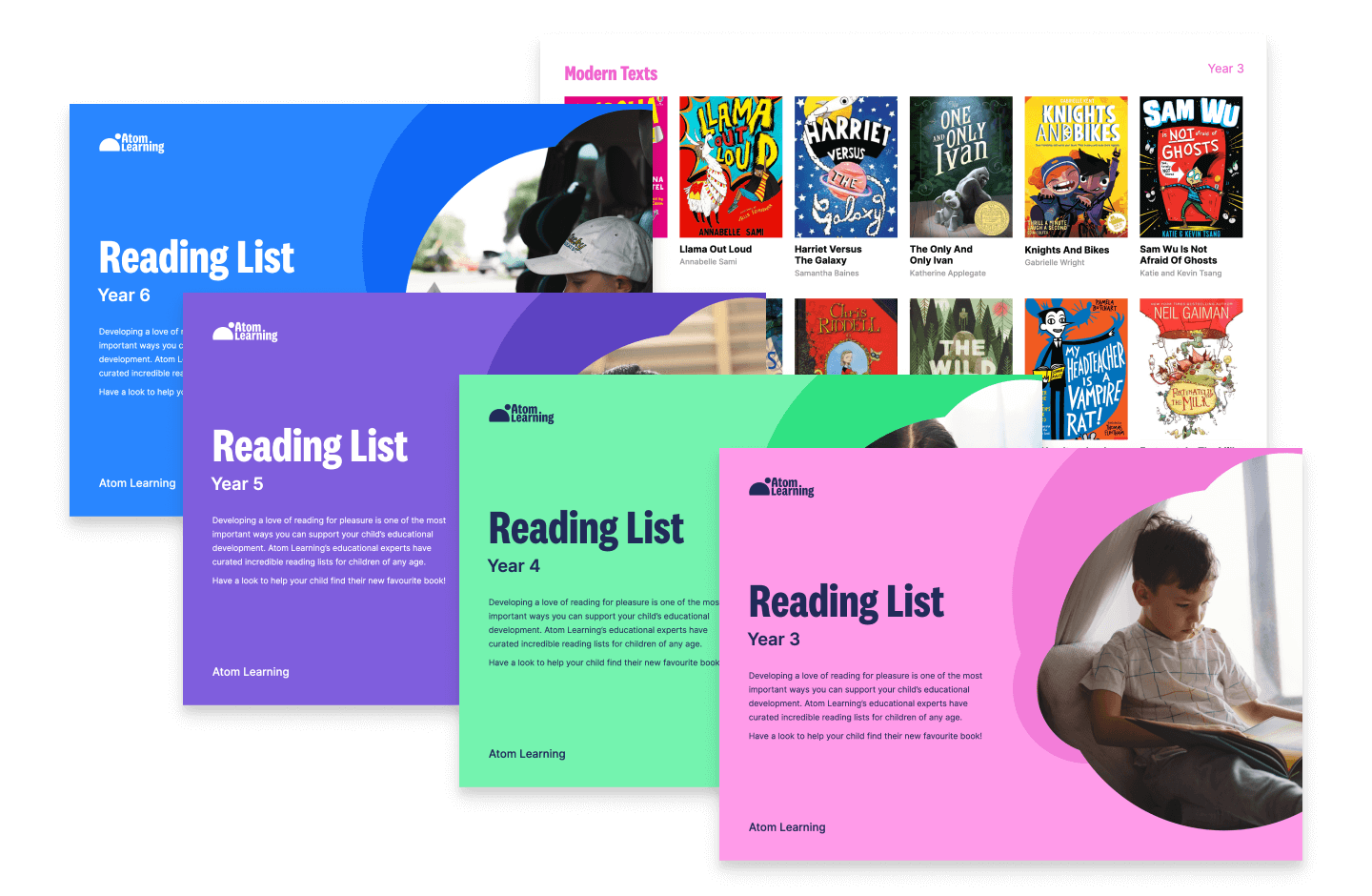
Download free Key Stage 2 reading lists

Find your child’s next great read. Atom’s free KS2 reading lists include carefully chosen books to help children aged 7–11 build comprehension, expand vocabulary and develop a genuine love of reading. Perfect for reading at home or alongside school learning.

Send me the lists

What is the Year 6 spelling test?

Spelling is formally assessed at the end of Key Stage 2 in the Year 6 SATs English exam. The spelling test is taken with a teacher or a classroom assistant and lasts 15–20 minutes.

In the Year 6 spelling test, the teacher or classroom assistant reads 20 sentences out loud to the child. The child has the sentences printed on paper, with one word missing from each sentence. They need to listen carefully to the missing word and spell it correctly in the gap.

The teacher will read the sentences twice and your child will have an opportunity to make any changes to their answers.

Take a look at the KS2 SATs spelling list from 2023 below.

KS2 Spelling Test 2023

  1. There was a lamb in the field.
  2. I kept in touch with my old friends when we moved.
  3. The questions were numbered from one to ten.
  4. The cup of tea was so hot it was undrinkable.
  5. We learnt the lyrics to the song.
  6. You ought to wear your coat.
  7. The footballer got a red card for misconduct.
  8. We saw a glorious sunset.
  9. The dog was trained to obey its owner.
  10. The official spokesperson delivered a speech.
  11. Each person’s fingerprint was unique.
  12. I found a puncture in my bicycle tyre.
  13. The rain became steadily heavier during the day.
  14. The mechanic fixed Mum’s car.
  15. I like most flavours of ice cream, but my preference is for chocolate.
  16. Protein is one of the main food groups.
  17. Giant pandas have substantial appetites.
  18. We acted out a scenario in drama.
  19. The optician recommended a pair of glasses.
  20. A currant is a type of dried fruit.

Popular spelling strategies

Try these popular methods to help teach your child how to spell at home.

Look, cover, write, check

The 'look, cover, write, check' strategy is a common spelling method taught at school. Try this at home:

  1. Write a word on a piece of paper and ask your child to read it carefully.
  2. Cover the word with your hand.
  3. Ask your child to write the spelling.
  4. Uncover the word and let your child check to see if they've got it right.
  5. Repeat!
Mother sitting at a table with her arm around her daughter, who is writing in a notebook. Both mother and daughter are smiling.

Chunking

'Chunking' can help your child learn how to spell long words with several syllables. It means breaking down a word into small chunks. For example:

  • 'ac' + 'tu' + 'ally' = actually
  • 'diff' + 'er' + 'ent' = different
  • 'Wed' + 'nes' + 'day' = Wednesday

Encourage your child to speak the different chunks out loud. Verbalising the sounds and listening to them fit together can help to make sense of the word.

Girl sitting at a table in front of an open notebook. She's holding a pencil and has got her head in her hand, looking up and thinking.

How to help your child’s spelling at home

1. Read widely

Reading is one of the most effective ways to build good spelling skills. When children read, they encounter words in context – helping them remember the correct spelling.

As well as reading regularly, it’s important that your child reads widely to maximise their personal vocabulary. Encourage them to read a variety of materials, including storybooks, newspapers, and non-fiction texts. Discuss the meanings and pronunciations of new words as you come across them.

Looking for inspiration? Download Atom’s recommended reading list for ages 7–11.

2. Make it fun

Spelling doesn't have to be a chore. Turn it into a fun activity by using games, puzzles, and interactive apps.

Games like Scrabble, Boggle, word searches, crosswords, or online spelling quizzes can make learning enjoyable. Engaging your child's creativity by writing short stories or creating their own spelling challenges can also be motivating.

3. Consistent practice

Spelling, like any skill, improves with practice. Encourage your child to practise spelling regularly. This could involve using school spelling lists, practising words from their reading books, or playing spelling games. Consistency is key, so try to establish a daily or weekly routine for spelling practice.

4. Encourage self-correction

Teach your child to review their own work and correct their spelling mistakes. This fosters independence and a sense of responsibility for their learning. Encourage them to use dictionaries and other reference materials to check spellings.

5. Celebrate progress

Acknowledge your child's spelling achievements, no matter how small. Positive reinforcement can boost their confidence and motivation. Create a space on the fridge or a wall where you can display their excellent spelling work, certificates and achievements.

No items found.
No items found.
No items found.
No items found.

Build strong English, maths and science skills.

Want to support what your child is learning at school, or help them stretch beyond it? Atom gives them the right blend of challenge and support. Help them strengthen foundations, deepen understanding, and grow confident in the subjects that matter most for Key Stage 2 and beyond. 

  • Follow personalised weekly learning plans that adapt to your child’s level and keep them progressing in English, maths and science. 
  • Learn through interactive lessons that stretch their thinking and reinforce key skills. 
  • Track progress topic by topic. See their strengths and pinpoint where they need to improve. 
Strengthen foundations and build confidence.

Start your free trial and help your child make real school progress today.

Try Atom for free