English is a core subject at primary school and taught every day. The Key Stage 2 national curriculum aims for children to develop high standards of literacy and a love of reading for enjoyment.
This guide will help you understand more about the Key Stage 2 English national curriculum and the skills your child will learn. Keep reading to:
find out what’s taught on the KS2 English curriculum
learn about KS2 English tests
get tips to support your child’s learning at home
What is the national curriculum?
The national curriculum is a programme of study for primary and secondary schools in England. State schools teach the same subjects and standards so that children across the country all learn the same things.
The national curriculum is organised into ‘key stages’, which span different age groups. Tests at the end of each key stage assess your child’s performance and understanding of what they have learnt.
Early years: ages 3–5 (nursery and reception)
Key Stage 1: ages 5–7 (Years 1–2)
Key Stage 2: ages 7–11 (Years 3–6)
Key Stage 3: ages 11–14 (Years 7–9)
Key Stage 4: ages 14–16 (Years 10–11)
Join Atom’s free parent newsletter
Stay one step ahead of your child’s learning journey. Get expert advice on 11+ prep, Key Stage 2 support, and school admissions, plus practical tips and free resources, sent straight to your inbox.
Key Stage 2 is divided into two blocks – Lower Key Stage 2 (Years 3 and 4) and Upper Key Stage 2 (Years 5 and 6). The topics and skills your child learns in Upper KS2 builds on and expands on the topics and skills in Lower KS2.
Year 3 and Year 4 English
By the end of Year 4, your child should be reading age-appropriate books, decoding unfamiliar words, and understanding what they have read. They’ll learn to read silently, examine non-fiction critically, and justify their interpretations.
Your child should be able to accurately express their thoughts in writing, using proper punctuation and a wide vocabulary to make an impact. They will gradually become more independent and be able to grasp the differences between written and spoken language.
Reading
Apply their knowledge of root words, prefixes and suffixes to understand new words
Read a range of fiction, poetry, plays, and non-fiction
Recognise themes, such as the use of magical devices in fairy stories and folk tales
Perform poems and play scripts using intonation, tone, volume and action for effect
Recognise different forms of poetry (such as free verse and narrative poetry)
Discuss their understanding of a text by explaining the meaning of words in context, drawing inferences, and identifying how language, structure and presentation contribute to meaning
Retrieve and record information from non-fiction texts
Discuss books with others by taking turns and listening to what others say
Spelling
Use prefixes and suffixes and understand how to add them
Spell homophones
Correct words that are often misspelt
Start accurately using the possessive apostrophe
Use the first two to three letters of a word to check its spelling in a dictionary
Vocabulary, grammar and punctuation
Use a range of conjunctions (e.g. when, if, because, although) to extend sentences with more than one clause
Use the present perfect verb form
Carefully select nouns or pronouns to avoid repetition
Use inverted commas to punctuate speech
Handwriting
Use diagonal and horizontal strokes to join letters
Understand which letters are best left unjoined
Increase the legibility, consistency and quality of their handwriting
Writing composition
Discuss and record ideas for composition
Organise paragraphs around themes
Create settings, characters and plot (narrative writing)
Use organisational devices, such as headings and subheadings (non-narrative writing)
Suggest improvements to their own and others’ writing
Proofread their writing for spelling and punctuation errors
Read their writing aloud, using intonation, tone and volume to make the meaning clear
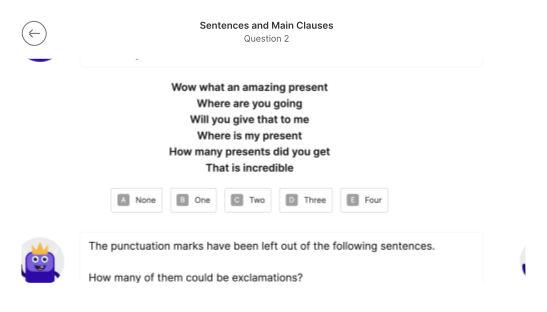
Here's an example of an English question suitable for children in Years 3–4 on Atom.
Year 5 and Year 6 English
In Years 5 and 6, the national curriculum aims to make reading an enjoyable habit both in and out of school. Your child should be reading silently and able to understand the text, infer meanings, and discuss their reading. Exposure to texts such as stories, plays, poetry and non-fiction will enhance their reading fluency and writing skills.
Your child will also learn how to express their thoughts with increasing accuracy using a range of grammar and punctuation. They will learn how to adapt their writing to the audience and purpose and understand why authors use specific grammar, vocabulary, and structure for meaning and impact.
Reading
Apply their knowledge of root words, prefixes and suffixes to read aloud and understand new words
Continue to read and discuss a wide range of fiction, poetry, plays, non-fiction, and textbooks
Increase their understanding of different themes, including modern fiction, fiction from our literary heritage, and books from other cultures and traditions
Recommend books to others
Make comparisons with and across books
Learn a wide range of poetry by heart
Perform poems and plays, showing understanding through intonation, tone and volume
Discuss their understanding of what they have read by exploring the meaning of words in context, drawing inferences, predicting what might happen next, summarising ideas, and identifying how language, structure and presentation contribute to meaning
Evaluate the impact of figurative language on the reader
Distinguish between fact and opinion
Retrieve, record and present information from non-fiction
Discuss books with others, building on their own and others’ ideas and challenging views courteously, and through presentations and debates
Spelling
Use further prefixes and suffixes
Spell words with ‘silent’ letters (e.g. knight, solemn)
Distinguish between homophones and other words which are often confused
Use knowledge of morphology and etymology in spelling
Use the first three to four letters of a word to check its spelling and/or meaning in a dictionary
Use a thesaurus
Vocabulary, grammar and punctuation
Recognise appropriate vocabulary and structures for formal speech and writing
Use passive verbs to affect how information is presented in a sentence
Use the perfect form of verbs to mark relationships of time and cause
Use expanded noun phrases to convey complicated information
Use modal verbs or adverbs to indicate degrees of possibility
Use relative clauses beginning with who, which, where, when, whose, that, or with an implied relative pronoun
Use commas, hyphens, brackets, dashes, commas, and semicolons accurately
Use a colon to introduce a list
Punctuate bullet points consistently
Handwriting
Choose which shape of a letter to use when given choices
Decide whether or not to join specific letters
Choose the writing implement that is best suited for a task
Writing composition
Identify the audience and purpose for a piece of writing
Note and develop initial ideas
Select appropriate grammar and vocabulary to enhance meaning
Describe settings, characters and atmosphere
Integrate dialogue to convey character and advance action
Use a wide range of devices to build cohesion within and across paragraphs
Use organisational devices, such as headings, bullet points and underlining, to structure text
Suggest changes to vocabulary, grammar and punctuation to enhance effects
Ensure the consistent and correct use of tense throughout a piece of writing
Ensure the correct subject and verb agreement when using singular and plural
Proofread for spelling and punctuation errors
Perform their own writing aloud, using intonation, volume and movement so that the meaning is clear
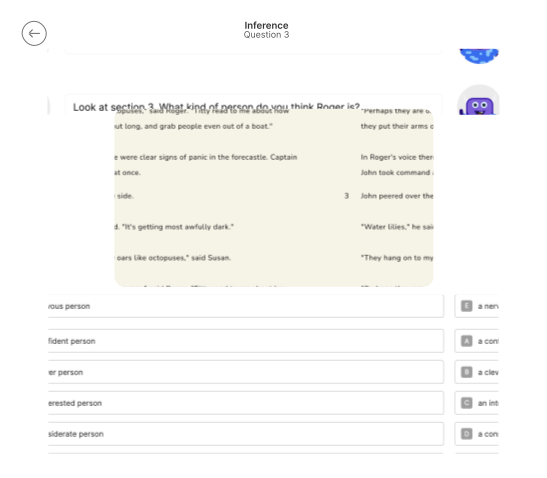
Here's a question appropriate for Years 5–6 on Atom. To answer this question, children need to use inference skills based on what they have read in the text.
No items found.
What are KS2 English tests?
At the end of Year 6, children in England primary schools take Key Stage 2 Standard Assessment Tests, known as Key Stage 2 SATs. These tests are used to assess your child's knowledge of the KS2 curriculum and for the government to understand the quality of education across schools in the country.
Pupils take three English SATs tests across two days in May:
Reading books together at home can be an enjoyable experience for both you and your child, while helping them discover a lifelong love of reading. Reading to your child is just as important as listening to them read](https://atomlearning.com/blog/reading-to-your-child).
Encourage your child to pick out books from different genres and themes (both fiction and non-fiction!) and set aside regular reading time together. After each reading session, ask them questions to help them develop skills in analysis and inference. For example, you could ask:
What do you think is going to happen?
How would you describe this character?
How might this story be different if it was told from another character’s point of view?
Family board games are a great opportunity to develop English skills while having fun!
Scrabble is one of the nation’s most popular board games and is a useful way to help your child improve their spelling skills. Playing with an older sibling or a parent can also introduce your child to a greater range of vocabulary.
Let your child practise their storytelling skills with Dixit. Each player takes it in turn to be the storyteller, giving a clue to what’s on one of their beautifully-illustrated cards. The other players need to try to match their cards to the clue to win points.
Want to support what your child is learning at school, or help them stretch beyond it? Atom gives them the right blend of challenge and support. Help them strengthen foundations, deepen understanding, and grow confident in the subjects that matter most for Key Stage 2 and beyond.
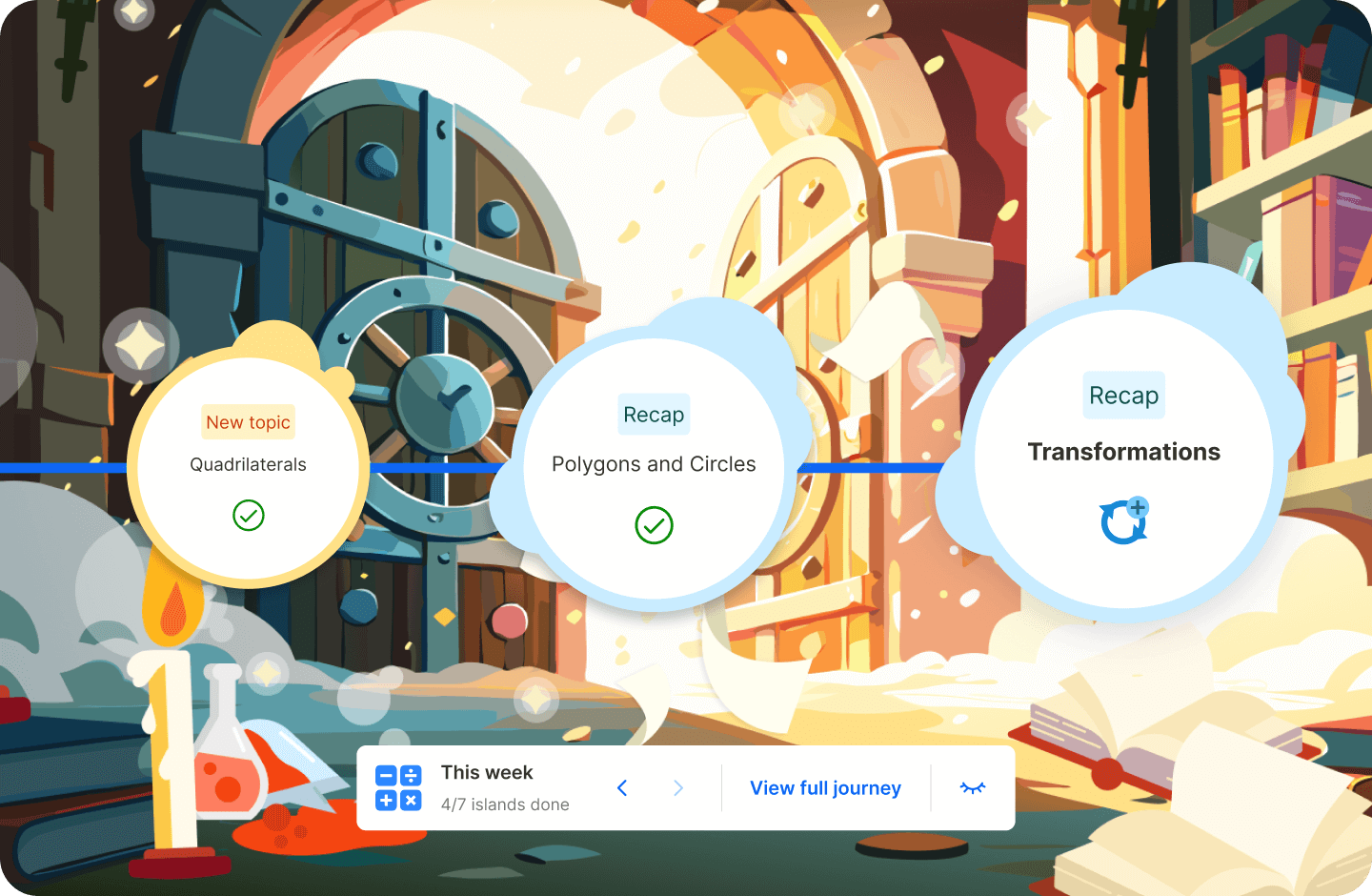
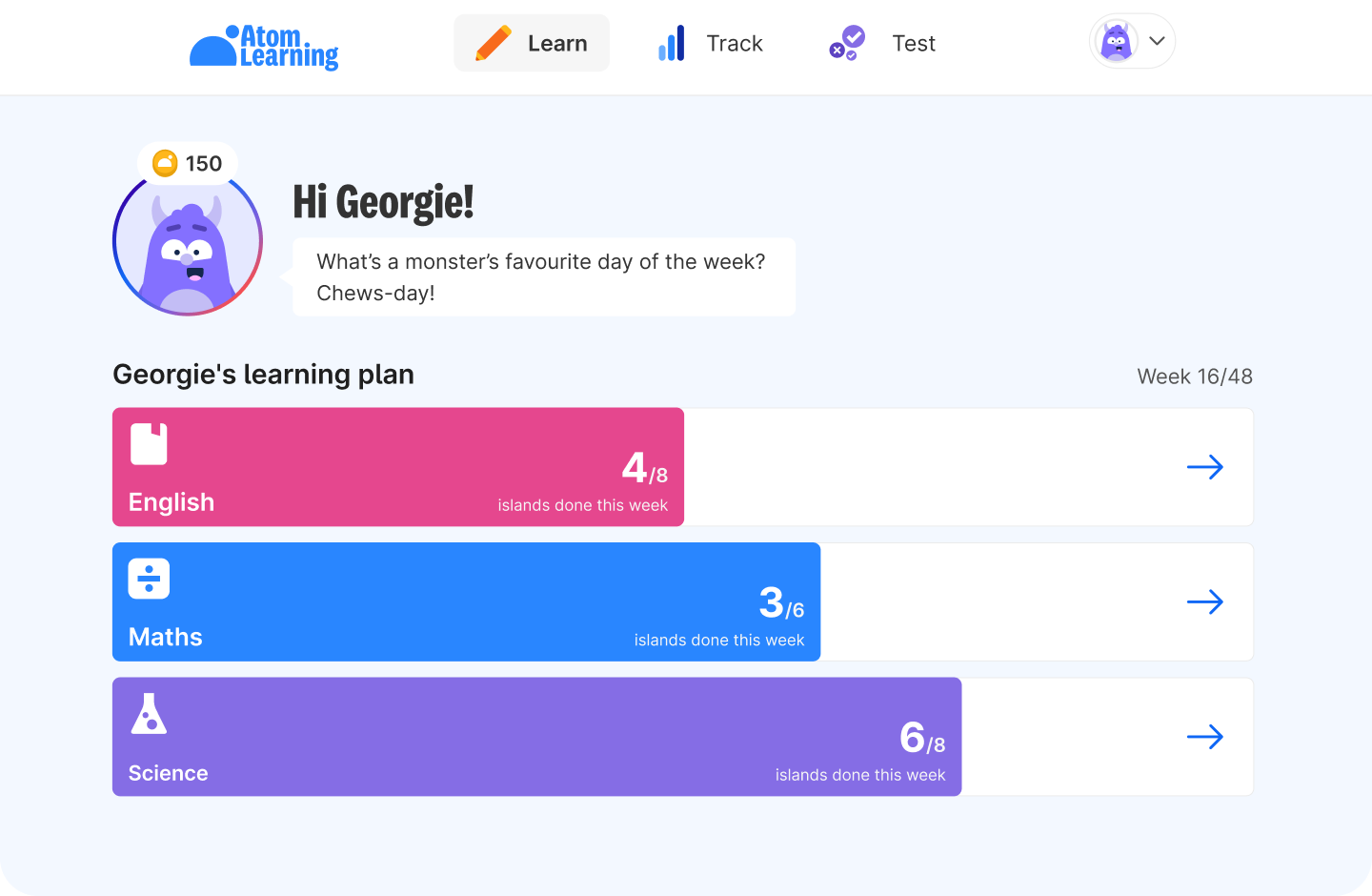
Follow personalised weekly learning plans that adapt to your child’s level and keep them progressing in English, maths and science.
Learn through interactive lessons that stretch their thinking and reinforce key skills.
Track progress topic by topic. See their strengths and pinpoint where they need to improve.
Strengthen foundations and build confidence.
Start your free trial and help your child make real school progress today.


.png)