Multiplication is a core skill for your child’s maths education, as well as proving useful in daily life! In this article:
- Discover top tips to introduce your child to times tables
- Watch how-to videos for the key multiplication methods for primary school maths
- Download free multiplication worksheets to help them get confident with their tables in no time!
What is multiplication and why do we learn it?
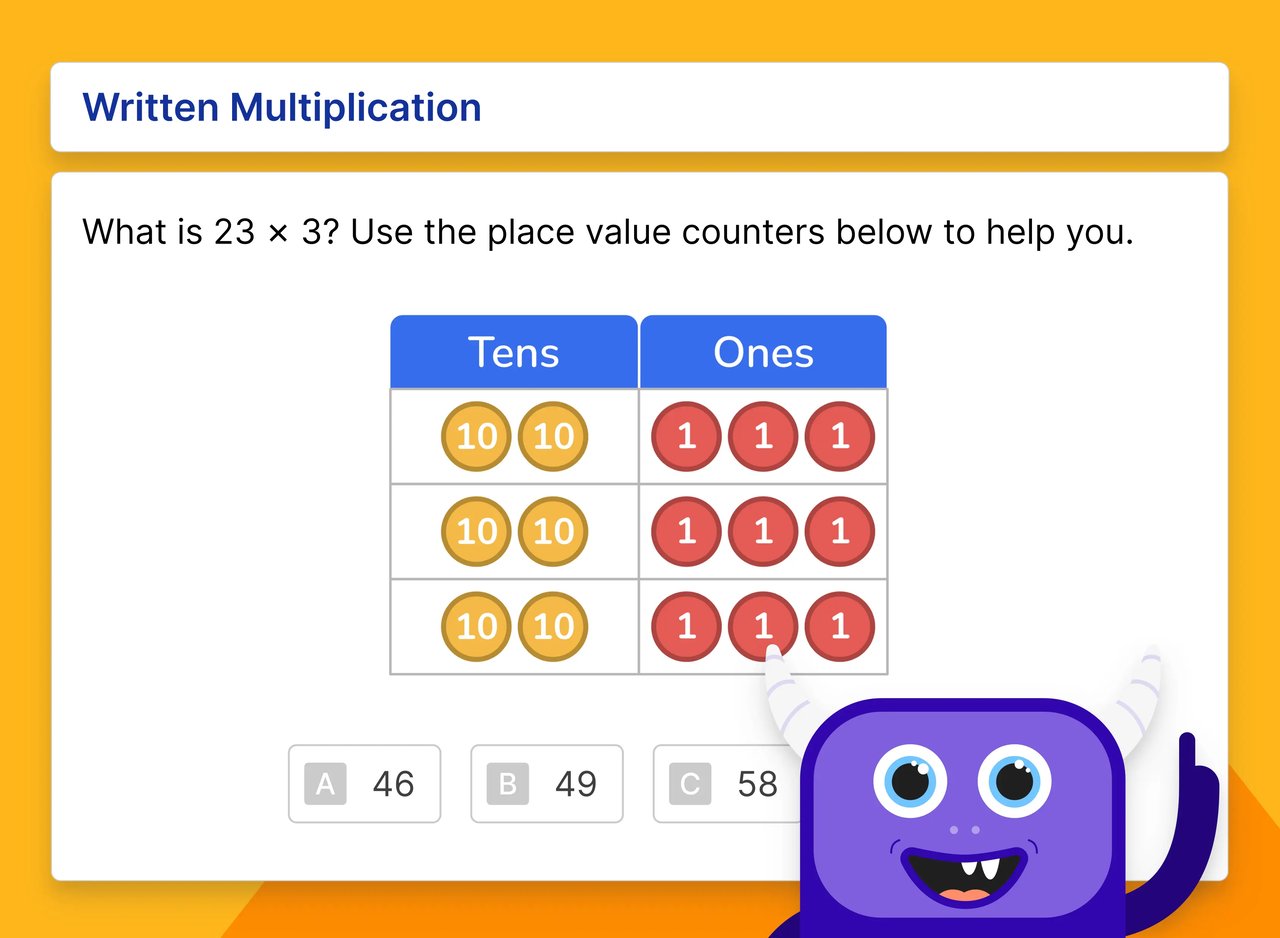
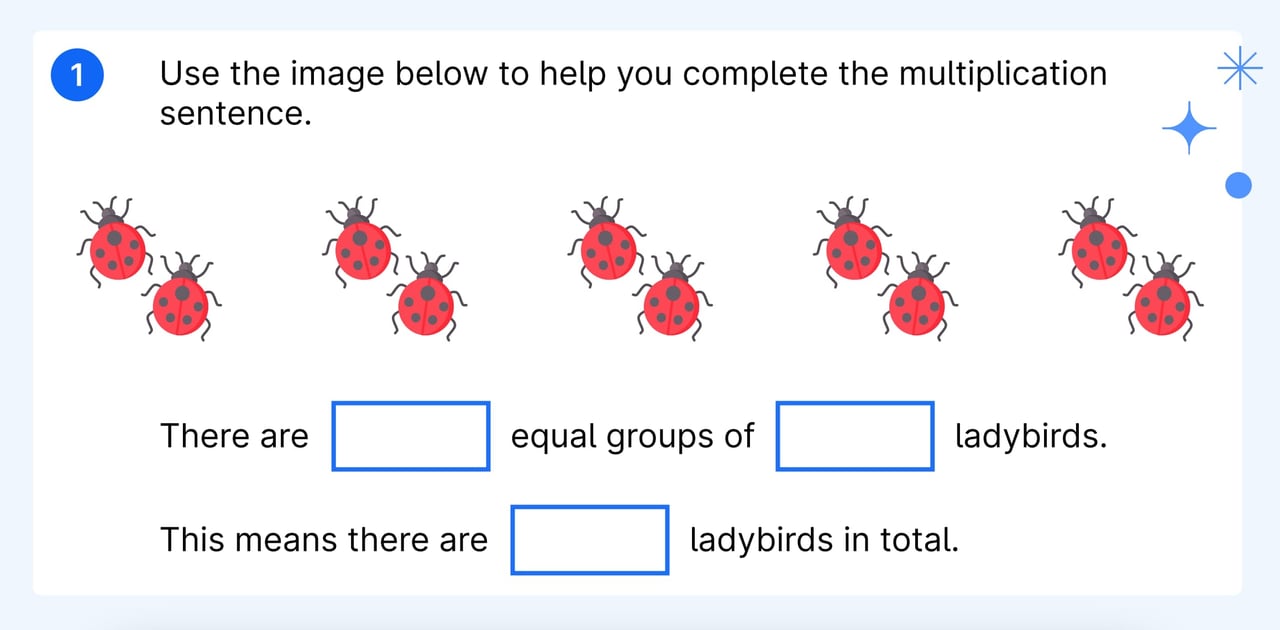
Multiplication is the calculation we use to express repeated additions of equal groups. As we'll see in this video, using repeated addition will always reveal the answer to a multiplication problem, but it is much quicker to multiply – particularly when we learn times tables by heart.
Multiplication is also an important foundation for maths topics that your child will encounter during their later years at primary school: division and algebra. Knowing times tables makes these problems a lot easier to tackle and avoids a lot of unnecessary complication.
What are multiplication facts?
Multiplication facts are simply the answers to multiplication problems. For example:
- 6 x 3 = 18 (the multiplication fact is 18)
- 23 x 4 = 92 (the multiplication fact is 92)
- 62 x 5 = 310 (the multiplication fact is 310)
How to introduce your child to multiplication
Here are our top tips for how to help your child understand and build confidence with the concept of multiplication.
Use real-life objects
Objects from around your home can come in handy when introducing your child to multiplication. Everyday items such as counting blocks, beads or biscuits, can help your child understand how multiplication works – and why it’s quicker to remember times tables than to count.
A good time to do this is after the weekly shop. Sit down with your child with some of your purchases in front of you. Group items into equal sets and then ask your child to count the total number of items. If you’ve bought three bunches of bananas, each with five bananas, how many do you have in total?
Practice skip counting
Skip counting is multiplying by repeated addition. For example, skip counting by 3 would go: 3, 6, 9, 12, 15, etc. – the same as the 3 times table. Practising skip counting will help children to learn their times tables and build up speed of recall.
Make it a challenge for your child – how quickly can they count to a certain number by twos, fives and tens? Once they’re confident with that, try threes, fours and eights.