Building independent learning skills can inspire a lifelong hunger for knowledge. In this article, we’ll share a simple strategy for developing your child's independent learning skills. Plus, get tips and activities to support their independence.
Why is independent learning important?
Independent learning is key to your child's academic growth because it:
- cements collaborative skills
- expands imagination
- develops resilience and persistence
- builds discipline by enhancing the skills they learn in the classroom
Children who learn independently are comfortable exploring new concepts and problem-solving. This can result in greater academic achievement and more self-confidence in their abilities.
What does an independent learner look like?
People who are independent learners are curious and have a drive to figure things out. Kids with well-honed independent learning skills naturally tend to:
- make informed choices on their own
- discover and select their own learning resources
- formulate their own problems, decide a course of action, and reflect on the process and outcome
- be motivated to tackle challenges and have the confidence to make decisions
If your child doesn't currently display these behaviours consistently, don't be disheartened. There are plenty of practical ways you can encourage independent learning.
The two-part formula for becoming an independent learner
Independent learning isn't a complete lack of guidance. Nor does it mean leaving your child to their own devices. It's all about equipping them with the tools and mindset to problem-solve.
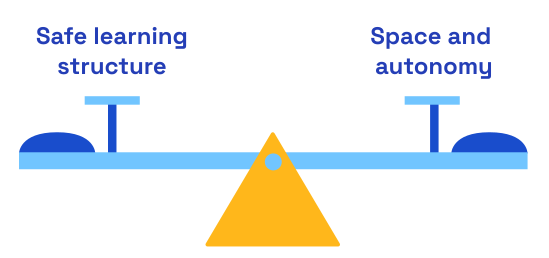
The formula for independent learning is a balance between freedom and structure:
Creating a safe learning structure to provide support and guidance + allowing your child space and autonomy to self-motivate = independent learning.
1. How to create a safe learning structure
Building a growth mindset
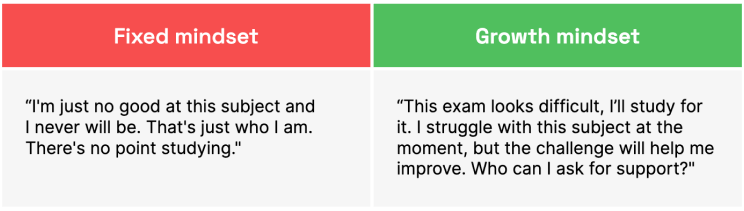
Having a growth mindset is the foundation of a child's ability to learn independently.
- A fixed mindset is the belief that abilities can't be changed. With a fixed mindset, it's assumed that natural intelligence is the only way to success.
- A growth mindset is the belief that abilities are developed over time through hard work, strategies, and input from others.
Powerful praise
Studies have found that children's mindset is influenced by the type of praise they get.
- Personal praise that focuses on innate qualities or labels can promote a fixed mindset. This includes comments such as "you're clever" or "you're good at this subject".
- Process praise that focuses on effort and approach can encourage a growth mindset. For example, "you studied really well for this and your hard work paid off".
So, whether your child is doing homework or preparing for an exam, remember to celebrate the process. Try to avoid the temptation to over-focus on rewarding good results. Instead, praise their resilience in making mistakes and learning from them, attention to detail, and improvements they've made. Ask them to reflect on what they're proud of too.
Time for reflection
Reflection encourages curiosity. By building it into your child's learning routine, you will lay the groundwork for independent learning skills. While you're working together on exam prep or homework, try asking these questions:
- Is there a different way you could solve this problem?
- Was this the quickest way to solve the problem?
- How would you explain this to someone else?
- How would you convince me this is the correct answer or the best method?
Once your child becomes accustomed to this way of exploring their knowledge and understanding, encourage them to ask themselves these questions when working alone. Self-guided reflection will become a natural part of their problem-solving.