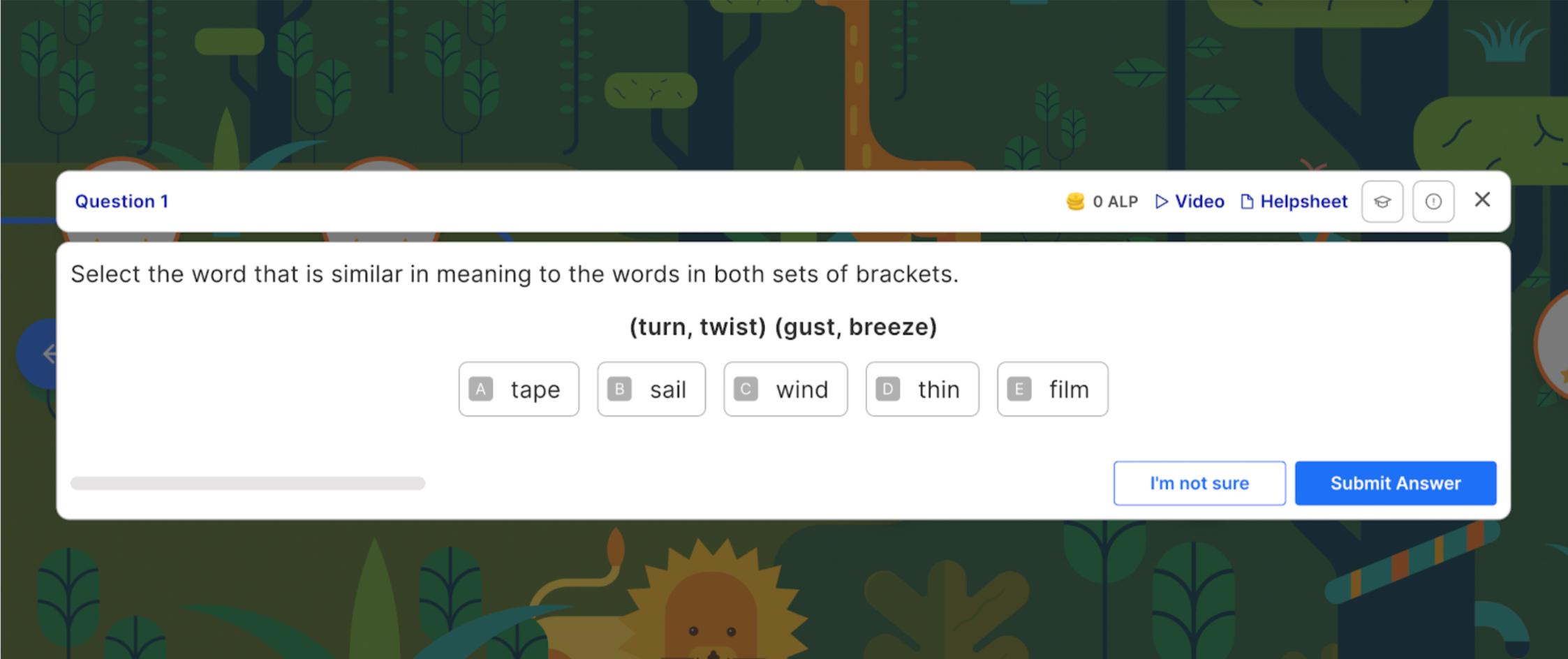
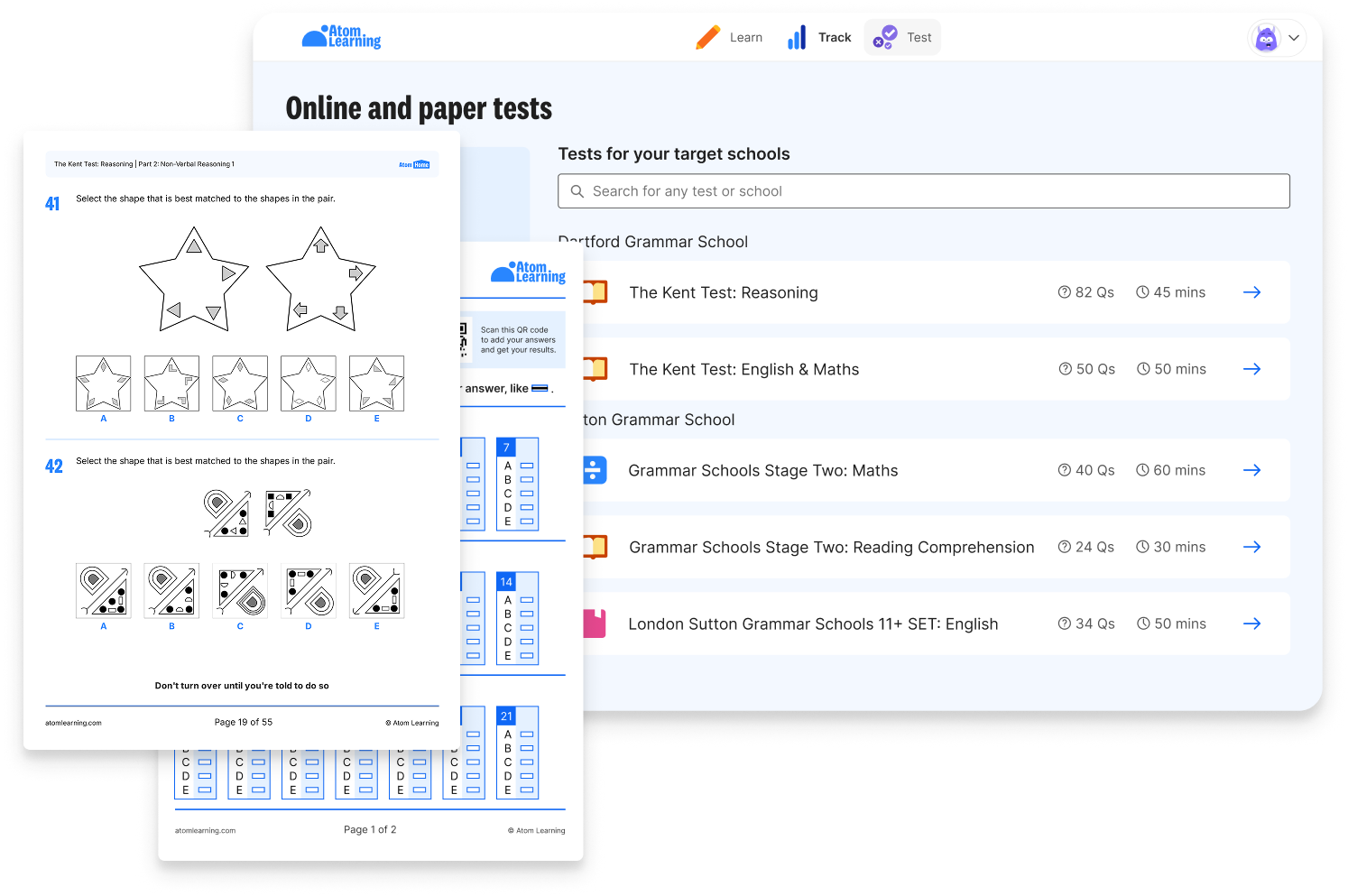
Most 11 plus exams (including GL Assessment and ISEB) test verbal reasoning, either in a specific paper or alongside English questions. Whether or not you're planning to send them to a selective school, your child will benefit from being introduced to verbal reasoning skills early. Here are some everyday ways to boost their vocabulary, comprehension and logic to set them up for success in their education!
What are verbal reasoning skills?
Verbal reasoning is a test of skill rather than knowledge. It isn't taught as part of the national curriculum – instead, it aims to measure how well someone can think, communicate and solve problems using words. It involves key skills such as:
- Reading comprehension
- Strong vocabulary
- Phonological awareness
- Problem-solving
- Identifying sequences
Why are verbal reasoning skills important?
We rely on verbal reasoning in daily life just as much as we rely on it in the classroom. Verbal reasoning helps us make sense of what we read and hear. The skills allow us to understand and communicate complex information, make connections, predict outcomes and reach conclusions based on evidence.
Your child will already have some ingrained ability for verbal reasoning. Humans begin to develop cognitive skills, like logic and the ability to identify connections, between the ages of two and three. The frequent 'why?' questions can be tiresome for parents but they mean that your child is learning to process information!
In the 11 plus exam, verbal reasoning tests children's potential for critical thinking. It is also an attempt to measure general intelligence – the basis of all selective school entry tests.
What's the difference between verbal and non-verbal reasoning?
- Verbal reasoning is the ability to understand and engage with language, i.e. any written and spoken information (including numbers!).
- Non-verbal reasoning is the ability to understand and engage with visual information, including shapes, diagrams, graphs, maps and pictures.
Both verbal and non-verbal reasoning need attention to detail, as well as the ability to solve problems and apply logic.
Free parent webinar
It's important to introduce your child to reasoning at the right level. In this webinar, Chloe explains how. She also covers how to develop a growth mindset to keep them motivated as they explore these new challenges!