Thinking about applying for an independent school with 10 plus entry? This guide is here to help you understand the ins-and-outs of 10 plus admissions and what might be on your child’s entrance exam.
Key takeaways:
- 10+ exams are taken in Year 5 for Year 6 entry to independent schools
- The exams usually assess English, maths and reasoning
- Your child might be interviewed or asked for a reference in addition to the assessment
- 10+ exams can be less competitive than 11+ exams
- Atom Home can provide a comprehensive learning plan to help your child’s 10+ exam preparation!
What are 10+ exams?
10+ exams are a type of entrance exam used by independent schools. They are taken by children aged 10 applying for a place in Year 6, either at an independent prep school or as part of an early-entry start to senior school.
Not all prep or senior schools have a 10+ entry route. Make sure to check the entry requirements for your preferred school.
How do I register my child for 10+ exams?
The application process can vary from school to school. Before you register your child for the 10+ exam, it’s a good idea to visit the school with your child first. School visits and open days give you and your child an opportunity to meet the staff and see the school facilities. This is essential to help you assess whether the school is the right fit for your child.
Once you have decided to start your child’s application, you will need to register them with the school and pay a registration fee. Once you have completed registration, the school will send you more details about your child’s exam. You will usually have this information a few weeks before the assessment day.
Whitgift School, for example, has a 10+ entry point. Families looking to register their child for 10+ entry need to pay a registration fee first (£170 for UK students, or £250 for international students). As this fee is non-refundable, you must be sure you wish your child to take the exam before registration. After the fee is paid, you can continue with your application.
What subjects do 10+ exams test?
The structure, format and content of the 10+ exam varies between schools. Most schools list the subjects tested on their entrance exams on their websites.
However, most 10+ exams are broadly similar. They usually test English, maths and reasoning (verbal and/or non-verbal) with multiple-choice and open-ended questions.
English
The English paper might consist of:
- A creative writing task. This usually tests your child’s range of vocabulary as well as spelling, grammar and punctuation.
- A comprehension task. Your child will need to read a passage of text and answer questions to demonstrate they are able to process and understand the text.
Some schools might also test speaking and listening ability.
Maths
The maths paper is usually based on the Year 5 national curriculum. Questions assess a range of topics including:
- Number and place value
- Addition and subtraction
- Multiplication and division (including factors and prime numbers)
- Fractions, decimals and percentages
- Measurement (including perimeter, area and converting between different units of measurement)
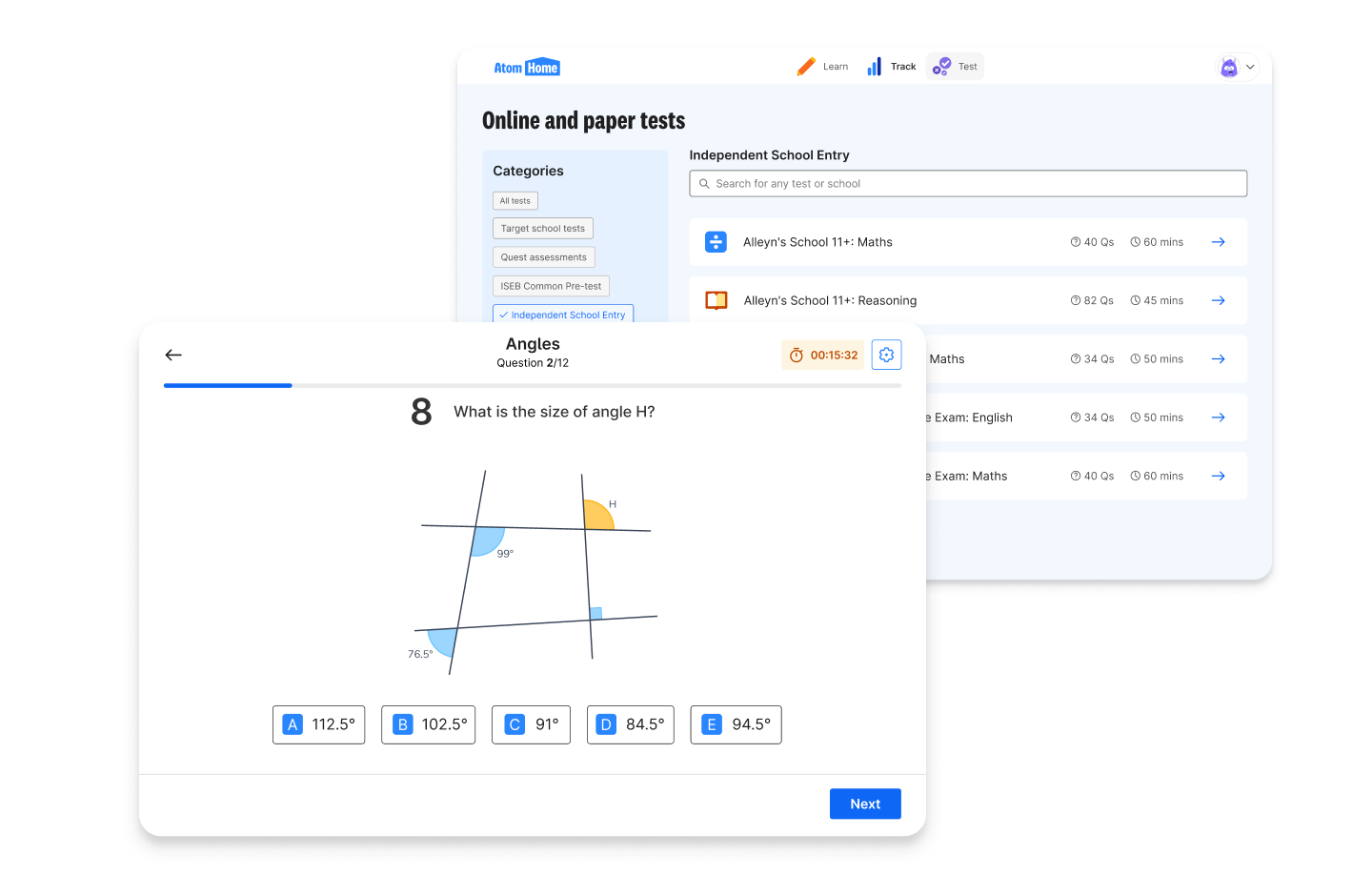
- Geometry (including 2D and 3D shapes, and angles)
- Statistics (including line graphs and tables)
Reasoning
Reasoning (often involving verbal and/or non-verbal reasoning) is not taught on the national curriculum. Your child might be unfamiliar with these types of questions.
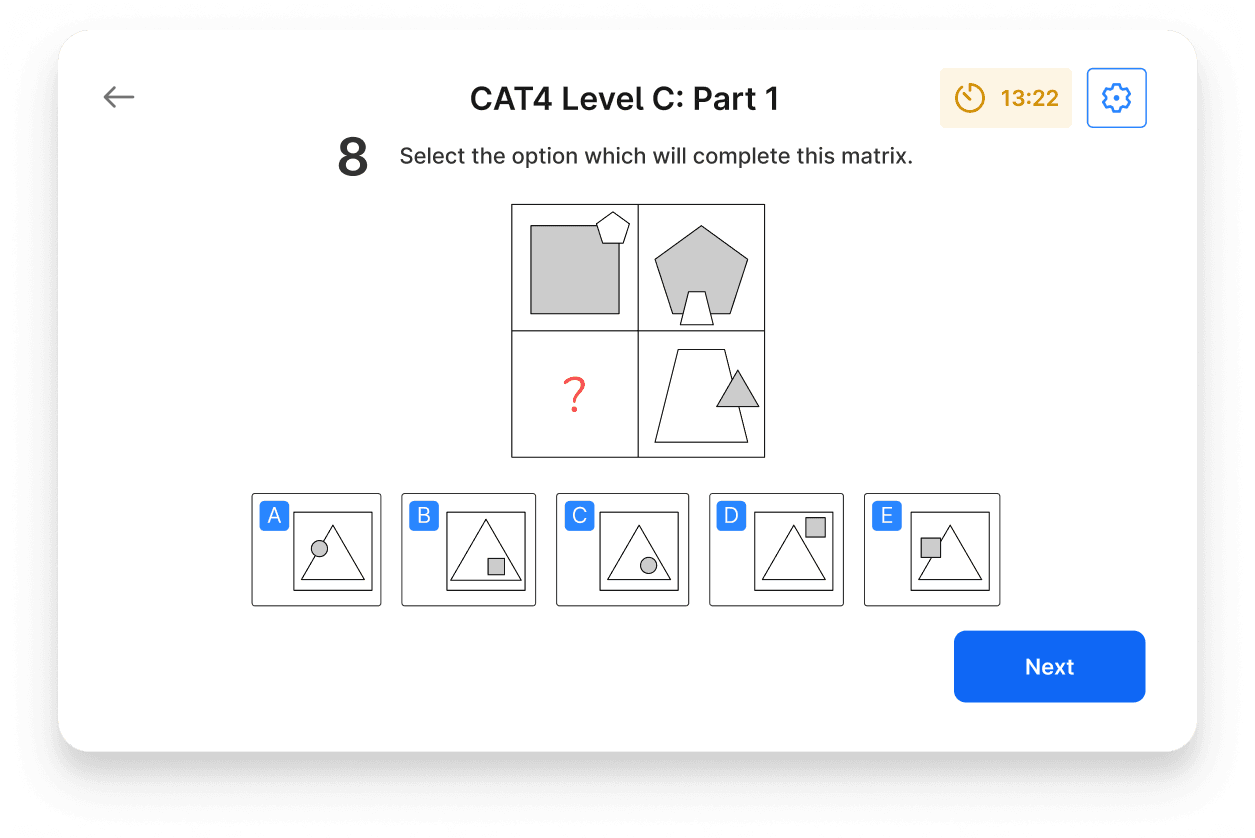
Non-verbal reasoning involves solving problems using shapes and diagrams. It tests skills such as logic and problem-solving, spatial awareness, and the ability to identify patterns and rules.
Verbal reasoning involves solving problems with written information. It tests skills such as reading fluency and comprehension, vocabulary knowledge, logic and problem-solving, and rule-spotting.
10+ exams don’t always involve reasoning, but they might involve either verbal or non-verbal reasoning (or in a selection of cases, a combination of both). These types of questions are normally multiple-choice.