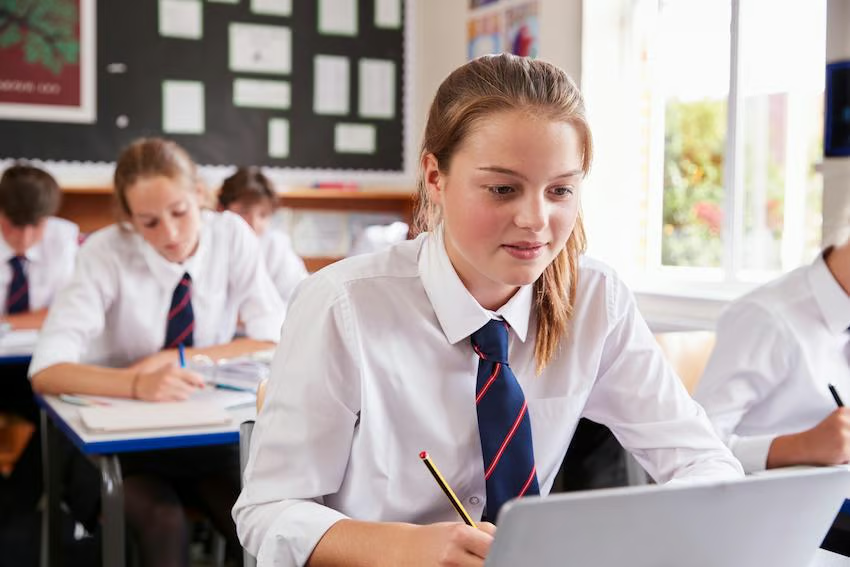
The move from primary to secondary school can feel daunting for even the most confident Year 6s. The change in learning environment can bring children out of their comfort zone, academically and socially.
As a parent, there are lots of things you can do to ease the transition and support your child in starting secondary school feeling confident and prepared. In this article, we will cover:
- The academic skills your child will need for the transition to Year 7
- What your child should be doing to prepare for secondary school
- How to keep your child learning over the summer holiday
- How to support your child’s wellbeing before the move to secondary
What academic skills will my child need in Year 7?
The transition from primary to secondary school brings many academic changes. The learning gets more challenging, and expectations step up. In Year 7, your child will be expected to build on their Key Stage 2 foundations and start developing greater independence, critical thinking, and subject-specific skills.
Here are the core academic skills that will help them feel confident from day one:
1. Reading comprehension and analysis
In secondary school English, your child won’t just be reading stories; they’ll be encouraged to start thinking more deeply about what the writer is trying to say and how they’ve said it.
They’ll be asked to explain their opinions, spot big ideas or messages in a text, and find evidence to back up their thinking. It’s less about finding the ‘right’ answer and more about showing they understand and can explain their ideas clearly.
Learn more about reading comprehension here: What's tested on 11+ English comprehension exams?
2. Maths fluency and problem-solving
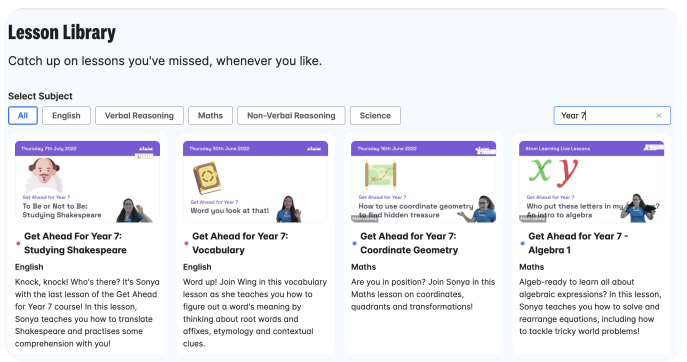
In Year 7 maths, your child will build on topics they already know, such as times tables, fractions, and percentages, and start learning new topics like algebra. They’ll begin to tackle more complex problem-solving and algebraic thinking, where it’s not just about getting the answer right but showing how they got to the answer and learning how to explain their thinking. Being confident with numbers and mental and written methods will help them feel ready.
3. Scientific enquiry and curiosity
Science lessons become more hands-on in secondary school. Your child will start doing more experiments and learning to ask questions, make predictions, and understand the results. They’ll cover different types of science, like biology, chemistry, and physics, so it helps if they’re already curious and comfortable using scientific words.
Read our blog: Everyday ways to engage your child with Science to help build their interest in Science before they start!
4. Written communication
Writing becomes more important across all subjects, not just English. Whether it’s a history essay or a science report, your child will need to explain their ideas clearly and in full sentences. Being able to organise their thoughts and write logically will really support their progress.
Reading can help improve your child’s written communication. The more your child reads, the more they will be exposed to writing techniques, structure, vocabulary and grammar.
5. Independent learning and organisation
One of the biggest changes in Year 7 is learning how to stay organised. With different teachers, more homework, and a busy timetable, your child will need to manage their time well. Skills like using a homework planner, packing their bag the night before, and checking their timetable will help them feel more in control.