Until recently, CEM (Centre for Evaluation and Monitoring) was a main provider of grammar school 11 plus exams.
In late 2022, CEM announced they were switching to online exams and no longer providing standard 11 plus exams. GL (Granada Learning) has once again become the main provider of admissions testing for UK grammar schools.
Most grammar schools switched to GL for the 2023–24 admissions season. If you're applying for your child to enter Year 7 in September 2025, they will likely be taking a GL exam. Learn more:
If you have any questions about which exam your target school will be using, we're happy to help – email us at [email protected].
No items found.
What was the difference between CEM and GL 11 plus?
Both exam providers assessed similar skills, but the key differences were:
GL publishes practice materials, while CEM did not.
Timings and structure – GL papers are separated by subject, while CEM integrated all subjects in shorter timed sections.
GL content is less closely mapped to the national curriculum and places more emphasis on logical reasoning and spelling.
How is the 11 plus scored?
All marks from each paper are combined to give a total score. Subjects may be weighted differently depending on the school. The score is usually age standardised to remove any disadvantage for children who were born later in the year.
Atom's 11 plus test papers provide your child with a standardised age score (SAS) equivalent to the scoring used in real 11 plus exams. We recommend that students aim for a SAS of at least 120 when practising for grammar school entry.
However, there is no single pass mark, as scoring cut-offs will depend on the admissions criteria of the school. Grammar school entry is more competitive in some regions than others. We can provide estimates for your target schools – please email us at [email protected] stating the schools you're interested in.
How challenging is the 11 plus?
The 11 plus is designed to test children’s potential to thrive in an academically demanding grammar school environment. It’s intended to challenge the top 25% of a cohort, with a number of questions covering academic content not yet taught in the classroom, under stringent time constraints.
When preparing for an exam it can be tempting to jump straight into using past papers. However, this is not an effective way to learn, and can cause children to feel demotivated. Learners should build a secure understanding of the 11 plus content before being tested under exam conditions.
Build exam technique
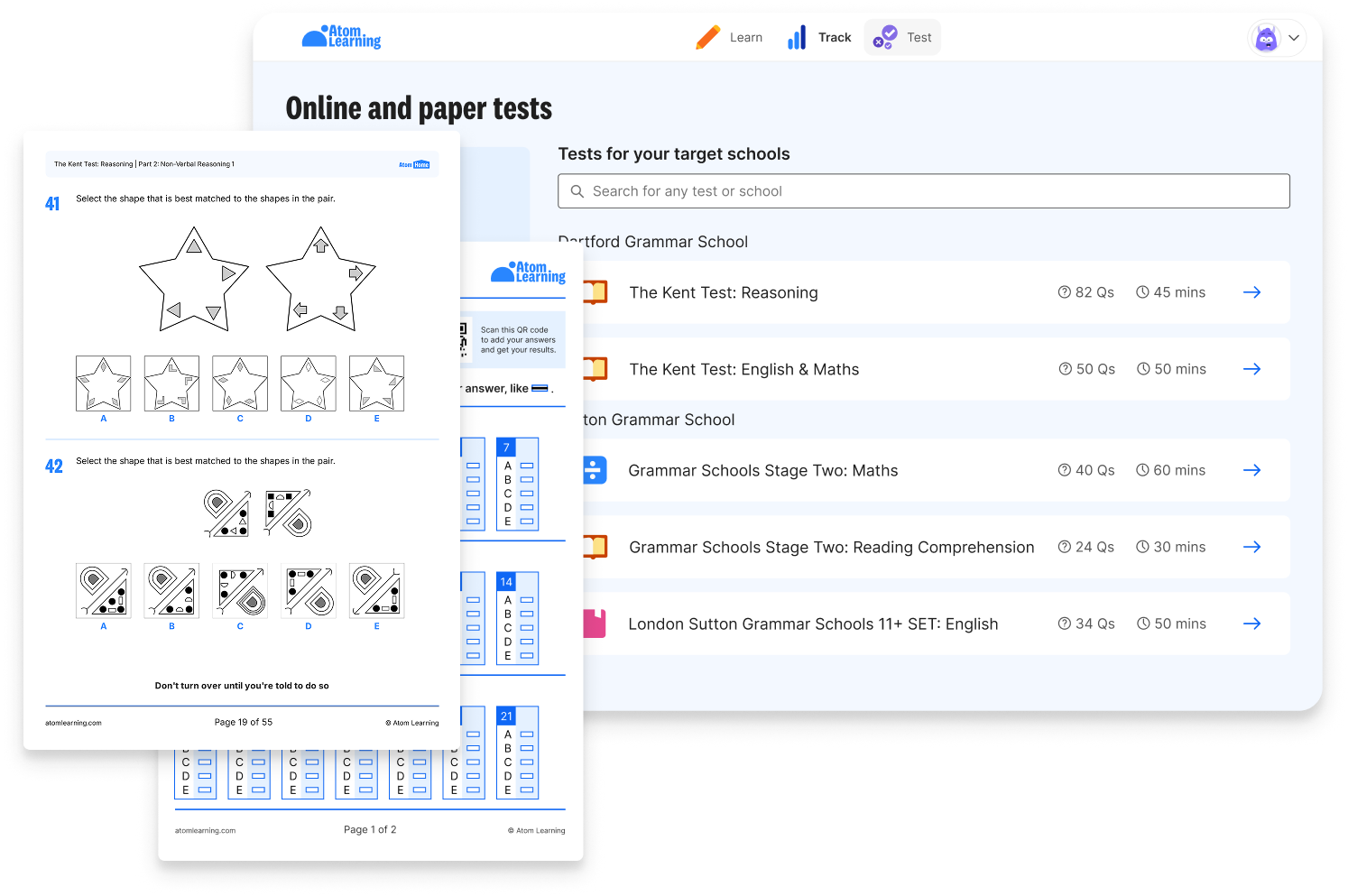
Once your child is confident with the 11 plus curriculum, begin to introduce practice tests to help them get used to question formats and timings. They will develop essential time management skills, and become familiar with what to expect on exam day.
Celebrate progress
To keep motivation high, be sure to celebrate each milestone in your child's revision, no matter how minor! Small rewards and plenty of breaks help young learners to stay engaged.
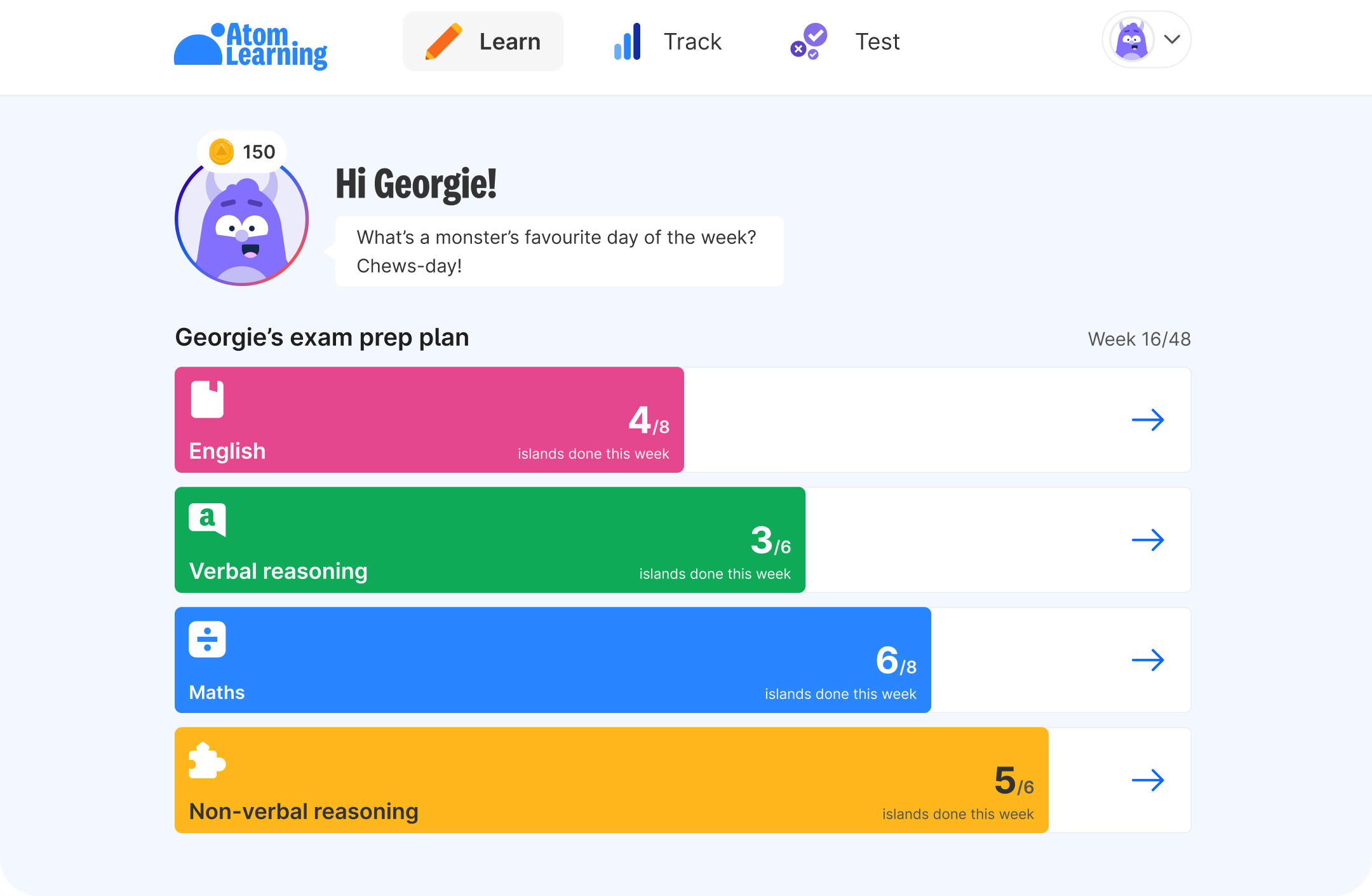
Not sure if your child is on track for the grammar school 11+? You don’t need to guess what to cover or whether they’re ready. Atom shows you exactly what to practise each week and how they’re performing, so you can stay ahead of the process without the stress.