
What is pupil premium?

Pupil premium can be a little confusing to understand. Working out whether your child is eligible and how this may benefit them may not always be crystal clear. Here, we dive into a rundown of the ins and outs of the pupil premium grant.
What is the pupil premium?
The pupil premium is a government grant for disadvantaged students from state schools in England. It was introduced to help schools improve academic and pastoral support for eligible pupils.
The amount of funding depends on individual circumstances but can range from £1,050 to £2,570 per year for each eligible pupil.
What is the service pupil premium?
It's worth noting that the service pupil premium (SPP) is a separate scheme from the standard pupil premium, and eligibility for one does not mean eligibility for the other. Atom's programme supports standard pupil premium recipients only and does not cover the service pupil premium.
The service pupil premium provides extra funding to schools whose pupils have parents in the armed forces. In the 2024–2025 financial year, schools receive £340 per eligible pupil.
To be eligible, the pupil must have at least one parent in the armed forces. This includes the full-time reserve service, or parent(s) serving in England but in the army of another nation. The pupil must also have been registered as a service child on a school census at any point over the last six years.
A child can also be eligible if a parent died whilst serving and is under the War Pensions Scheme or Armed Forces Compensation Scheme.
Does my child qualify for pupil premium?
Pupil premium funding is allocated to either schools or local authorities. Your child’s school will claim the pupil premium grant on behalf of your child.
Your child might be eligible for free school meals (FSM) if you are on universal credit and have a household income of less than £7,400 per year after tax. Even if your child meets the criteria, you will usually need to register them to receive meals at school. You can check all the eligibility criteria and register your child on gov.uk.
Who receives the pupil premium grant?
The pupil premium grant is paid directly to schools and/or local authorities.
Eligible schools are publicly funded. This includes:
- Schools maintained by the local authority
- Free schools
- Non-maintained special schools
- Academies
Funding is also provided to local authorities based on the number of children who:
- are looked after by the local authority,
- attend a private school, but the local authority pays the full tuition fee
Local authorities choose how much of the allocated funding is given to schools.
What are the benefits of the pupil premium grant?
The pupil premium grant helps fund the extra support children need to do their best in school. Schools have to allocate the funding across three areas:
- Providing targeted support. This might include small group support, one-to-one help, or catch-up support.
- Developing high-quality teaching. This may include hiring new teachers, providing new training, or investing in extra teaching assistants.
- Removing non-academic barriers to success. This can include counselling to improve social and emotional wellbeing, funding school trips for families who might not otherwise be able to afford them, or providing free breakfasts or after-school clubs to promote attendance.
The amount of funding allocated for each area differs between schools and is based on their ongoing needs.
Take control of your child’s 11+ preparation.
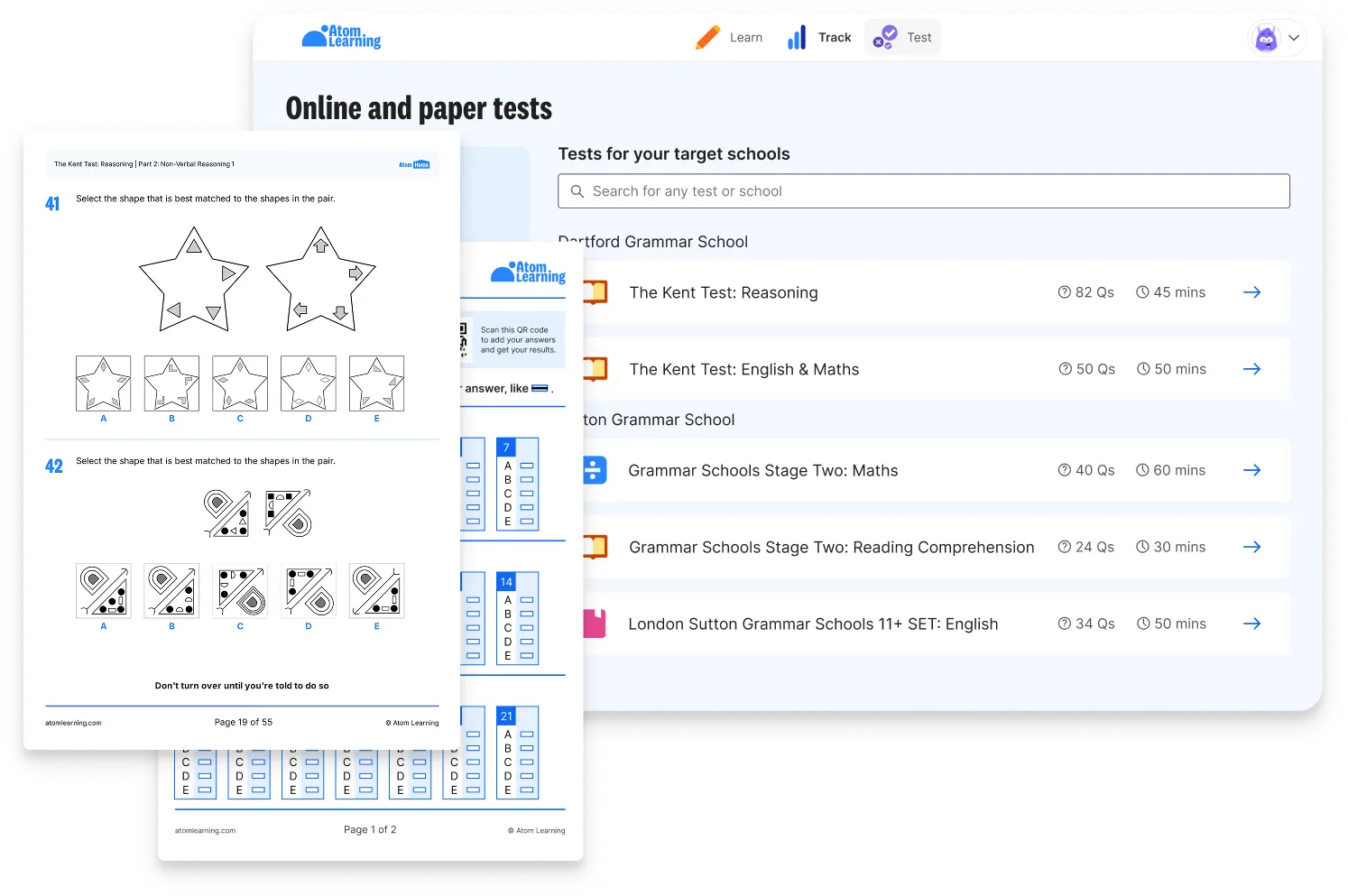
Not sure if your child is on track for the grammar school 11+? You don’t need to guess what to cover or whether they’re ready. Atom shows you exactly what to practise each week and how they’re performing, so you can stay ahead of the process without the stress.
- Follow personalised weekly exam plans that show them what to learn next.
- Download realistic 11+ practice papers and upload a photo for instant, stress-free marking.
- Track progress and see how they compare to others applying to the same schools.
Start your free trial and help your child feel fully prepared for the 11+.