Uppingham School: 13 plus entry guide
Are you considering Uppingham School for your child? We've collated everything you need to know about applying for a place in Year 9. Find out key dates, learn about the admissions process, and get tips and resources to help your child prepare.
About Uppingham School
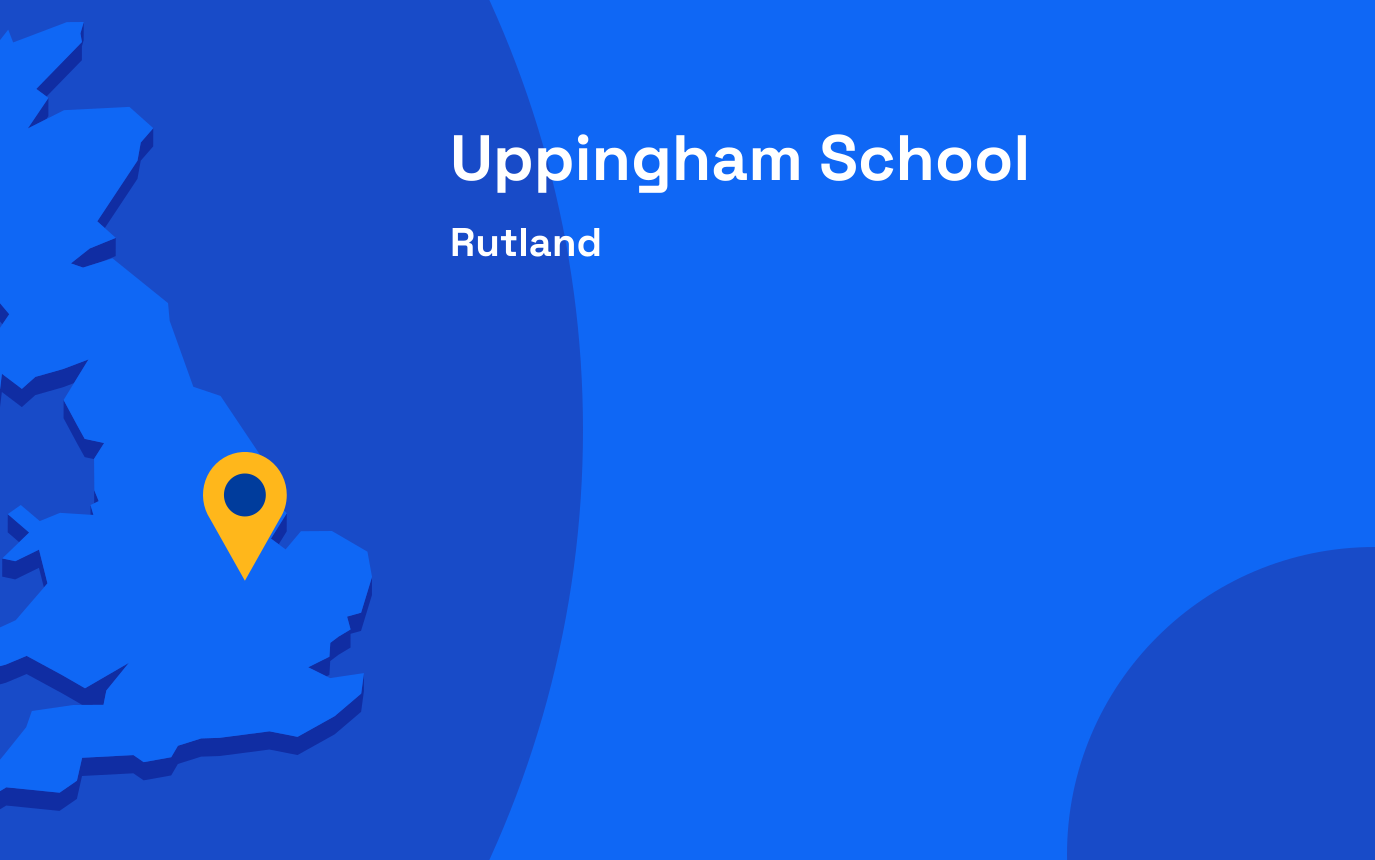
Uppingham School is a leading private boarding school in Rutland for boys and girls aged 13–18. Students live and learn in a mixture of historic and modern buildings integrated throughout the market town of Uppingham.
Uppingham provides a holistic education and develops students into intellectually curious young adults. Pupils are encouraged to question their learning, think independently, and interrogate new ideas. Students go on to study at Russell Group universities, Oxbridge, art and drama colleges, and Ivy League universities.
Uppingham has a full boarding provision, with students living in 15 boarding houses throughout the town. Each house has a family-orientated environment with students receiving round-the-clock expert care. The full boarding experience means students can make the most of an extensive co-curricular programme. This includes over 20 sports – both competitive and recreational. Students interested in the arts will enjoy three music schools, professional-standard art facilities, and frequent theatrical productions.
- Address: Uppingham School, Uppingham, Rutland, LE15 9Q3
- School type: private boarding, girls and boys aged 13–18
- Headteacher: Richard Maloney
- Number of pupils: 800+
- Fees per term: £11,358 (day), £12,915-£19,392 (boarding)
- National rank (Sunday Times Parent Power): 127
- A level results: 84.1% A*–B
- GCSE results: 67.8% 9/8/7
Key info for 13+ admissions
- Admissions contact: [email protected]
- Number of places: 150
- Registration deadline: end of May in Year 7
- Assessment date: autumn term in Year 7
- Assessment type: Year 7 pre-test, interview, Year 8 common entrance exam (or alternative) and school reference
- Open days: throughout the year – book here
Uppingham School fees and financial assistance
The fees at Uppingham School are £12,915-£19,392 per term (or £11,358 for day pupils).
Financial assistance at Uppingham
Pupils who perform well in the entrance process but whose families would not otherwise be able to afford the school fees may be eligible for a bursary. This is a means-tested financial award which can, in some cases, cover 110% of school fees (tuition plus some additional costs, such as uniform and occasional trips).
If your child is offered a place at Uppingham School and you think they would be eligible for a bursary, you will need to submit a bursary application before 31st December when they are in Year 8.
Children who require bursary support and who have been awarded a scholarship will be prioritised over non-scholarship applicants. More information is available in the school’s bursaries policy.
Uppingham School scholarships
The school offers a range of scholarships at 13 plus entry, and candidates are assessed through tests or observations, interviews and references.
- Academic: apply by January in Year 8. Exams take place in February
- Art, textiles, design & technology: apply by January in Year 8. Tests take place in March
- Drama: apply by January in Year 8. Auditions take place in March
- Music: apply by January in Year 8. Auditions take place in January/February
- Sport: apply by October in Year 8. Assessments take place in November
- Thring (leadership): apply by January in Year 8. Interviews take place in March
Non means-tested scholarships may carry a financial award of up to 5%. Larger scholarship awards can be made on the basis of financial need.
Uppingham School 13 plus admissions process
13 plus is the main entry point to Uppingham School. 150 children – 90 boys and 60 girls – join in Year 9 (Fourth Form) each year, from more than 80 schools across the UK and overseas. The vast majority of children are full boarders, but the school has some provision for day pupils.
Learn more: Applying to UK schools from overseas
1. Visit Uppingham
If you’re considering Uppingham School for your child, it’s a good idea to visit first. Seeing the school in-person will help to give you a sense of the school’s ethos and provision, to see whether your child would thrive in its environment, and to formulate ideas about your child’s potential house choices.
Visiting days provide the opportunity to hear from the headmaster, talk to current staff and pupils, and tour the boarding houses and school facilities. Personal visits include a meeting with the registrar and a tour of two boarding houses.
Public open days and personal visits can be booked through the school website.
2. 13 plus registration
You can register your child for 13 plus entry to Uppingham School at any age, but ideally before the end of May when they are in Year 6. Boys can be registered against a house at the time of application, so early registration is recommended if you have a particular boarding house in mind. Girls are only allocated to a house once offers have been made.
To register your child for Uppingham School, complete the online registration form. You will also need to pay a non-refundable registration fee of £200.
3. Year 7 pre-tests
Your child will take the Uppingham School Year 7 pre-test in the autumn term of Year 7. The pre-test consists of online assessments (90 minutes), an extended writing task (30 minutes), and a 20-minute interview with a member of Uppingham staff (either in-person at the school or online). We’ve included more information about the pre-test below.
Children who have performed well in the pre-tests and who have positive references from their current school will receive a conditional offer in mid-October in Year 7. You will need to accept by the end of the first week in November for your child to move to the next stage.
What’s on the Year 7 pre-test?
The Year 7 pre-test consists of a series of assessments, typically taken either at your child’s current school or at an overseas invigilation centre.
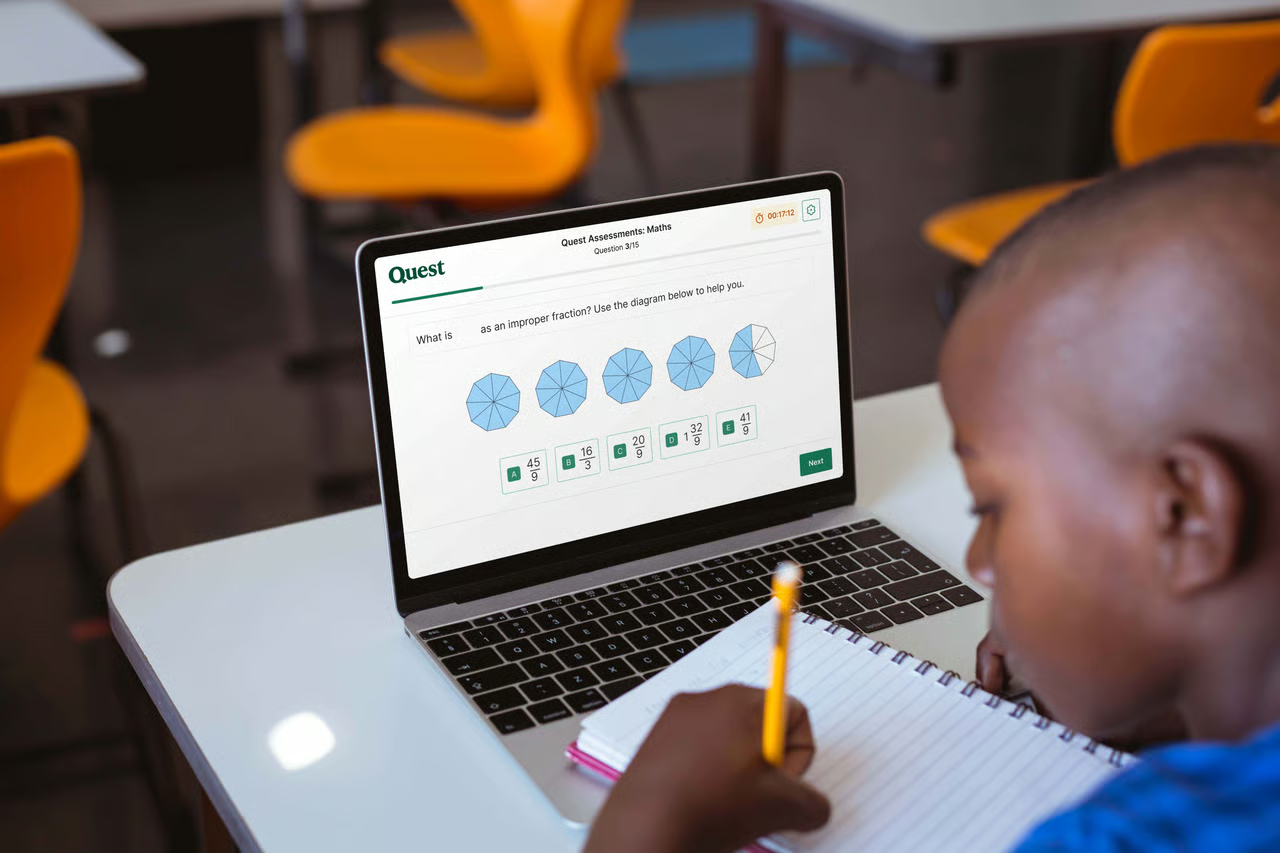
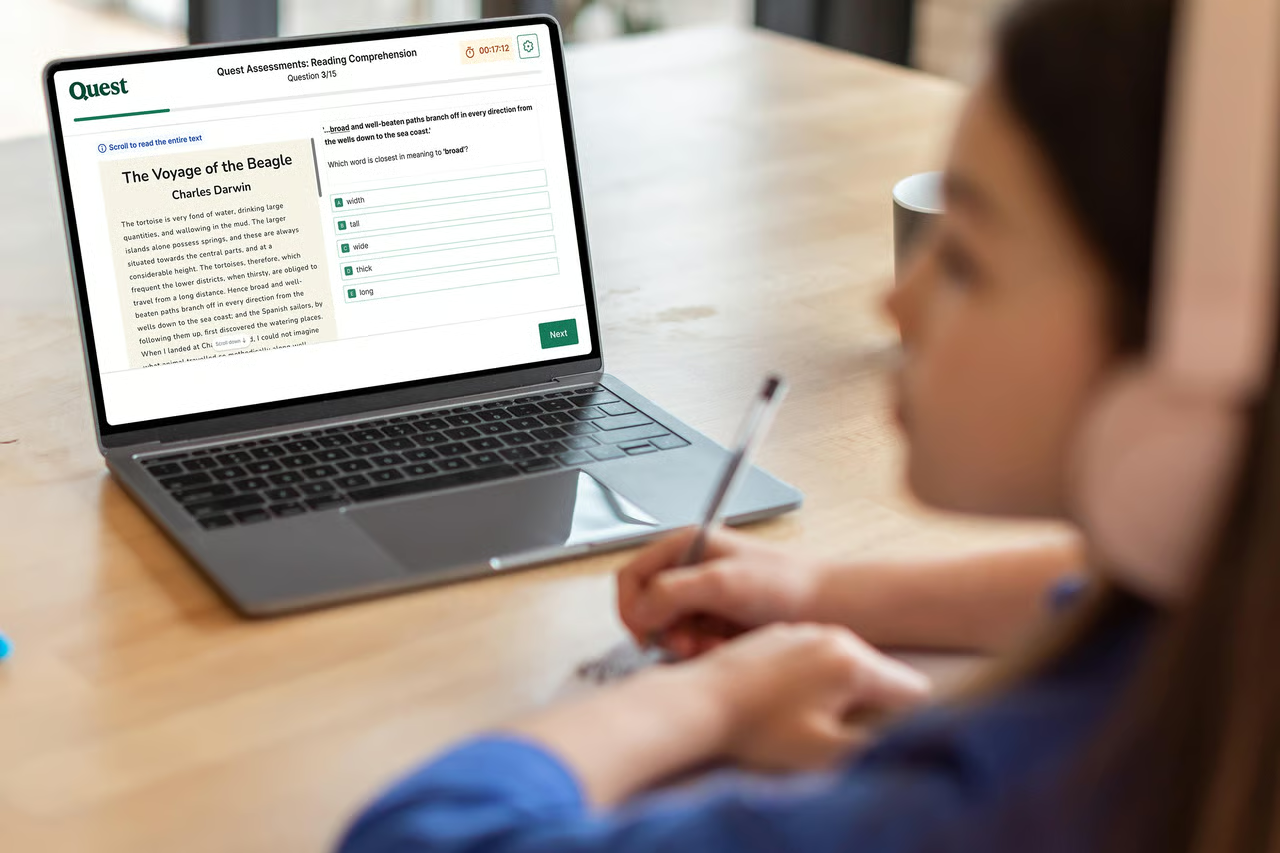
The online assessment is provided by Quest Assessments. These tests aim to improve typical entrance exams in English, maths and reasoning by providing an accessible, challenging, and enjoyable experience.
Questions are adaptive, meaning they become more difficult or less difficult depending on how your child is performing. This ensures children see questions at the right difficulty level for them, so they are stretched but not to the point where it becomes demotivating.
It takes 90 minutes to complete:
- Non-verbal reasoning: 15 minutes. Questions will test your child’s ability to understand and analyse visual information.
- Verbal reasoning: 15 minutes. Your child will be assessed on their ability to use logic and solve problems with written information.
- Maths: 30 minutes. Children will answer questions on the topics they have learnt on the maths national curriculum.
- English: 30 minutes. Questions will be aligned to the English national curriculum.
Your child will also have a 30-minute extended writing task. Take a look at our guide to creative writing (applicable to children taking exams aged 10–11) for more information, tips and guidance.
£100 off your Atom Home subscription
You have the chance to win £100 off your Atom Home subscription when you sign up to our newsletter.

4. Year 8 exams
Children who have received conditional offers for Uppingham School will sit further exams in Year 8. Prep school applicants normally take the common entrance exams, with different tests available for children applying from schools who do not offer common entrance.
Common entrance
Prospective pupils at prep-schools that offer common entrance are required to sit these exams in Year 8. The School expects a 55% average pass mark in the common entrance to fulfil their place in Year 9.
Uppingham's non-common entrance
If your child’s school does not offer the common entrance, they can take Uppingham’s own tests. These usually take place in February or March in Year 8. The test consists of two papers:
- Maths: 40 minutes
- English comprehension: 40 minutes
The non-common entrance papers are normally sat at Uppingham and are accompanied by an interview with a houseparent.
5. Final offers
Children who have performed well in the Year 8 exams and who have a positive second reference from their current school will receive final offers.
To accept your child’s offer, you will need to complete an acceptance form, provide a copy of your child’s passport, and pay an entrance deposit. This costs £1,500 – overseas candidates will also need to make an additional deposit equivalent to a term’s fees.
Top tips to prepare for entry to Uppingham School
Uppingham School assesses a variety of subjects for 13 plus entry, including content which is not traditionally taught on the national curriculum. Here are our top tips to help your child prepare for the selection process.
Build foundational knowledge
It can be tempting to jump straight into practice papers to prepare for school exams. However, this is not an effective way to learn and can cause children to feel demotivated.
Your child should have a good understanding of the content they’ve been taught in Year 5 before testing their knowledge with practice papers. Using a ‘little and often’ approach when recapping content is key, as our brains encode new information more effectively when dealing with smaller ‘chunks’ of information. Experts recommend study sessions should last no longer than 30 minutes for children aged 10–11.
Read widely
The English paper may require your child to analyse text and interpret written information. Regular reading at home is a great way to help your child build these skills.
Encourage your child to read books from different genres and by a diverse range of authors. Increasing the variety of your child’s reading will help them understand different styles, tones and purposes. Meanwhile, reading a little every day will help widen their vocabulary, sharpen their analytical thinking, and enhance their imagination.
Looking for reading inspiration? Download Atom's recommended reading list for ages 7–11.
Refine exam technique
When your child feels confident with the topics they’ve learnt in Year 5, they’ll be ready to put their knowledge to the test. Practice tests can help your child develop problem-solving skills and build confidence working under test conditions. They’re also a great way to consolidate learning and highlight knowledge gaps for further improvement.
Celebrate progress
Setting regular, achievable goals and celebrating your child’s progress – no matter how big or small – will help keep their motivation high.
Be sure to celebrate effort, as well as achievement. When your child makes mistakes or struggles to understand a particular topic, help them understand that they have the ability to improve through practice. Regular praise will help your child improve their resilience when tackling new and challenging topics.
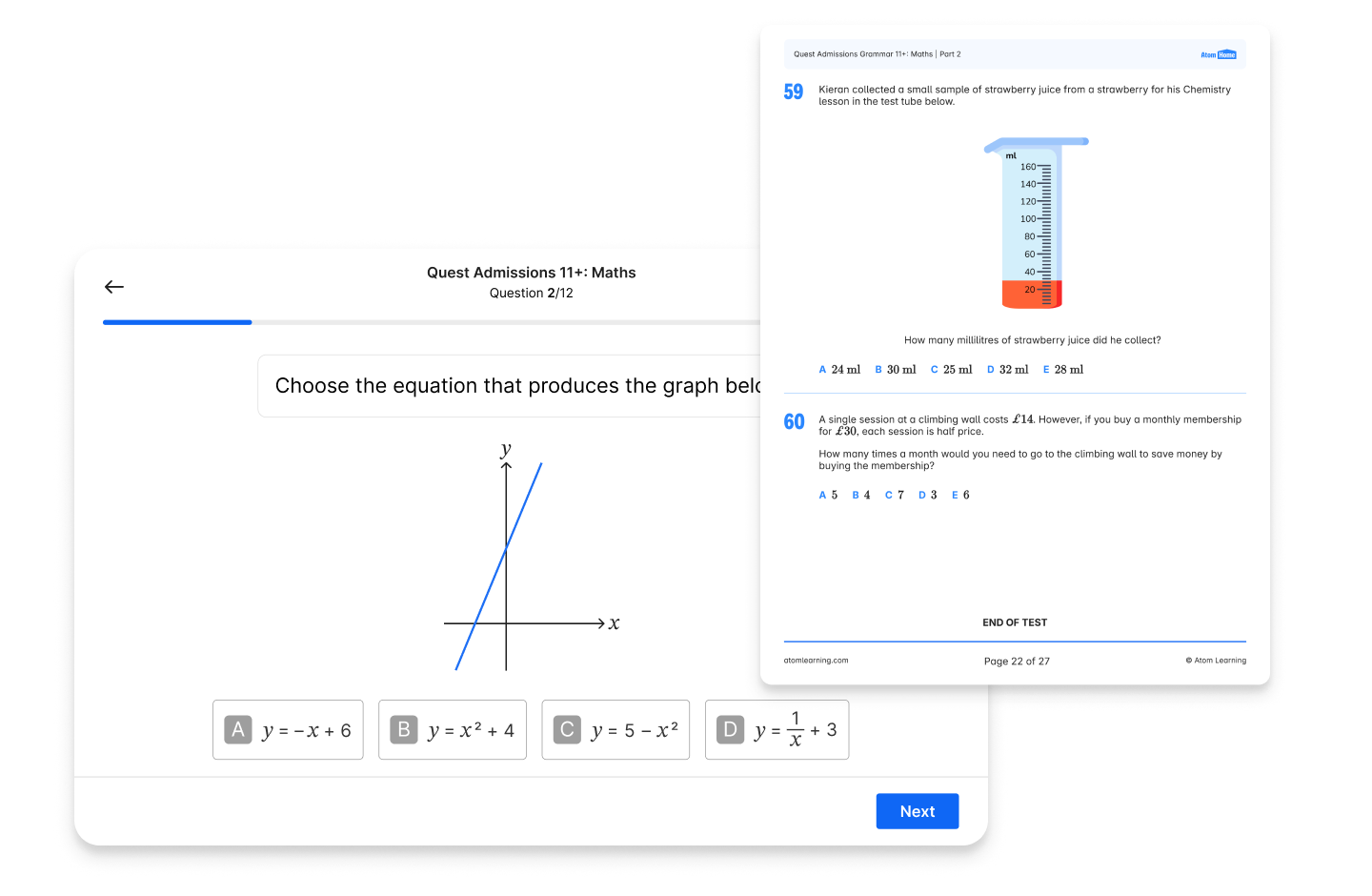
Help your child feel ready for Quest Admissions

Quest Admissions tests can vary by school, and that’s where many families feel lost. Atom helps break preparation down into simple steps, so your child can build the skills and confidence needed for success.
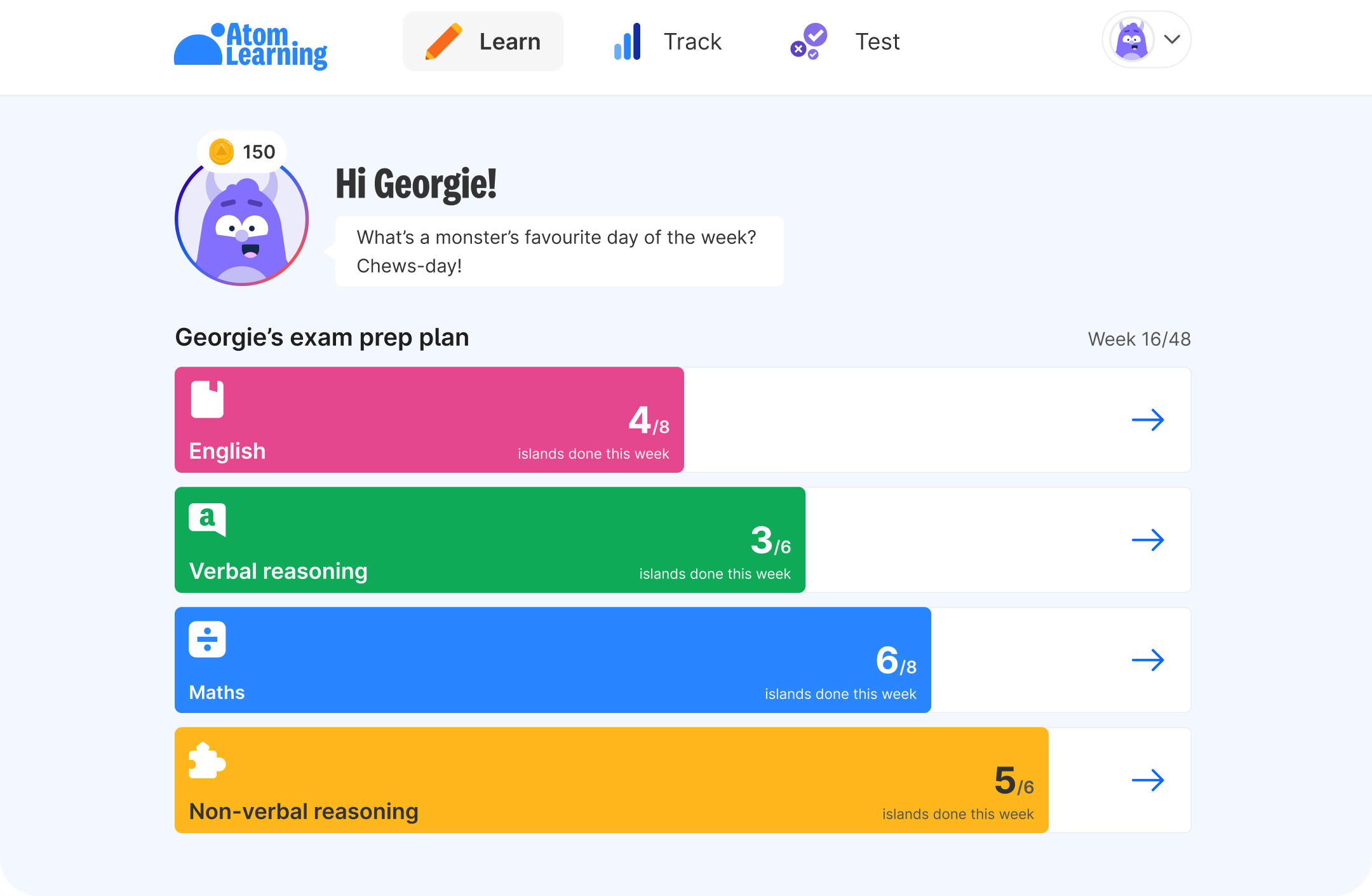
- Follow personalised weekly exam plans that focus on the key skills commonly assessed in Quest Admissions.
- Practise with replica Quest mock tests that generate new questions every time – whether you’re preparing for online tests or paper tests.
- Track progress and spot strengths and gaps early, long before the exam.
Start your free trial and help your child build the skills to succeed in Quest Admissions.