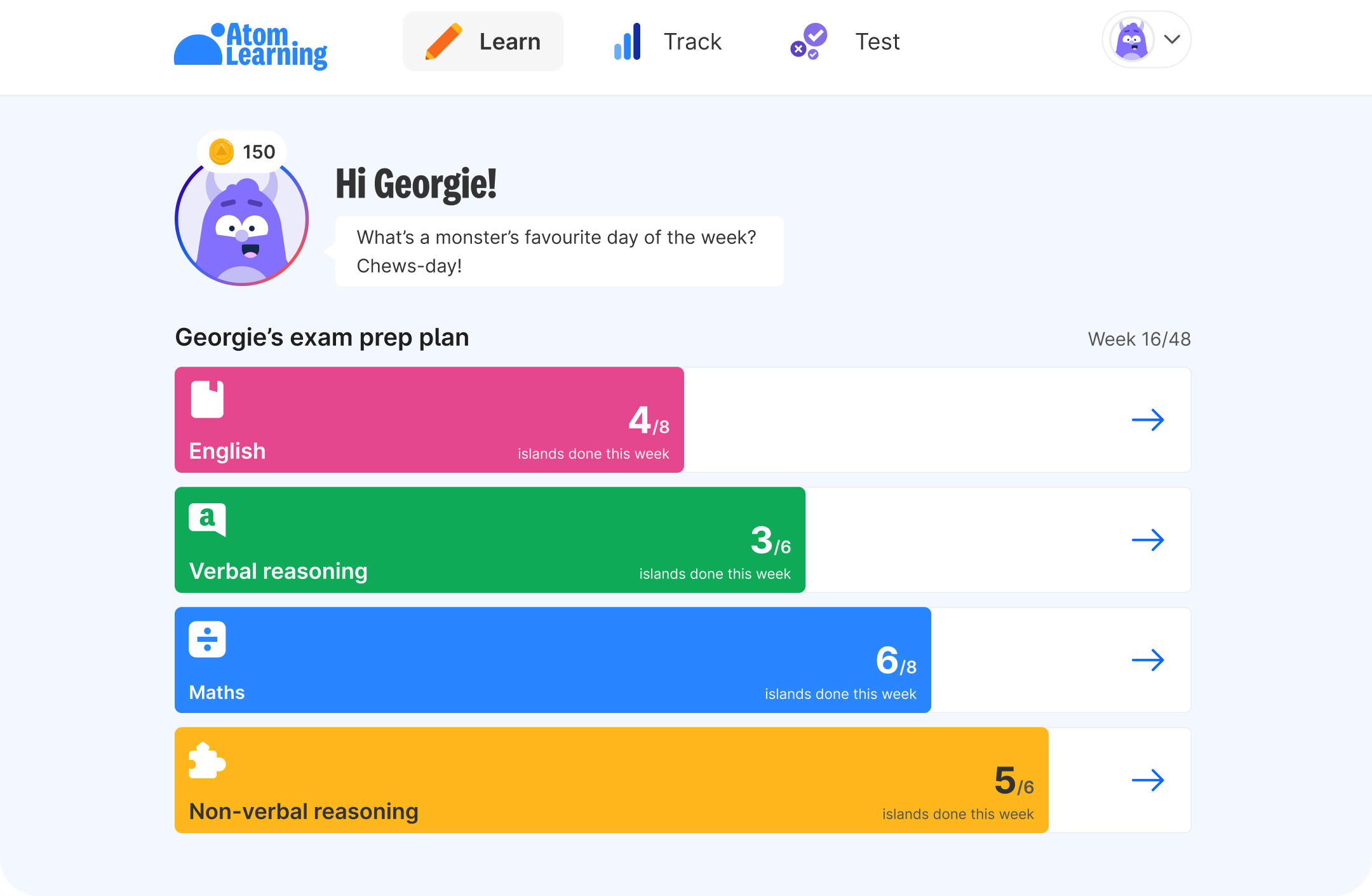
Preparing for grammar school exams in September? Gemma shares her three-month 11 plus study plan, designed to help you use this time wisely and empower your child to excel.

Is your child ready for the 11+?
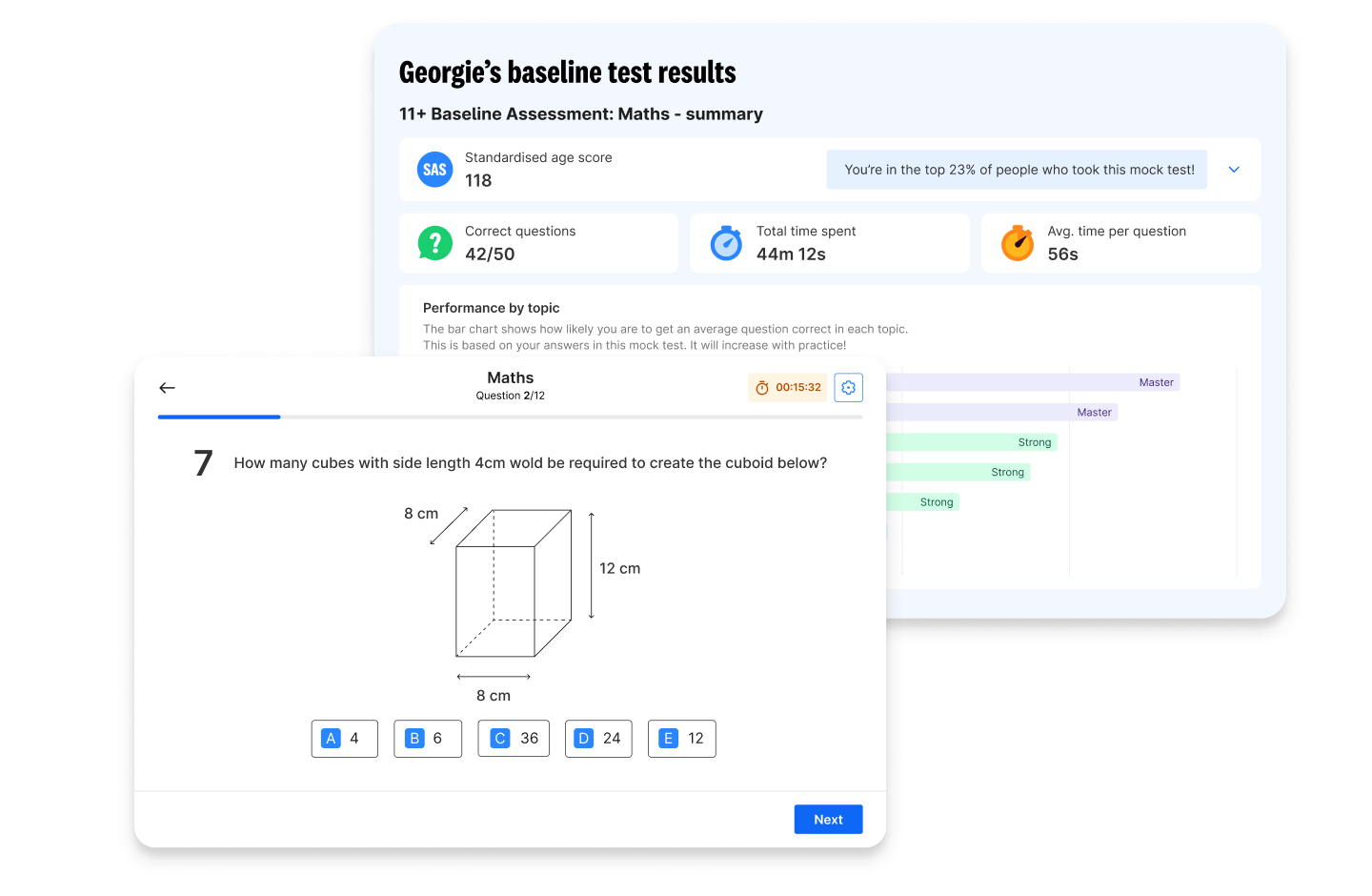
See where they stand in minutes. Atom’s free 11+ baseline tests give you an instant breakdown of their strengths and gaps. Know exactly what to focus on next and start preparing with direction, not uncertainty.
Take the free test
Building subject mastery
The 11 plus covers a lot of content and your child will be assessed on some of the most challenging Year 6 learning objectives in English and maths. It's a good idea to use the rest of the summer term and the summer holidays to build their confidence and fluency with the Year 6 objectives which they won't have seen in the classroom during Year 5. You can use these Key Stage 2 English and maths checklists as a guide for what to cover:
No items found.
Verbal and non-verbal reasoning will be new to most students as they are not taught as part of the national curriculum. It's best to familiarise your child with these subjects well in advance of the exam so there are no surprises.
Remember that all subject areas are important, so make sure you're balancing time between areas of strength and areas of difficulty. Around this time, start to tackle your child's most challenging topics by setting 3–4 custom practice activities per week.
Building exam technique
11 plus practice papers, although no substitute for building subject mastery, are a great way to build exam technique and confidence. The summer term and summer holidays are an ideal time to introduce semi-regular mock tests.
At this time, set one or two practice tests per month. Then, build up the frequency to one per week during the six weeks leading up to the exam (at the start of August). To make sure your child comes to them fresh, we don't recommend taking mock tests on a school day, or on a day when they've been revising.
Take five or ten minutes to sit down with your child after a practice exam to review their answers together, celebrate their efforts and talk through any corrections. This is an important step to consolidate and embed their learning. (Learn more about using mock tests for the 11+ here).
No items found.
Supporting your child's wellbeing
Even as the exam date draws closer, it's important to allow flexibility. If your child is feeling tired or demotivated, take a 24-hour break from all exam preparation. Having a good night's sleep, taking part in some hobbies or simply having fun will help them feel refreshed.
Exams are a natural part of a child’s education journey but they can also be stressful. If low-key practice focused on long-term learning is part of your child's regular routine, then exam revision hopefully won't feel like a big deal.
However, children can still become overwhelmed in the lead up to the 11 plus. It might be the first formal exam they have taken where the stakes feel high. It's important to set realistic expectations. Keep the exam in perspective and remind your child that this is just part of the process of finding the right school for them. No matter what the outcome of the exam, you will find a school where they will be happy and thrive.
Checking in regularly can help your child to open up if things get too much. Remember that not all fears will be obvious and might be missed. Learn how to help your child manage test anxiety here.
Grammar school admissions: a recap
Now is a good time to check back on your target school's website and make sure you have all key dates noted down. 11 plus registration is likely to be closing soon with three months to go until the exam.
Grammar school exams take place in September while your child is in Year 6. Although the timing and structure of the exam papers vary between schools and regions, the content of the test is very similar across the country. Your child will be assessed on:
- Advanced Key Stage 2 English and maths
- Verbal reasoning and non-verbal reasoning
Competition for grammar school entry across the UK is fierce, so we strongly recommend ensuring your child has ample time to practice so they feel confident on exam day.
No items found.
No items found.
Take control of your child’s 11+ preparation.
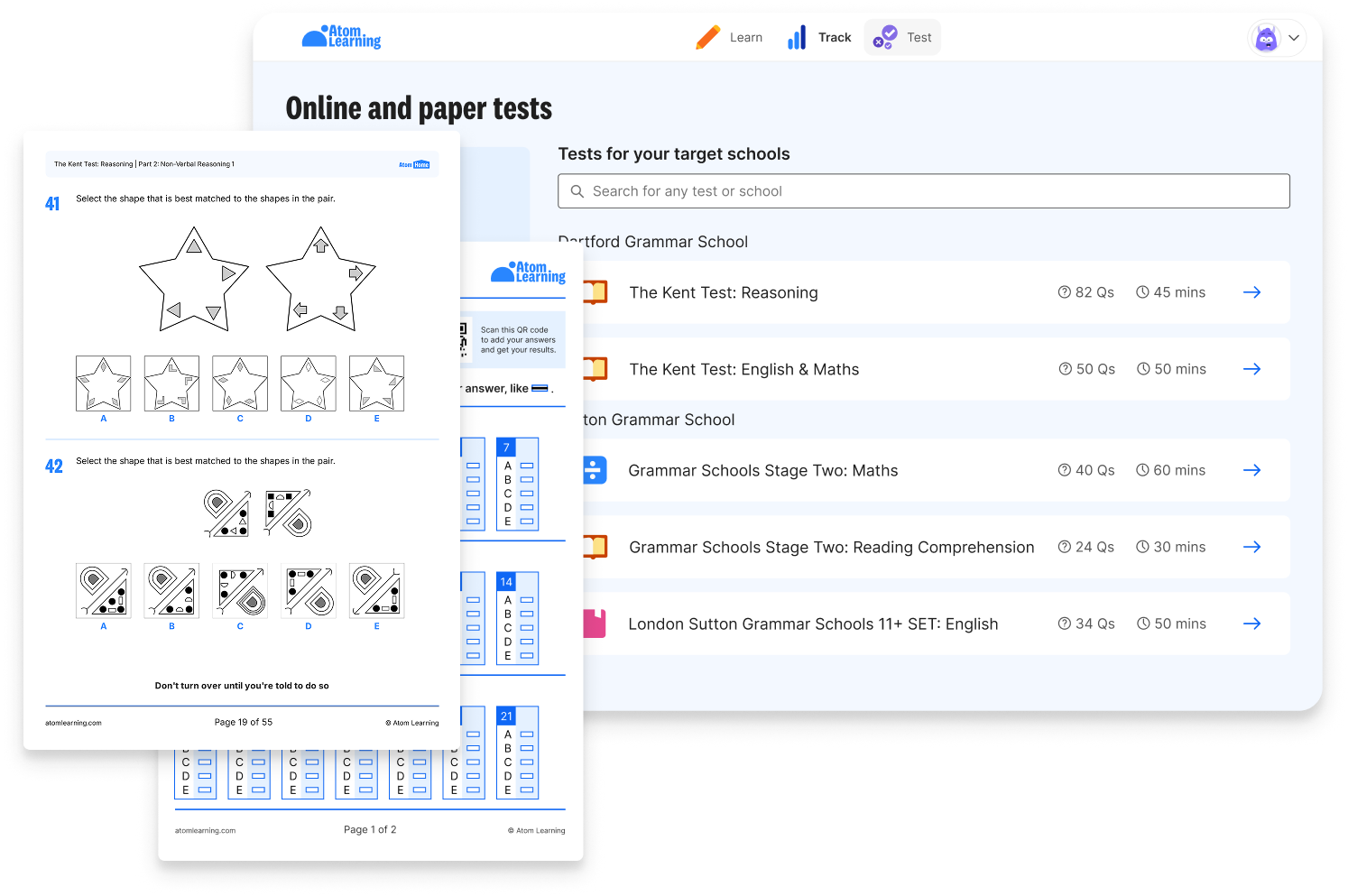
Not sure if your child is on track for the grammar school 11+? You don’t need to guess what to cover or whether they’re ready. Atom shows you exactly what to practise each week and how they’re performing, so you can stay ahead of the process without the stress.
- Follow personalised weekly exam plans that show them what to learn next.
- Download replica 11+ practice papers and upload a photo for instant, stress-free marking.
- Track progress and see how they compare to others applying to the same schools.
Endorsed by grammar schools, trusted by families.
Start your free trial and help your child feel fully prepared for the 11+.
Try Atom for free