Are you considering a UK independent school education for your child? Find out everything you need to know in this guide, including:
- The origins of independent schools
- The advantages and disadvantages of independent schools
- How to apply and secure a place at an independent school
What is an independent school?
Independent schools, also known as private schools, operate outside of government funding. Instead, they are funded through tuition fees paid by families. These schools have complete control over how they are run, including the curriculum they teach, their admissions process, and the overall learning environment they create.
UK independent schools have a long history. They began in the medieval period, when education was provided by religious groups. Over time, some schools became independent from the church or government, choosing how they were run and funded. That independence still exists today. These schools manage themselves, charge fees and decide what they teach, making the name ‘independent’ just as true now as it was then.
Today, the independent school sector is diverse. It includes large day and boarding schools and smaller preparatory and specialist schools that accommodate different educational needs. While some independent schools remain single-sex, many are now co-educational.
Are independent schools free?
Independent schools in the UK are not free; they charge tuition fees to cover the cost of education, facilities, and extracurricular activities. There is no set fee, with the price varying depending on each school’s location, reputation, facilities, and whether it offers day or boarding places.
In recent years, many independent schools have been committed to widening access and providing financial assistance through scholarships and means-tested bursaries:
Independent school scholarships:
Independent school scholarships are designed to recognise and support children with exceptional talent in a particular area, such as academics, music, sport, art or drama. Each school sets its own criteria, so it’s a good idea to check the admissions section on school websites or contact schools directly to find out what’s available and how to apply.
If your child is shortlisted, they may be invited to take part in extra assessments like an exam, an audition or a practical task, depending on the type of scholarship.
If awarded a scholarship, you could receive a fee reduction. In return, your child will usually be expected to stay committed to that subject and take an active role in that part of school life.
Means-tested bursaries:
Means-tested bursaries help families with the cost of independent school fees. They provide a discount on fees, which you will not need to pay back.
To find out if you’re eligible, you’ll need to complete a financial assessment during the admissions process. This looks at things like your income, savings, and regular expenses. Some schools carry out this process themselves, while others work with external organisations to make sure it’s fair and confidential.
If you are awarded a bursary, the school will offer a fee reduction, depending on your family’s financial situation.
It’s a good idea to check your chosen schools’ websites early, as bursary deadlines can be earlier than other application stages.
How can my child get a place at an independent school?
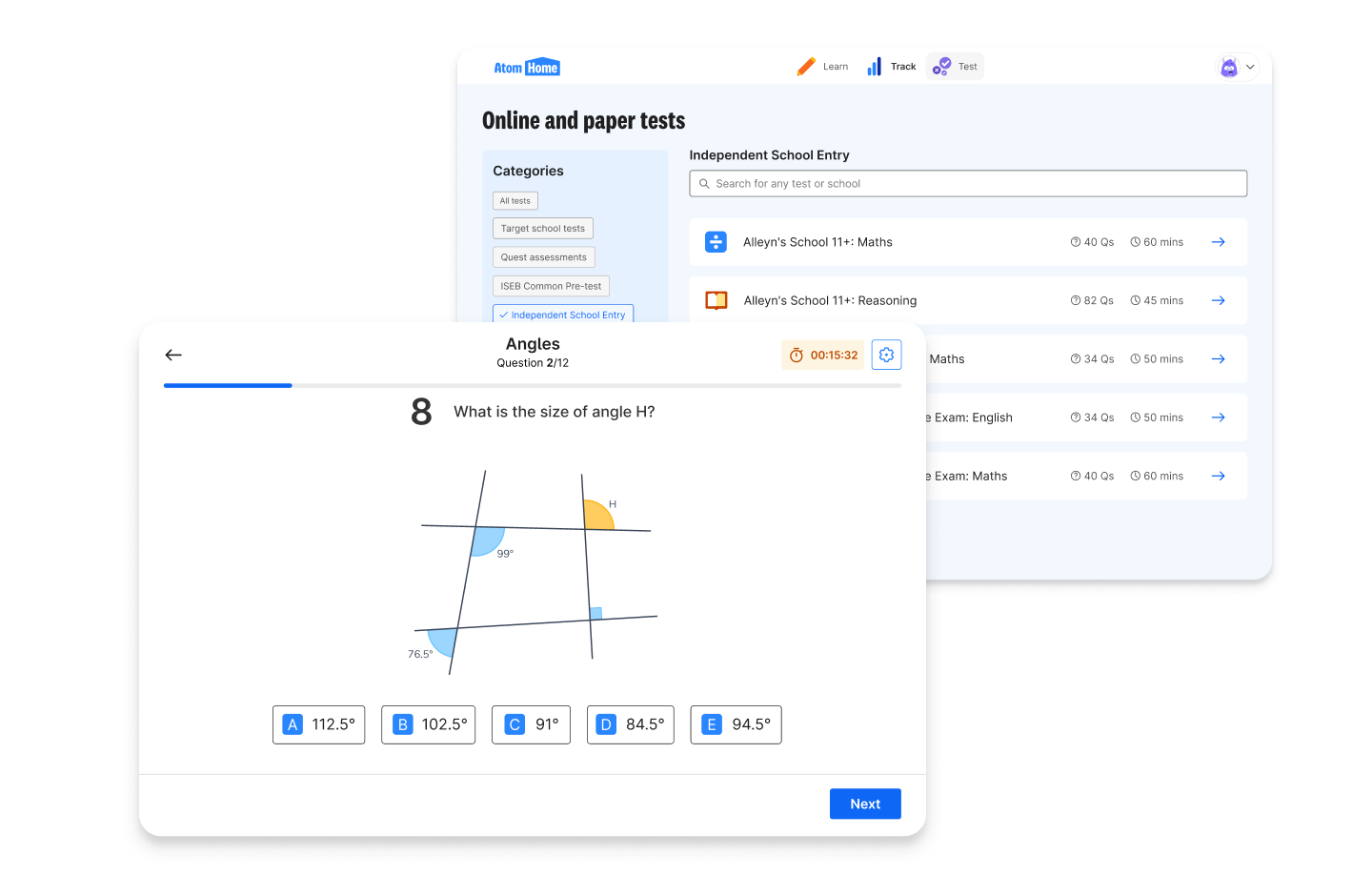
Some independent schools are academically selective. For these schools, your child will need to take entrance exams as part of the admissions process. The 11+ is the most common entry point, but some schools also offer entry at 10+ and 13+.
It’s important to note that the 11+ for independent schools is often different from the version used by grammar schools. Each school sets its own format, and the content can vary depending on whether the school uses standardised tests or their own papers.
Independent entrance school exams:
Children usually take the entrance exam during the autumn or spring term of Year 6. The exact format varies from school to school, but most assessments cover a combination of the following subjects:
- English: This may include reading comprehension, creative writing, or both. Children are assessed on their spelling, punctuation, grammar, and vocabulary.
- Maths: Based on the Key Stage 2 national curriculum, questions test numerical reasoning and problem-solving skills.
- Verbal reasoning: Measures how well your child can understand and reason with written information, including relationships between words and logic-based questions.
- Non-verbal reasoning: Assesses your child’s ability to solve problems using visual information such as patterns, shapes, and diagrams.
Some independent schools set their own entrance exam papers, while others use standardised tests provided by external exam boards. Below are some of the most common assessment providers used for 11+ entrance exams:
Click the links to explore our detailed guides and learn more about each exam's structure, format, and content.
.png)