Back to blog

Pate's Grammar School 11+ guide

By
Atom
|
October 9, 2026

Atom Learning is partnered with Pate’s Grammar School. You can read more about our partnership here.

Applying to Pate's Grammar School for September 2028? This guide covers the FSCE entrance test on Saturday 3 July 2027, the qualifying score, how the 150 Year 7 places are allocated and the key dates for September 2028 entry.

The entrance test has changed. From September 2028 entry, the Gloucestershire grammar schools use the FSCE entrance test, set by Future Stories Community Enterprise. It replaces the previous Gloucestershire Grammar Schools Entrance Test, it is sat in the summer term of Year 5 rather than the autumn of Year 6, and it contains no verbal or non-verbal reasoning.

Pate's Grammar School 11+ at a glance

  • School type: co-educational grammar school
  • Location: Cheltenham, Gloucestershire
  • Admissions contact: office@patesgs.org
  • Number of places in Year 7: 150 (2027-entry figure — Pate's Grammar School confirms each year's admission number in its determined arrangements, published the spring before entry.)
  • Qualifying score: not yet published for 2028 entry (see below)
  • 11+ test: FSCE entrance test (three papers, each about 45–60 minutes)
  • Test date for 2028 entry: Saturday 3 July 2027

Source: FSCE entrance test information and FAQs for Gloucestershire parents, and the school's admissions policy. Last checked October 2026.

Key dates for September 2028 entry

The Gloucestershire grammar schools have published the full timetable for the first FSCE test. It is sat in the summer term of Year 5, much earlier than the previous September test, so registration opens in February.

Key dates for Pate's Grammar School 11+ entry in September 2028, with expected windows where the school has not yet confirmed exact dates.
DateWhat happens
Monday 8 February 2027Registration opens at 12 noon
Friday 19 March 2027Registration deadline, 12 noon
Saturday 3 July 2027Entrance test, held at one of the Gloucestershire grammar schools
October 2027Results sent to parents
Sunday 31 October 2027Deadline to apply for secondary school places through your home local authority. This date falls on a Sunday.
Wednesday 1 March 2028National offer day for secondary school places

Worried about missing an important 11+ deadline?

Get grammar school reminders with the key dates for your target school delivered straight to your inbox.

• Registration deadlines
• Exam dates
• Revision nudges

All tailored to your child. We'll make sure you're always prepared for what's next.

Send me grammar school reminders

How to apply to Pate's Grammar School

Pate's Grammar School is selective, so your child needs to sit the 11+ test to be considered for a place.

For 2028 entry you register your child for the FSCE entrance test online through the Gloucestershire grammar schools' websites during the registration window. Your child sits the test once, and each grammar school you choose to share the score with tells you whether your child has reached its qualifying standard.

Once you have your child's result, you apply by naming Pate's Grammar School on your common application form, which goes to your home local authority. For September 2028 entry the deadline is Sunday 31 October 2027. As it falls on a Sunday, you may find it easier to submit your form in the days before.

Reaching the qualifying score makes your child eligible, but it doesn't guarantee a place. If more qualifying children apply than there are places, the school uses its oversubscription criteria, set out further down this page.

What will my child be tested on?

The FSCE entrance test is made up of three separate papers, which may be sat in any order. Each paper typically lasts 45 to 60 minutes, and a break may be scheduled between them. All written elements are sat on one day, at one of the Gloucestershire grammar schools.

Questions are a mix of multiple choice, constrained response and creative writing. Papers are scanned and marked using optical mark recognition, with people checking anything inconsistent, and the results are age-standardised.

There is no verbal or non-verbal reasoning. FSCE's position is that non-verbal reasoning is not part of the Key Stage 2 national curriculum, so it isn't a fair thing to assess.

Everything in the test comes from Key Stage 2 subjects taught up to and including the end of Year 5. Eleven subjects may appear:

Qualifying score: not yet published for 2028 entry. Pate's Grammar School's test is provided by FSCE from the July 2027 test onwards. Scores from previous years were set against the previous Gloucestershire test and don't carry across to the new one. The school will publish a qualifying standard for the new test in its own time.
The Key Stage 2 subjects the FSCE entrance test for Gloucestershire grammar schools may draw on, and what each one assesses.
SubjectWhat the test is looking for
Art & DesignEvaluating and analysing creative works, and the language of art, craft and design
ComputingComputational thinking, algorithms and solving problems with unfamiliar technology
Design & TechnologyHow products are designed and made to solve real problems, and evaluating existing designs
EnglishUnderstanding texts and using language accurately, with a creative writing element
GeographyPhysical and human processes, and how landscapes and environments form and change
HistoryWeighing evidence, thinking critically and developing perspective
LanguagesCuriosity about how other languages work
MathsProblem-solving, logical reasoning and fluent application of numeracy
MusicListening to, reviewing and evaluating music across periods, genres and traditions
Physical EducationMovement skills in isolation and combination, and flexibility, strength, technique and control
ScienceExploring and comparing everyday phenomena, and analysing relationships between variables

How are places allocated at Pate's Grammar School?

If more children reach the qualifying standard than there are 150 Year 7 places, Pate's Grammar School offers places in the order below. This order comes from the school's admissions policy for 2027 entry. The school sets its 2028-entry policy separately, and we'll update this table if anything changes.

Pate's Grammar School oversubscription criteria in priority order, from the 2027 entry admissions policy.
PriorityWho it covers
1Looked after and previously looked after children (including those adopted from care abroad) who reach the qualifying standard, or score within 15% of the 150th-ranked standardised score
2Priority Places, up to a maximum of 15, for disadvantaged students who score within 15% of the 150th-ranked standardised score. These go in this order: Pupil Premium students with an Appendix 1 postcode; Pupil Premium students elsewhere in Cheltenham Borough; other students with an Appendix 1 postcode; Pupil Premium students with an Appendix 3 postcode; all other Pupil Premium students
3Non-Priority Places (Local): students who reach the qualifying standard and live in Gloucestershire or an Appendix 3 postcode, by rank order, until categories 1 to 3 total 105 places
4Non-Priority Places (UK wide): at least 45 places for students who reach the qualifying standard and live anywhere in the UK, by rank order
No items found.

Within each category, places go in rank order of test score. Appendix 1 lists Cheltenham postcodes in the most income-deprived areas (IDACI deciles 1 to 3); the policy lists the postcodes in full.

Does Pate's Grammar School have a catchment area?

Pate's doesn't have a catchment area, but where you live does matter. Up to 105 places (including looked after children and Priority Places) go to children living in Gloucestershire or in the postcodes listed in the policy's Appendix 3, and at least 45 places are open to qualifying children living anywhere in the UK. Priority Places favour Pupil Premium children and children from the Cheltenham postcodes listed in Appendix 1.

If two or more children have the same score, the child living closer to the school, measured in a straight line from the front door at the address given at registration to the school's front entrance, ranks higher. If children still can't be separated, lots are drawn, supervised by someone independent of the school.

If you don't live close to the school, it's worth thinking about how your child will get there every day. How long will the journey take? What transport options are available? Will they be travelling independently or with support?

A longer or more complex journey can affect your child's daily routine, including how much time they have for homework, rest and after-school activities. It's a good idea to think about how manageable the school run will be and whether it will work for your family day to day.

How can I help my child prepare for the FSCE test?

Atom Learning is not an official or authorised source of information about FSCE assessments. This guide is based on publicly available information. FSCE assessments are tailored to each school and can change from year to year. For definitive information, always use the familiarisation materials published by the school you are applying to.

There are no FSCE past papers, and the subjects and question styles change each year — so there is no pattern to learn. What the test does reward is a confident grasp of the Key Stage 2 curriculum up to the end of Year 5, applied to unfamiliar questions.

Build solid KS2 knowledge

Because the FSCE test draws on what your child has already been taught, the strongest preparation is making sure those foundations are secure — across the curriculum, not just English and maths.

With Atom Home, your child gets:

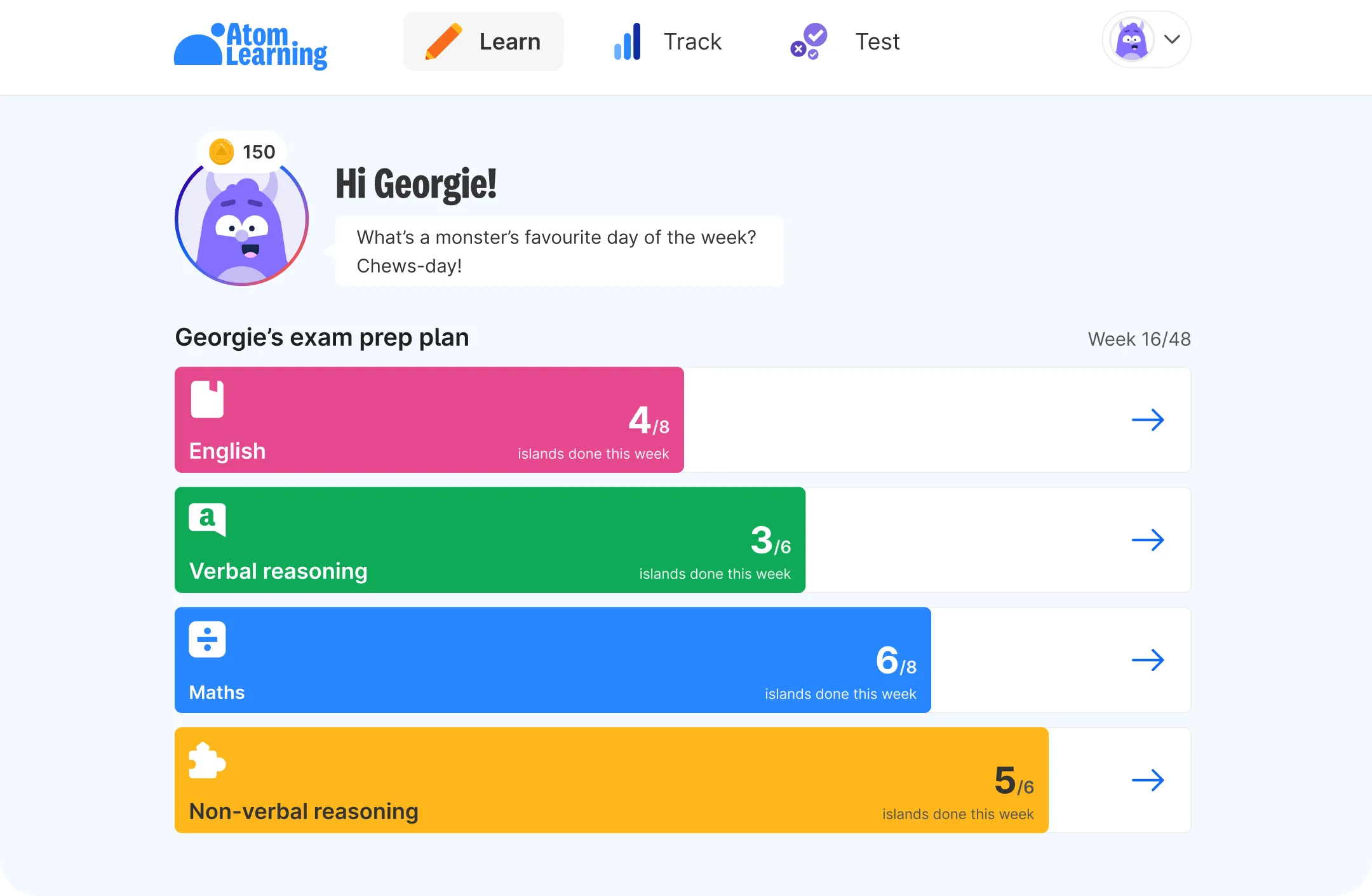
  • a personalised weekly learning plan tied to their target schools
  • adaptive questions that meet them at the right level of difficulty
  • coverage of KS2 topics across the curriculum

Enter your target schools on Atom Home and get started with a free trial today.

Encourage regular reading

Reading underpins almost every part of the FSCE test — comprehension, vocabulary, and the creative writing paper. Aim for 10–15 minutes a day, with variety: fiction and non-fiction, different genres and authors.

Explore Atom's free reading and writing starter kit for age-appropriate suggestions.

Get comfortable with the format

The school publishes a free Familiarisation Guide showing the layout of the papers and answer sheets. Read it with your child so the test looks familiar on the day.

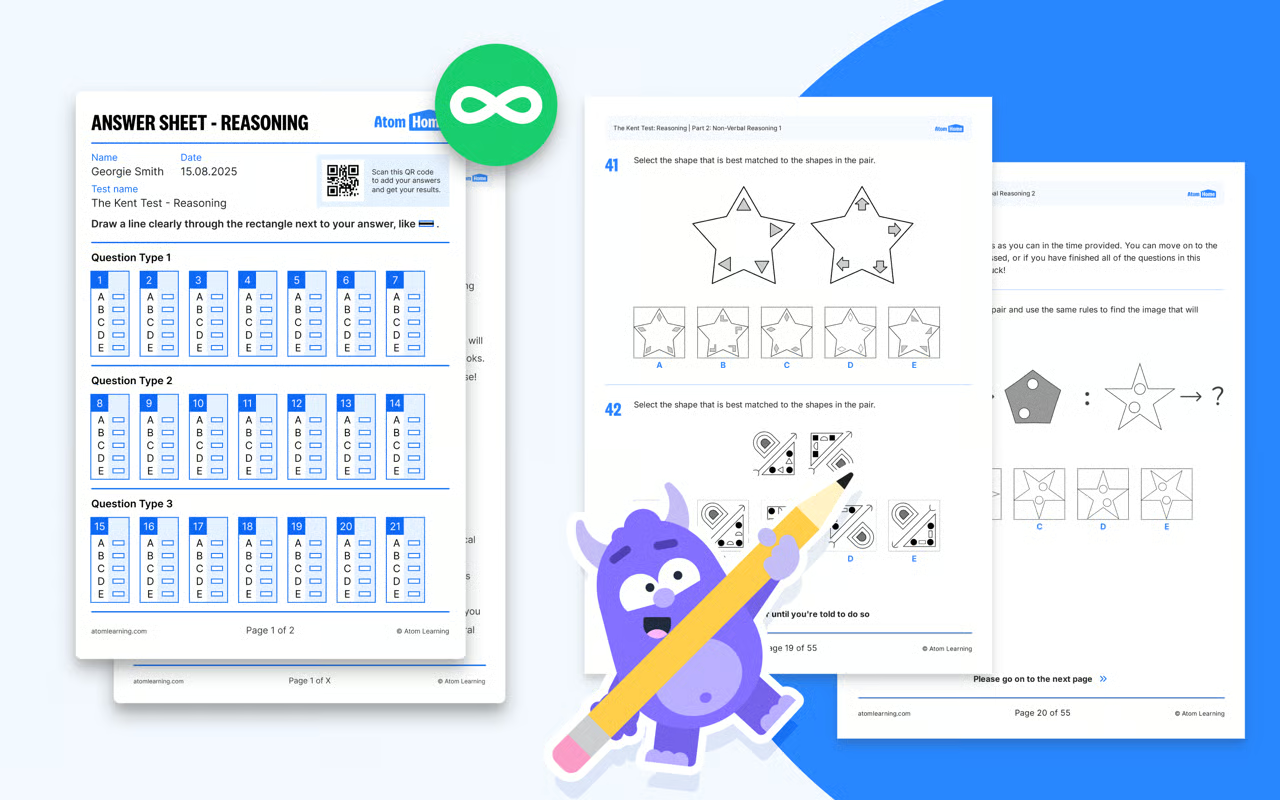
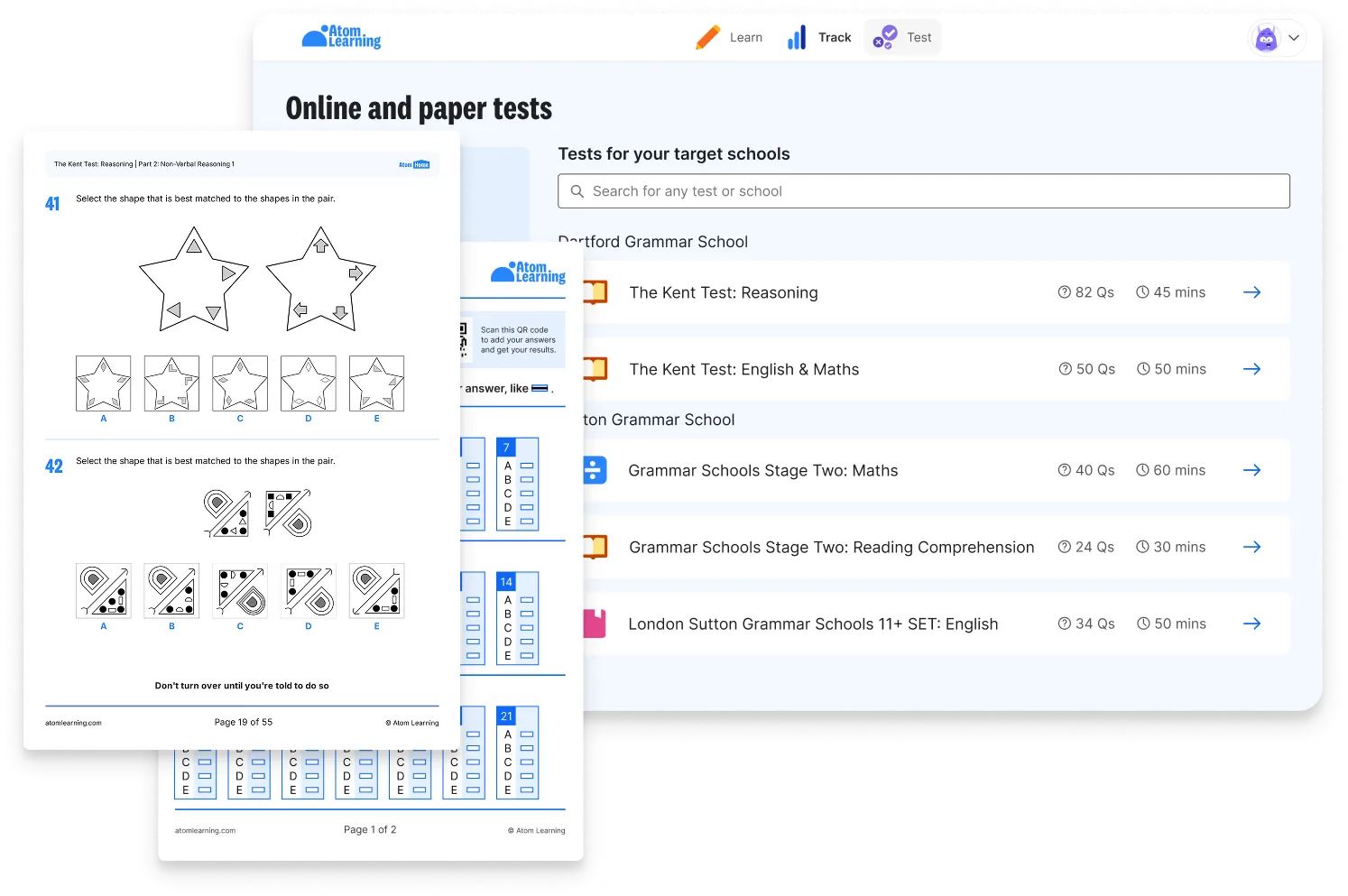
Beyond that, Atom's practice papers build the habit of working accurately under timed conditions and filling in an answer sheet correctly. Photograph the answer sheets and upload them for instant marking, a Standardised Age Score — the same age-standardised basis FSCE uses — and a clear view of which topics to work on next.

Celebrate progress, not just scores

Atom's progress tracking shows how your child is doing across topics and how that is developing over time, so you can keep motivation steady and focus on consistent improvement.

No items found.

Take control of your child’s 11+ preparation.

Not sure if your child is on track for the grammar school 11+? You don’t need to guess what to cover or whether they’re ready. Atom shows you exactly what to practise each week and how they’re performing, so you can stay ahead of the process without the stress.

Endorsed by grammar schools, trusted by families.

Start your free trial and help your child feel fully prepared for the 11+.

Try Atom for free