If you’re exploring grammar school options in Bexley, South London, this guide walks you through the Bexley Selection Test (often called the 11+). Keep reading to:
Find out more about grammar schools in Bexley
Learn about the Bexley Selection Test – the local 11 plus exam
Discover which subjects your child will be tested on
Plus, get exclusive resources to help your child prepare!
Which schools use the Bexley Selection Test?
There are four grammar schools in Bexley that use the Selection Test:
If your child applies to more than one, they only need to take one test.
Dates for your diary
The deadline to apply for entry in 2026 has now passed.
Registration opened: Early May 2025
Registration closed: End of May 2025
Bexley test dates: Early-mid September 2025
Results from the Bexley Selection Test: Mid-October 2025
National secondary school application deadline: 31st October 2025
National school offers day: Monday, 2nd March 2026
Dates can vary, so always check with your target schools.
What is the Bexley Selection Test?
The Bexley Selection Test is an academic exam taken in Year 6, in September - known as the 11+. It is used for admissions for Bexley grammar schools. If your child is at a Bexley primary school, they take it at their school. If not, they go to one of the grammar schools or an assigned site.
All four grammar schools in the borough use the Bexley Selection Test. This means that your child only needs to take the test once, even if they’re applying to two or more grammar schools in the borough.
If your child is also applying for a grammar school in Bromley, Kent or Medway, they will need to take a separate exam in addition to the Bexley Selection Test. Find out more information about these exams:
The Bexley Selection Test consists of two test papers which are provided by GL Assessment.
Each paper contains approximately 50 minutes of questions, plus time for instructions and practice questions. All the questions in the Bexley Selection Test are multiple-choice.
Both papers are divided into smaller, individually-timed sections. Each paper includes a mixture of questions in:
English comprehension: how well your child can understand, interpret, and analyse written text
Maths: Key Stage 2 content taught up to the end of Year 5
Verbal reasoning: using logic to solve problems with written information, like letters, words, symbols and numbers
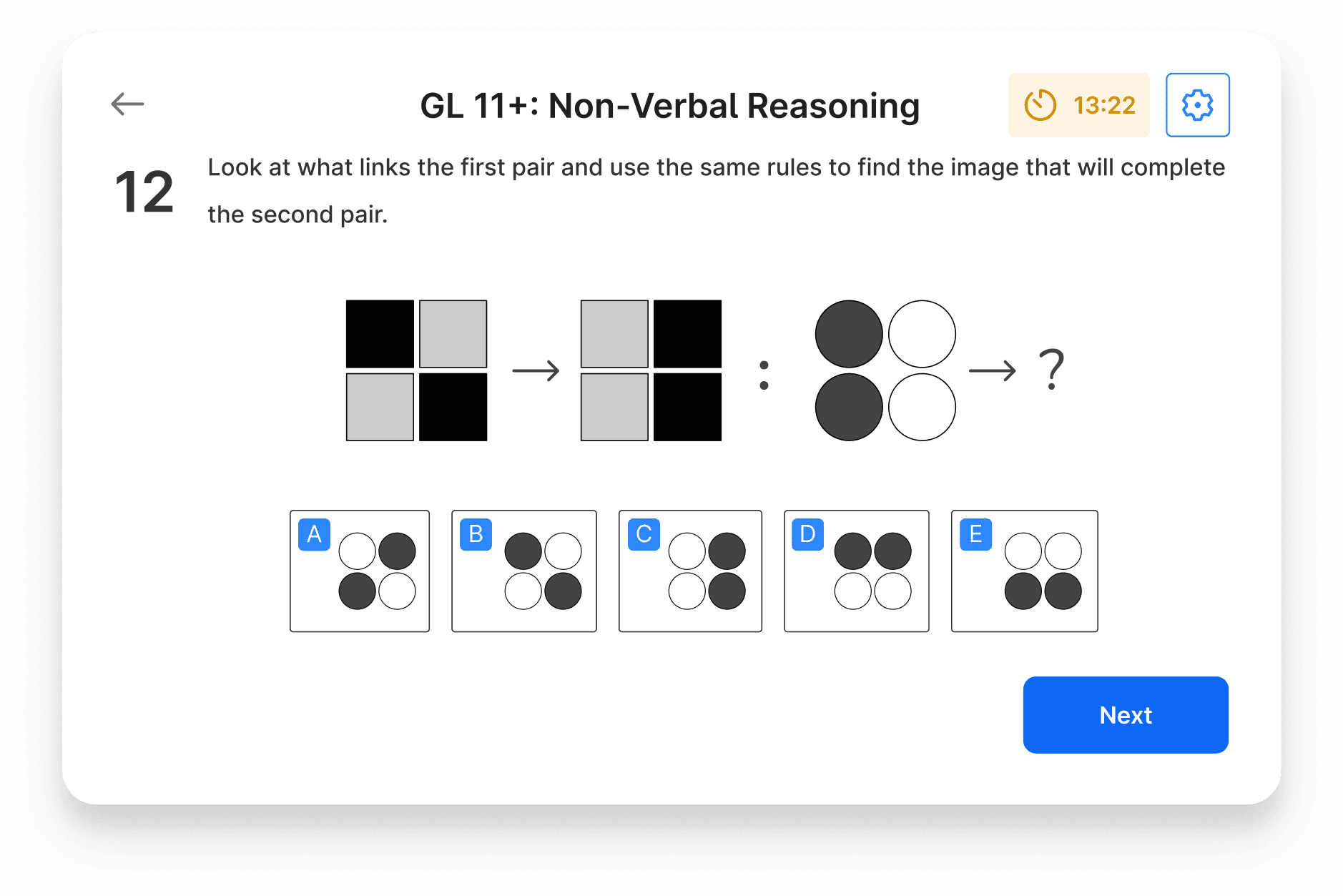
Non-verbal reasoning: using logic to solve problems with visual information, such as diagrams, shapes and pictures
Is your child ready for the 11+?
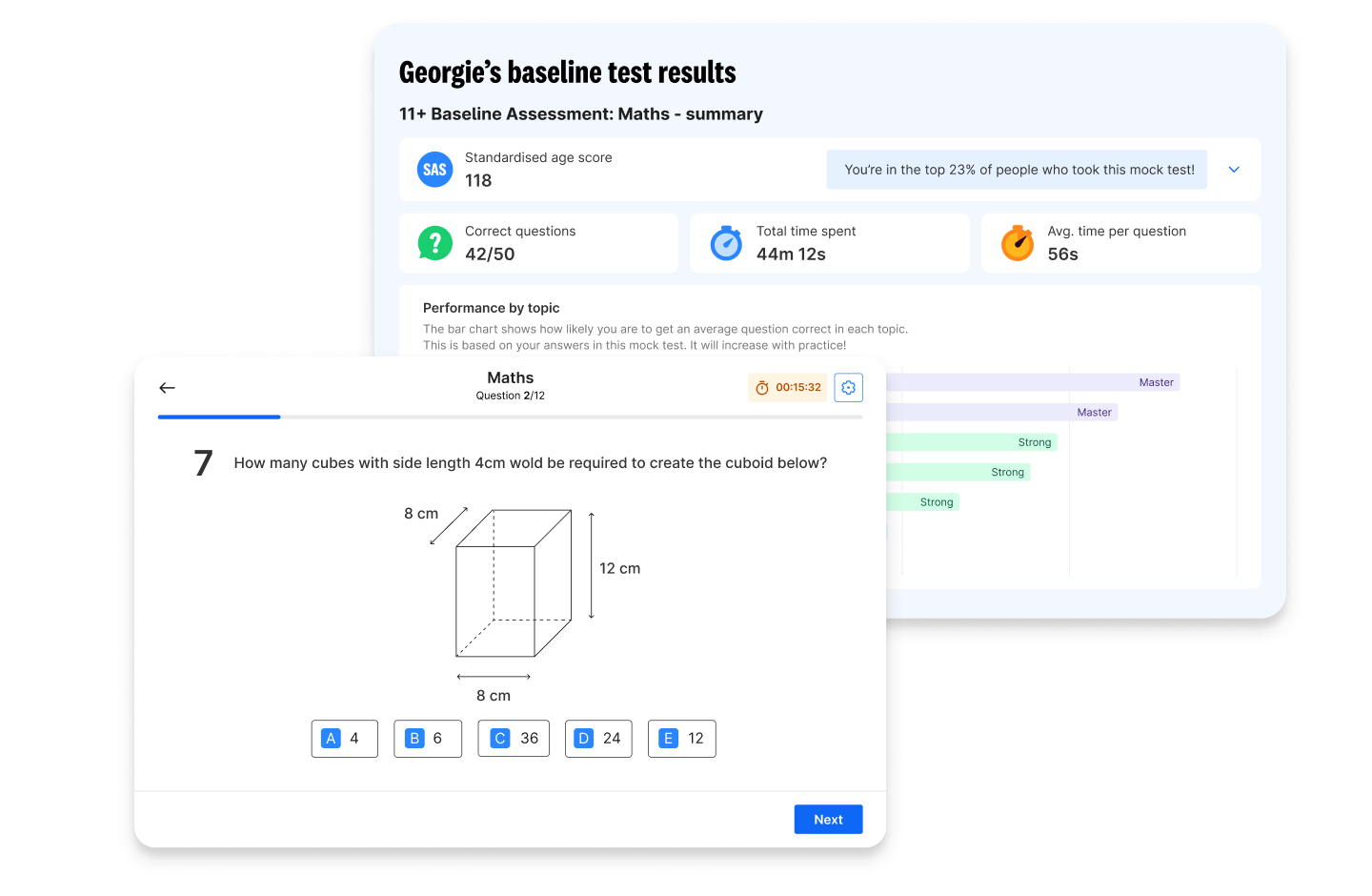
See where they stand in minutes. Atom’s free 11+ baseline tests give you an instant breakdown of their strengths and gaps. Know exactly what to focus on next and start preparing with direction, not uncertainty.
After the test, your child’s papers will be sent to GL Assessment for marking.
First, each paper is marked to provide a 'raw' score. This is the sum of your child's marks for correct answers.
Next, each raw score is age-standardised based on your child's age in years and months at the time of taking the test. This is to ensure that younger children don't do worse because of there age.
Your child will be given an age-standardised score for each of the three main subject areas:
Verbal ability (verbal reasoning and comprehension)
Numerical ability (maths)
Non-verbal ability (non-verbal reasoning)
They will also receive one total age-standardised score that will be used to decide whether they meet the standard for your chosen school. The total score is weighted by following this formula:
50% of the verbal ability score + 25% of the numerical ability score + 25% of the non-verbal ability score
Achieving a total weighted standardised score of 200 represents that the child is at an average academic level for their year group.
What's the pass mark for the Bexley Selection Test?
There is no specified pass mark for the Bexley Selection Test. Each of the four grammar schools has 180 places available in Year 7. The 180 children with the highest scores applying to each grammar school will be eligible for a place at that school.
The Bexley Selection Test is competitive. Around 30% of children who take the test achieve a mark high enough to be considered for a grammar school place in the borough.
How to apply to Bexley grammar schools
If you're considering a Bexley grammar school for your child, it's a good idea to speak to your child's teacher first. Once you're confident your child is working at the standard needed to keep up in a grammar environment, you will need to:
After you've registered your child, you'll receive a test invitation. This will tell you where and when your child is due to sit the test. This will either be at their primary school or at a testing centre.
If you are considering grammar schools outside Bexley, remember to register for their exams too.
2. Apply for school places
You will be sent your child's results in mid-October.
Before listing a school on your form, check its admissions policy and make sure your child is eligible. The application form must be submitted to your home local council by 5pm on 31st October 2025.
3. National offers day
On 2nd March 2026, you will find out which school your child has been allocated a place at. They will be allocated a place at your highest-preferred school for which they meet the entry criteria and which has places available.
If your child was not allocated a place at your first-choice school, you have the right to appeal the decision. You should contact your child’s headteacher to discuss whether a request for a review can or should be made.
How can I help my child prepare for the Bexley Selection Test?
The Bexley Selection Test is challenging. Here are our top tips to help your child prepare for the exam.
Bitesize learning
Research shows children learn best in short, focused bursts, which is why a ‘little and often’ approach is so effective. Just 20–30 minutes of regular practice can establish a solid foundation of knowledge without the stress or burnout from cramming.
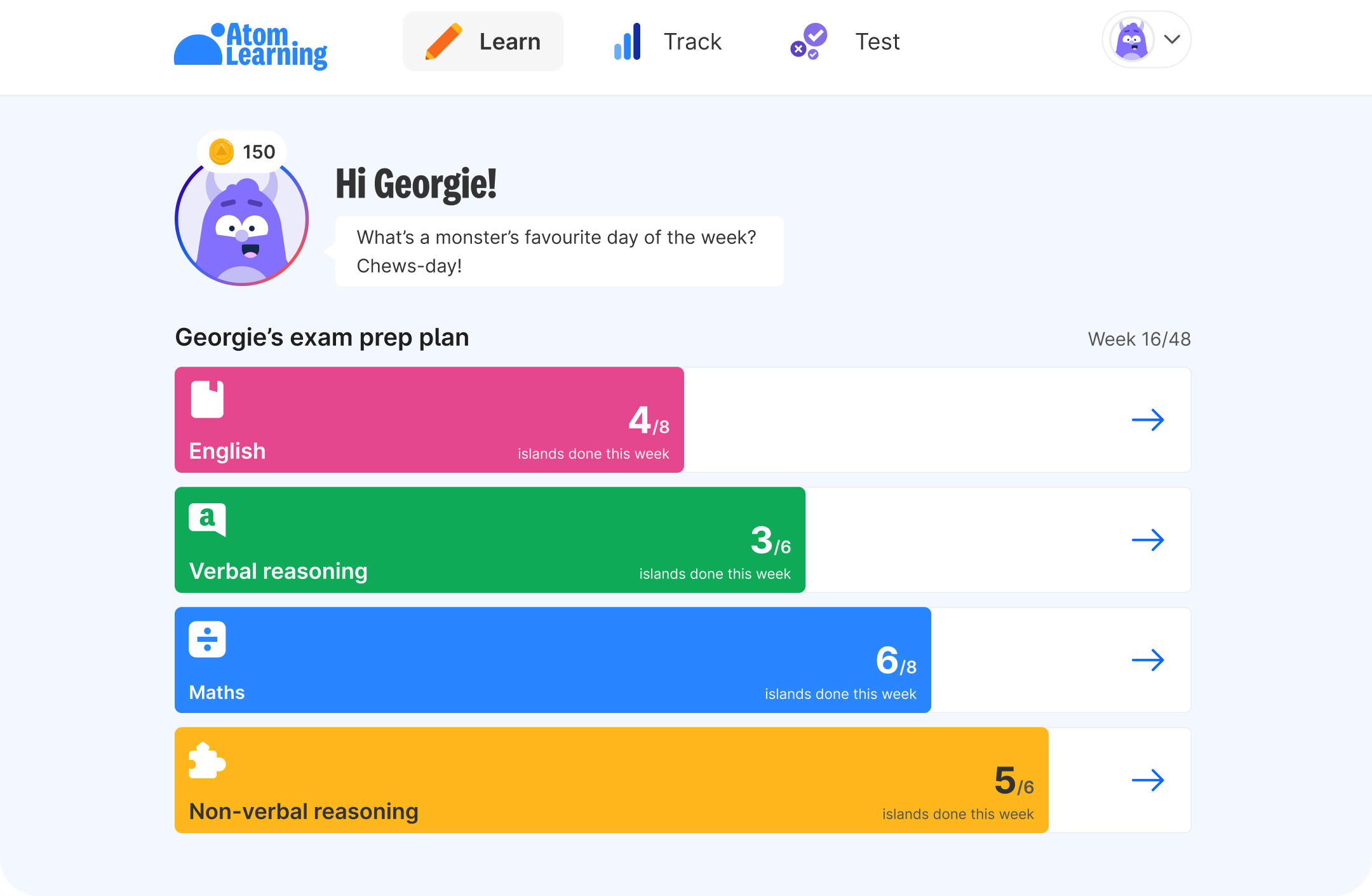
Atom Home makes this approach simple. The platform's short, interactive activities keep learning engaging, while its adaptive technology ensures every question is pitched at just the right level. Each session strengthens your child's knowledge and confidence, helping them make steady progress towards success in the Bexley Selection Test.
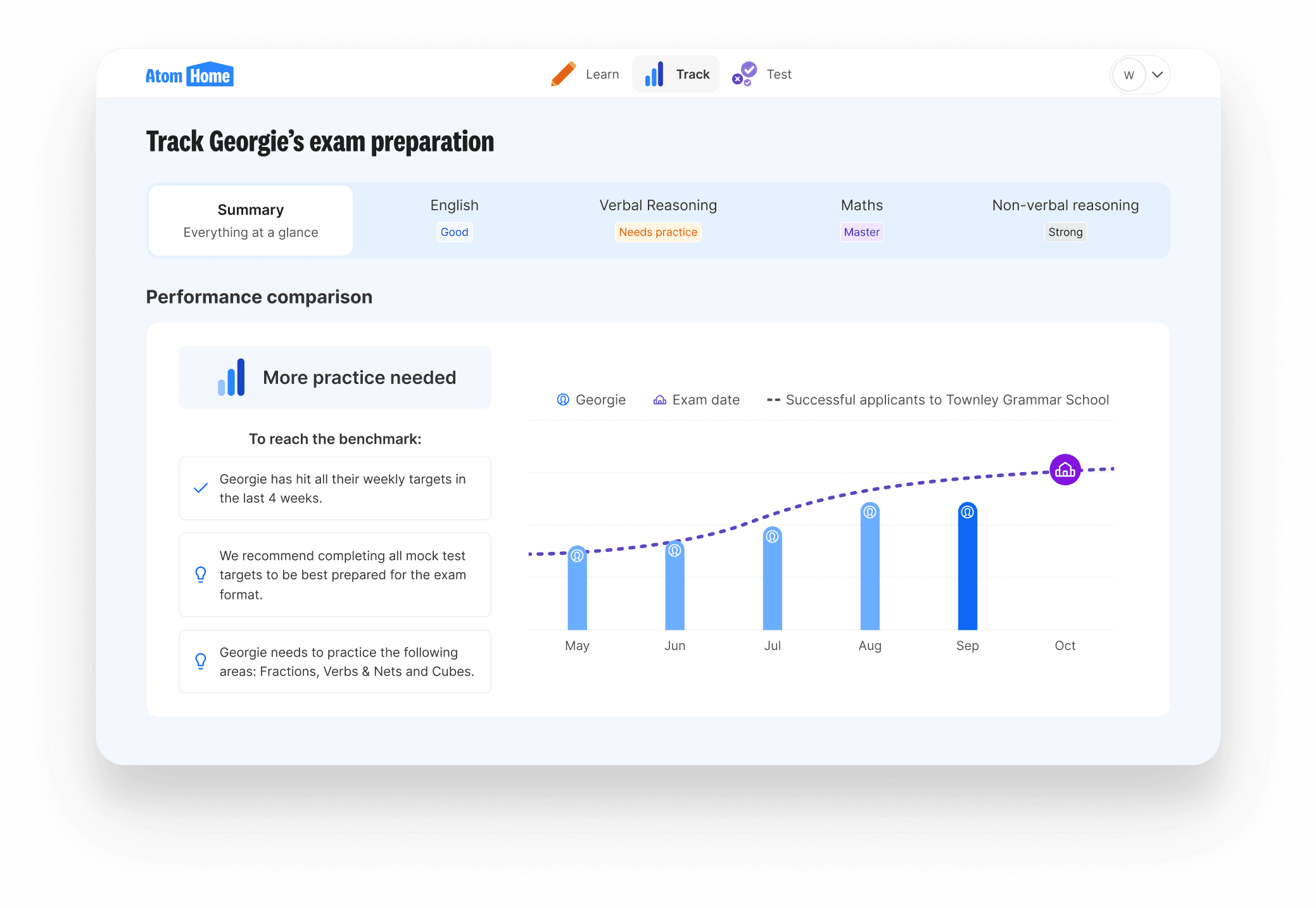
See how your child’s progress compares with successful Bexley applicants on the track page and know exactly where to focus next with Atom Home.
Read widely
11 plus exams test your child’s ability to analyse and interpret written information. Regular reading is a great way to help your child build these skills.
Encourage them to read books from different genres and by a range of authors. Increasing your child’s reading will help them understand different styles, tones and purposes. Meanwhile, reading a little every day will help widen their vocabulary, sharpen their analytical thinking, and enhance their imagination.
Refine exam technique
When your child feels confident with the topics they’ve learnt in Year 5, they’ll be ready to put their knowledge to the test.
Practice tests can help your child develop problem-solving skills and build confidence working under test conditions. They’re also a great way to consolidate learning and highlight knowledge gaps for further improvement.
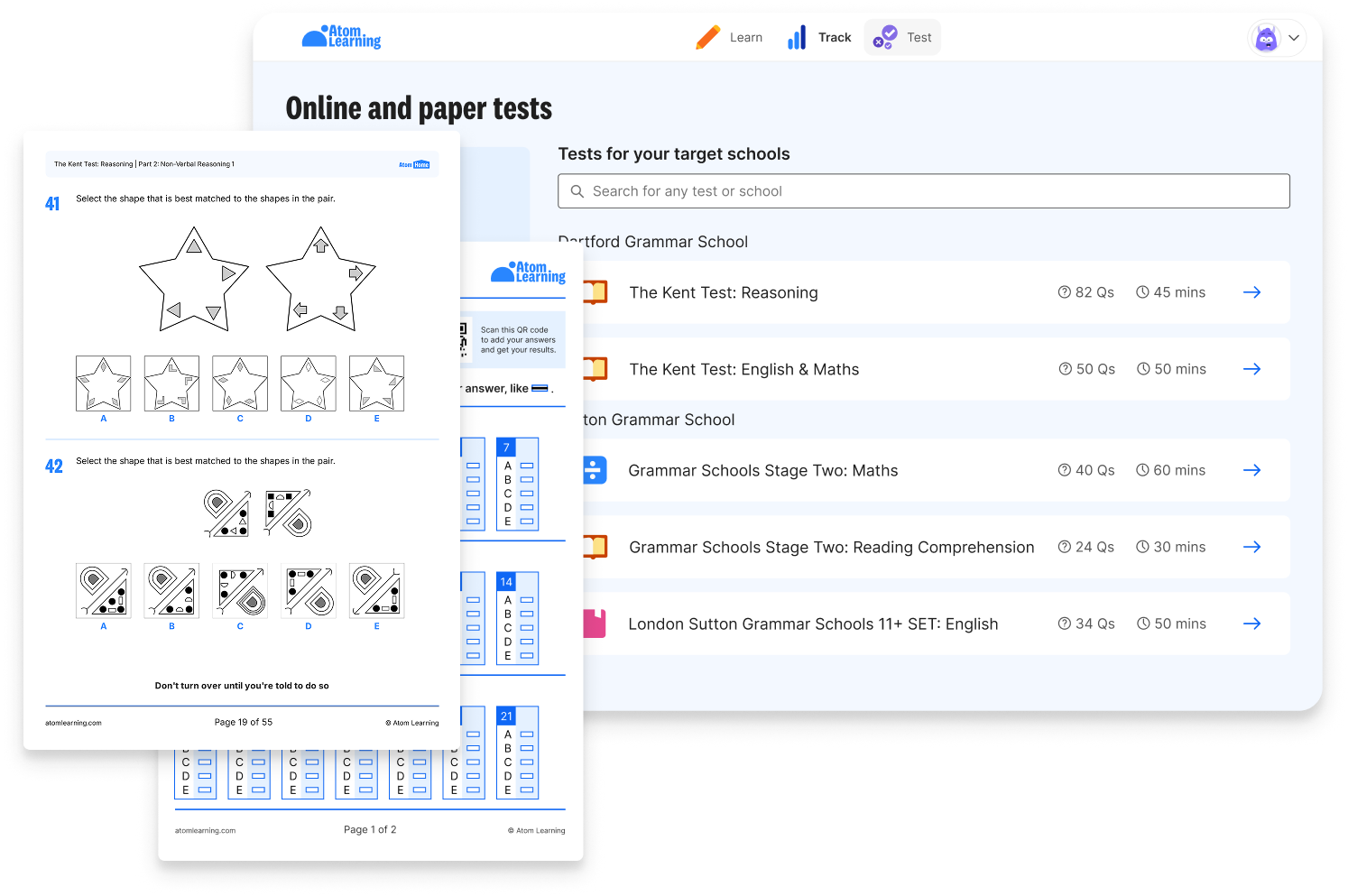
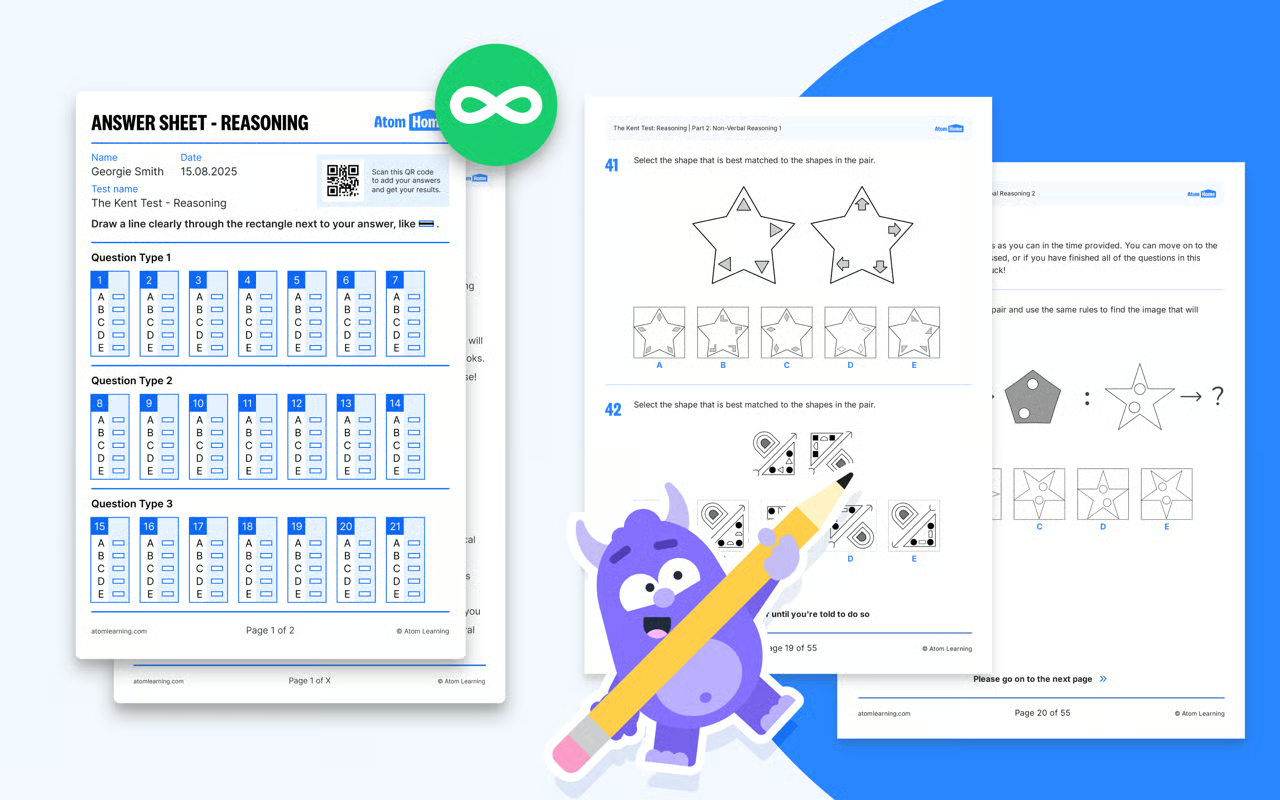
With Atom Home, you'll unlock online mock tests and printable practice papers. Enjoy automatic marking and progress tracking with the online tests, and help your child get familiar with the real exam experience with printable practice papers.
Celebrate progress
Setting regular, achievable goals and celebrating your child’s progress – no matter how big or small – will help keep their motivation high.
Make sure to encourage a growth mindset. This means celebrating effort, as well as achievement! When your child makes mistakes or struggles to understand a particular topic, help them understand that they’ll improve through practice. Regular praise will help your child improve their resilience when tackling new and challenging topics.
No items found.
No items found.
No items found.
No items found.
Take control of your child’s 11+ preparation.
Not sure if your child is on track for the grammar school 11+? You don’t need to guess what to cover or whether they’re ready. Atom shows you exactly what to practise each week and how they’re performing, so you can stay ahead of the process without the stress.