Back to blog

Get ready to nail your OCR Triple Science GCSE

By
Atom
|
October 22, 2026

Getting ready to nail your OCR Triple Science starts by understanding everything you can about the exam.

Take a look at our guide to understand the format, timings, topics and potential grade boundaries for Triple Science GCSE. Plus, we’ve got top tips on how to prepare and where to find past papers.

Not sure which exam board your school uses? Take a look at our guide to finding out which exam board you’re studying.

Key takeaways:

  • Triple science counts as three separate GCSEs.
  • You will study the Gateway Science exam, which separates Physics, Chemistry and Biology.
  • A formula sheet for Physics will be provided for Triple Science exams.

What’s the format for OCR Triple Science GCSE?

  • Triple Science is a triple award, meaning you’ll receive three GCSEs.
  • There are two tiers you can study: Foundation and Higher.
  • There are six papers: two in Chemistry, two in Physics and two in Biology.
  • Each paper is 1 hour and 45 minutes long and worth 60 marks each.
  • Each science discipline is assessed separately across the two papers.
  • Each separate science (Biology, Chemistry, Physics) has its own specification and exam code: J247, J248, J249, respectively.

What’s the difference between Triple Science: Higher and Foundation?

You can take either Higher or Foundation level Triple Science, depending on your level.

Foundation tier Triple Science OCR:

  • Covers the core topics you need to know and excludes more complex or demanding areas.
  • In Foundation Triple Science, you can achieve a maximum grade of 5.

Higher tier Triple Science OCR:

  • The higher tier covers both core and more advanced topics across the curriculum.
  • For Higher tier Triple Science, you can achieve a maximum grade of 9 - the highest possible grade.
  • The lowest grade you can get is a 4.

Your school will place you in the correct tier based on your performance in Year 9. Sometimes, students may be moved up or down a tier during Year 10 or 11.

OCR requires all Triple Science exams to be taken at the same level, so you cannot do Higher for one subject and Foundation for another.

Is there an equations sheet for Triple Science OCR?

Yes! It’s been confirmed that equation sheets will continue to be provided for OCR Triple Science.

The sheet will cover key formulas used for Physics and will be provided for the Triple Science exams. The formula sheet includes key equations needed for both Foundation and Higher tier Physics.

Take a look at the 2025 equation sheet.

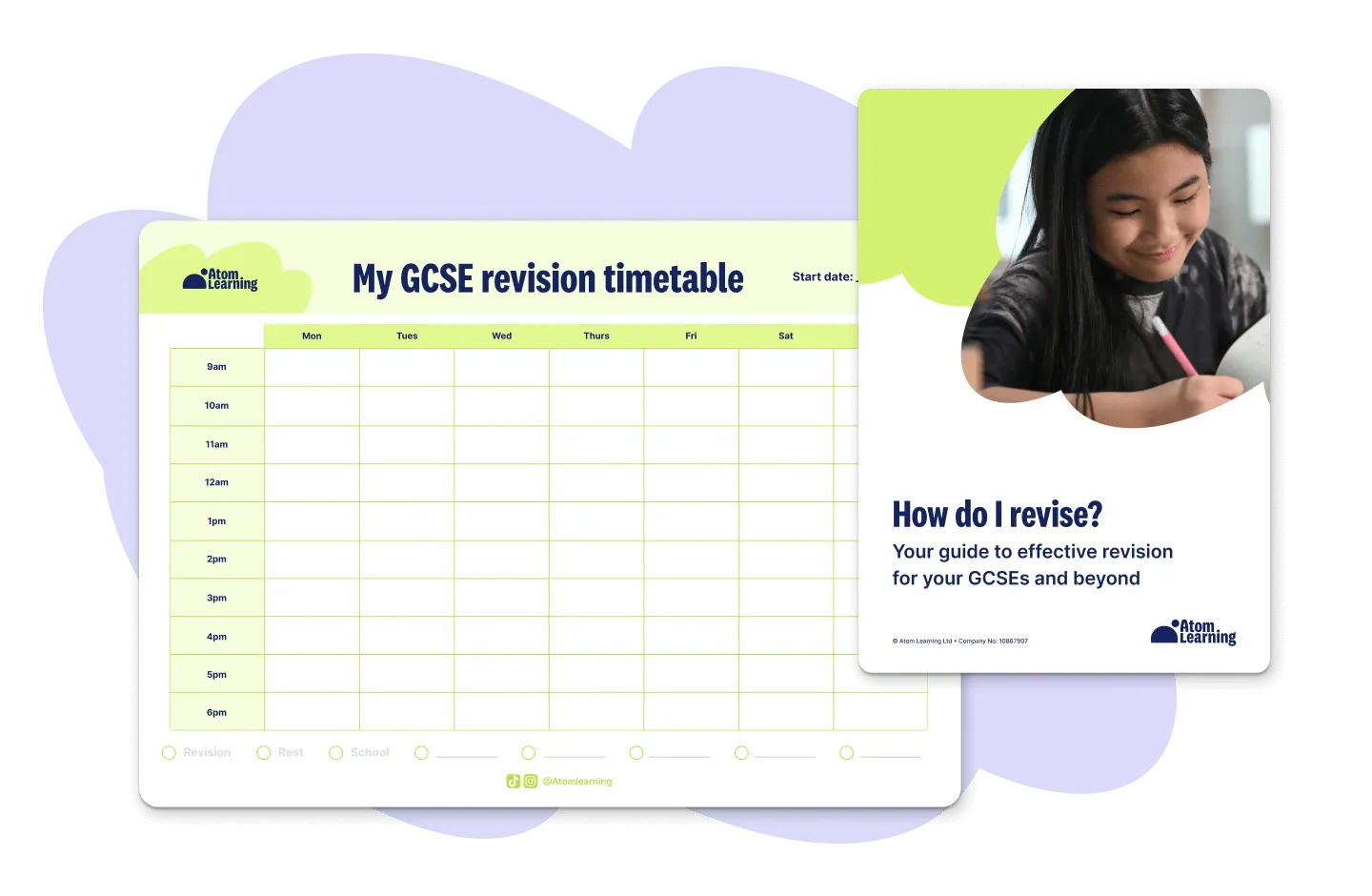
Download your free GCSE revision planner

Less stress, more success! Get your free GCSE revision planner and our handy guide to effective revision today.

Download now

What are the grade boundaries for Triple Science GCSE?

Triple Science is three separate GCSEs, so each of Biology, Chemistry and Physics is graded on its own and each is tiered. OCR also runs two suites — Gateway Science (A) and Twenty First Century Science (B) — with different boundaries, so check which one your school enters you for.

In the June 2026 series — the most recent — a grade 4 standard pass in Gateway took 93 out of 180 (52%) at Foundation and 69 (38%) at Higher in Biology; 100 (56%) and 76 (42%) in Chemistry; and 108 (60%) and 80 (44%) in Physics.

The full June 2026 boundaries for both suites, all three subjects and both tiers are below. OCR publishes the boundaries for every series on its grade boundaries page.

Biology A: Gateway Science (J247)

OCR GCSE Biology A (J247) grade boundaries for the June 2026 exams, showing the raw marks needed for each grade.
Grade Foundation tier Higher tier
Grade 9Not available at this tier141 out of 180 (78%)
Grade 8Not available at this tier131 out of 180 (73%)
Grade 7Not available at this tier121 out of 180 (67%)
Grade 6Not available at this tier103 out of 180 (57%)
Grade 5 (strong pass)112 out of 180 (62%)86 out of 180 (48%)
Grade 4 (standard pass)93 out of 180 (52%)69 out of 180 (38%)
Grade 368 out of 180 (38%)60 out of 180 (33%)
Grade 243 out of 180 (24%)Not available at this tier
Grade 118 out of 180 (10%)Not available at this tier

Chemistry A: Gateway Science (J248)

OCR GCSE Chemistry A (J248) grade boundaries for the June 2026 exams, showing the raw marks needed for each grade.
Grade Foundation tier Higher tier
Grade 9Not available at this tier163 out of 180 (91%)
Grade 8Not available at this tier151 out of 180 (84%)
Grade 7Not available at this tier139 out of 180 (77%)
Grade 6Not available at this tier118 out of 180 (66%)
Grade 5 (strong pass)120 out of 180 (67%)97 out of 180 (54%)
Grade 4 (standard pass)100 out of 180 (56%)76 out of 180 (42%)
Grade 376 out of 180 (42%)65 out of 180 (36%)
Grade 252 out of 180 (29%)Not available at this tier
Grade 129 out of 180 (16%)Not available at this tier

Physics A: Gateway Science (J249)

OCR GCSE Physics A (J249) grade boundaries for the June 2026 exams, showing the raw marks needed for each grade.
Grade Foundation tier Higher tier
Grade 9Not available at this tier152 out of 180 (84%)
Grade 8Not available at this tier141 out of 180 (78%)
Grade 7Not available at this tier131 out of 180 (73%)
Grade 6Not available at this tier114 out of 180 (63%)
Grade 5 (strong pass)123 out of 180 (68%)97 out of 180 (54%)
Grade 4 (standard pass)108 out of 180 (60%)80 out of 180 (44%)
Grade 380 out of 180 (44%)71 out of 180 (39%)
Grade 253 out of 180 (29%)Not available at this tier
Grade 126 out of 180 (14%)Not available at this tier

Biology B: Twenty First Century Science (J257)

OCR GCSE Biology B (J257) grade boundaries for the June 2026 exams, showing the raw marks needed for each grade.
Grade Foundation tier Higher tier
Grade 9Not available at this tier138 out of 180 (77%)
Grade 8Not available at this tier124 out of 180 (69%)
Grade 7Not available at this tier110 out of 180 (61%)
Grade 6Not available at this tier91 out of 180 (51%)
Grade 5 (strong pass)112 out of 180 (62%)72 out of 180 (40%)
Grade 4 (standard pass)91 out of 180 (51%)53 out of 180 (29%)
Grade 371 out of 180 (39%)43 out of 180 (24%)
Grade 252 out of 180 (29%)Not available at this tier
Grade 133 out of 180 (18%)Not available at this tier

Chemistry B: Twenty First Century Science (J258)

OCR GCSE Chemistry B (J258) grade boundaries for the June 2026 exams, showing the raw marks needed for each grade.
Grade Foundation tier Higher tier
Grade 9Not available at this tier138 out of 180 (77%)
Grade 8Not available at this tier124 out of 180 (69%)
Grade 7Not available at this tier111 out of 180 (62%)
Grade 6Not available at this tier93 out of 180 (52%)
Grade 5 (strong pass)107 out of 180 (59%)75 out of 180 (42%)
Grade 4 (standard pass)87 out of 180 (48%)57 out of 180 (32%)
Grade 366 out of 180 (37%)48 out of 180 (27%)
Grade 245 out of 180 (25%)Not available at this tier
Grade 124 out of 180 (13%)Not available at this tier

Physics B: Twenty First Century Science (J259)

OCR GCSE Physics B (J259) grade boundaries for the June 2026 exams, showing the raw marks needed for each grade.
Grade Foundation tier Higher tier
Grade 9Not available at this tier141 out of 180 (78%)
Grade 8Not available at this tier130 out of 180 (72%)
Grade 7Not available at this tier119 out of 180 (66%)
Grade 6Not available at this tier103 out of 180 (57%)
Grade 5 (strong pass)121 out of 180 (67%)87 out of 180 (48%)
Grade 4 (standard pass)106 out of 180 (59%)71 out of 180 (39%)
Grade 384 out of 180 (47%)63 out of 180 (35%)
Grade 262 out of 180 (34%)Not available at this tier
Grade 140 out of 180 (22%)Not available at this tier
No items found.

How many marks is each OCR Triple Science paper?

Each of the three subjects has two papers worth 90 marks each, both 1 hour 45 minutes, so every subject is marked out of 180 and the three GCSEs together come to 540 marks. Each paper is worth 50% of its subject.

Where can I find past papers and mark schemes?

Practising with past papers and mark schemes is one of the most effective ways to prepare for GCSE Triple Science.

Past papers help you understand question styles, see how marks are awarded, and build confidence with real exam timing and structure.

Head to the OCR website to find past papers and mark schemes from previous GCSE Triple Science exams for Biology, Chemistry and Physics. Once you've worked through those, Atom gives you a fresh set of practice papers based on our team's predictions for the next GCSE year, plus instant, examiner-style feedback so you always know exactly where marks were gained or lost.

Read the examiner's report, not just the mark scheme

After every series the board publishes an examiner's report on what candidates actually did — the questions that were misread, the answers that stopped half way, the marks lost to command words. It is the closest thing to being told in advance what to avoid, and almost nobody reads it.

Start with the OCR Triple Science Biology Paper 1 examiner's report (June 2025), then work through the rest on OCR Biology A assessment materials and OCR Chemistry A assessment materials and OCR Physics A assessment materials.

A recent OCR Triple Science past paper to start with

If you want to sit one now rather than browse, use the June 2025 paper: the question paper and the mark scheme. Give yourself the real time limit, mark it against the scheme, then read the examiner's report on the same paper to see where other candidates lost the marks you lost.

Are there predicted papers for OCR Triple Science?

Yes. Once you have worked through the real past papers, there is nothing left that you have not already seen — and the most recent papers are the ones every other candidate has done too. Predicted papers are fresh papers written to match the style, balance and difficulty of the real thing for the year ahead.

Atom writes a set of predicted papers for OCR Triple Science based on our team's predictions for the next GCSE series, marked instantly with examiner-style feedback so you can see exactly where marks were gained or lost — so you can keep sitting full papers under real conditions right up to the exam.

What key topics do I need to know for OCR Triple Science GCSE?

Triple Science papers cover a range of topics. You’ll need a thorough understanding of each to achieve top marks, so make sure you revise any areas you find tricky ahead of the exams.

The main topics for Triple Science are:

Biology topics

  • B1: Cell level systems
  • B2: Scaling up
  • B3: Organism level systems
  • B4: Community level systems
  • B5: Genes, inheritance and selection
  • B6: Global challenges
  • B7: Practical skills

Chemistry topics

  • C1: Particles
  • C2: Elements, compounds and mixtures
  • C3: Chemical reactions
  • C4: Predicting and identifying reactions and products
  • C5: Monitoring and controlling chemical reactions
  • C6 Global challenges
  • C7: Practical skills

Physics topics

  • P1: Matter
  • P2: Forces
  • P3: Electricity
  • P4: Magnetism and magnetic fields
  • P5: Waves in matter
  • P6: Radioactivity
  • P7: Energy
  • P8: Global challenges
  • P9: Practical skills

Check out the OCR GCSE Triple Science specifications for more.

What are examiners looking for?

The assessment objectives for GCSE Triple Science are set by Ofqual, the exams regulator, and are consistent across exam boards.

Examiners are looking for the following in your exam papers:

  • AO1: Demonstrate knowledge and understanding of scientific ideas; scientific techniques and procedures
  • AO2: Apply knowledge and understanding of scientific ideas; scientific enquiry, techniques and procedures
  • AO3: Analyse information and ideas to interpret and evaluate; make judgments and draw conclusions; develop and improve experimental procedures

How can I prepare for OCR Triple Science GCSE?

To prepare for Triple Science exams, you’ll need to start revising early to make sure you’re confident covering all the key topics.

5 top tips to prepare for GCSE Triple Science:

1. Understand key vocabulary, definitions and units

Don’t miss out on marks for questions asking you to state or define terms. Make sure you get your head around the key vocab, definitions and units. You can use flashcards to help you memorise key terms and quiz yourself.

2. Use practice papers and mark schemes

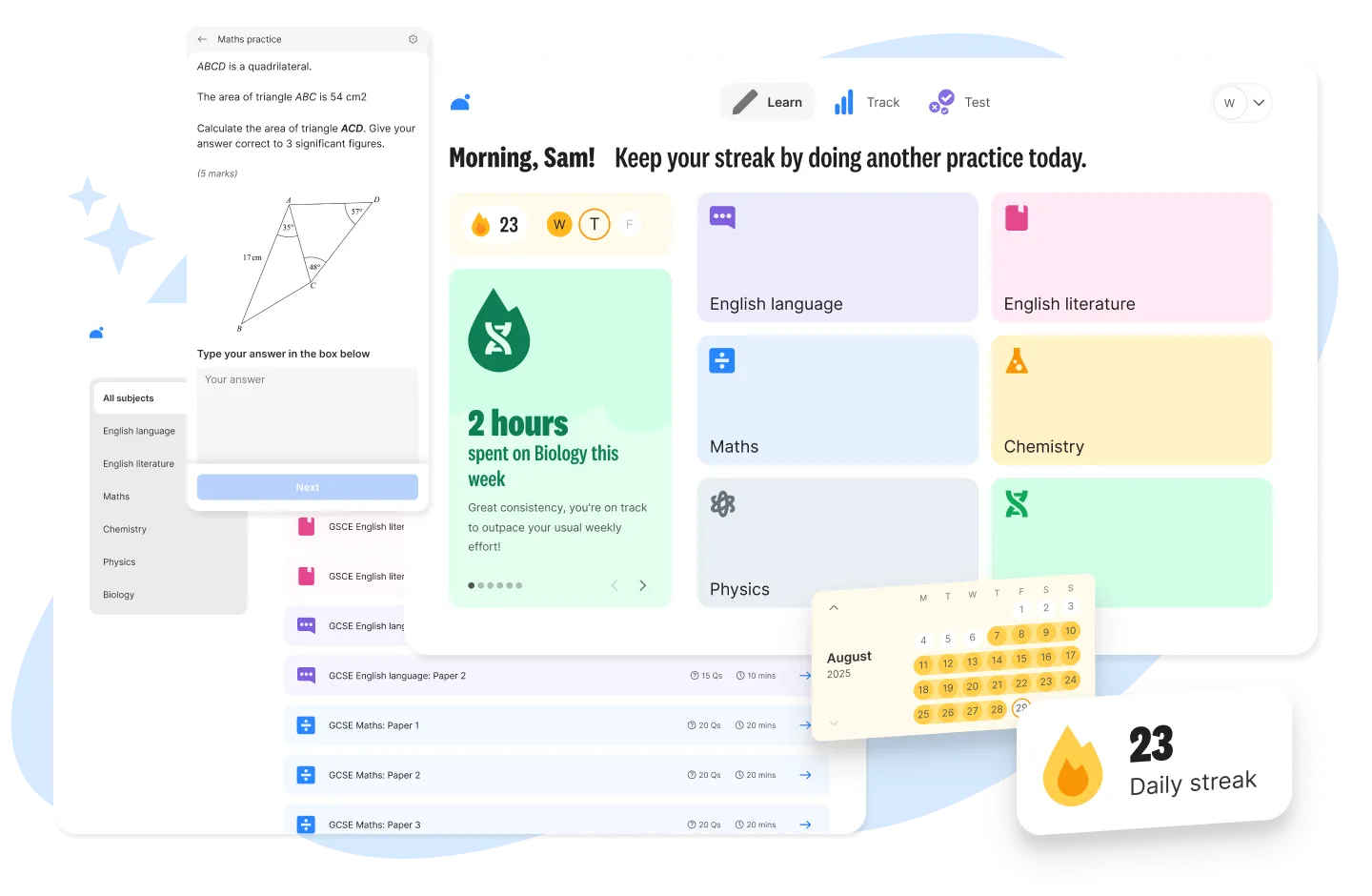
The best way to prepare? Practise like it’s test day. Practising exam questions from past papers and checking your answers will help you get used to the question format and understand how to get top marks. You can also take a whole test and practise under timed conditions too, to build confidence for the real thing. Atom gives you practice papers based on our team's predictions for the next GCSE year, along with instant, examiner-style feedback, so you get the same practise-and-check approach without having to mark everything yourself.

3. Mix up your revision techniques

It’s a good idea to try a mix of revision tactics. From flashcards to teaching others, a mix will help learning to stick. Studying little and often will also help you avoid fatigue and burnout.

4. Practise applying and analysing knowledge and ideas

Assessment objectives 2 and 3 are asking you to apply what you know to analyse and draw conclusions. When you learn a new concept, try asking yourself: how can I apply this in a different scenario? Or what assumptions or errors might affect this conclusion?

Atom's examiner-style feedback tells you whether your reasoning and application hit the mark, so you can see exactly where your analysis needs to go further.

5. Plan, review, and adapt your revision

After each mock or practice paper you take, identify the topics or question types you struggle with, then prioritise those in your next revision cycle. Over time, your weak areas will shrink and your confidence will grow!

Preparing for OCR Triple Science starts with understanding the format and key topics of the exams. Once you know what to expect, you’ll be able to revise thoroughly and enter the exam hall with confidence!

No items found.
No items found.

Take control of your GCSE revision

Everything you need for GCSE success, in one place.

Feeling confident about your GCSEs comes from knowing what to revise, how to improve, and where to focus next.

🔮 GCSE practice papers based on our team's 2026 exam predictions

🎓 Guided courses that cover all the topics on your exams

✍️ Instant feedback that tells you where you’ve gained and lost marks

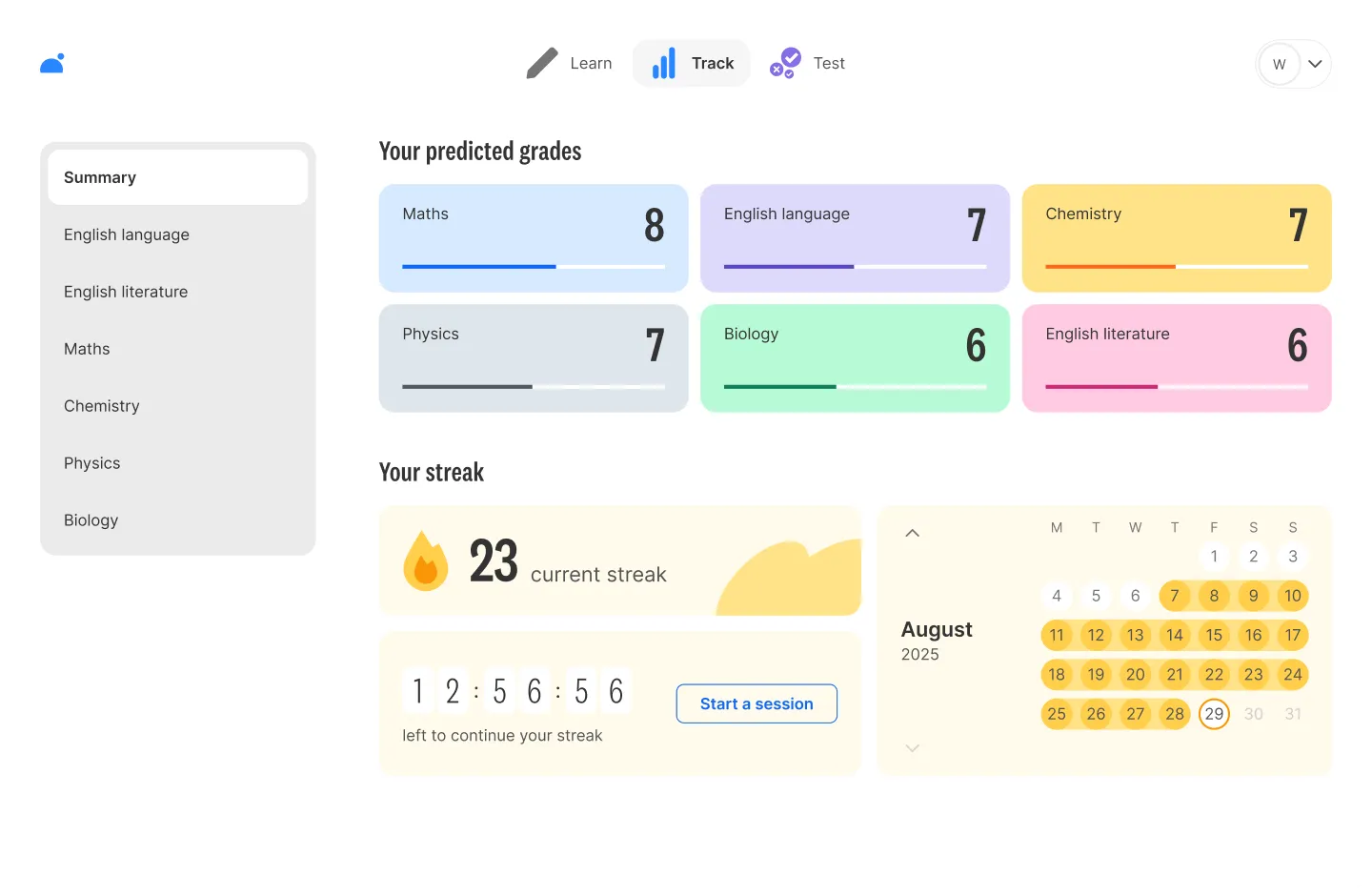
📈 Predicted GCSE grades and topic-by-topic tracking

Know where you stand and how to improve

Create your free account and start making real progress today.

Online GCSE revision

Contents