

Help your child feel ready
for the CAT4
Atom is partnered with leading schools













What is the CAT4 used for?
Admission to selective schools
Streaming students into sets
Indicator for national tests and exams
How Atom turns revision into CAT4 exam day success
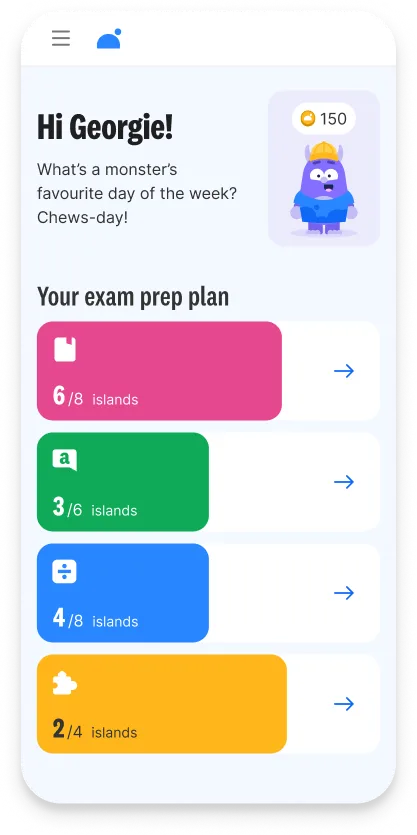
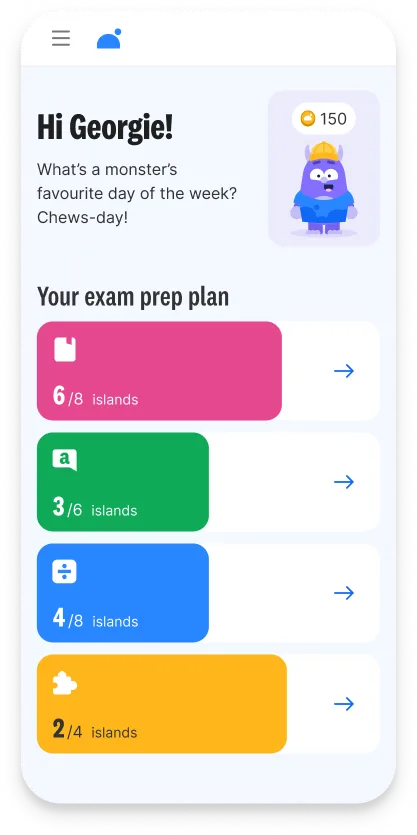
A clear plan, built around your target schools.

Practice with realistic tests.
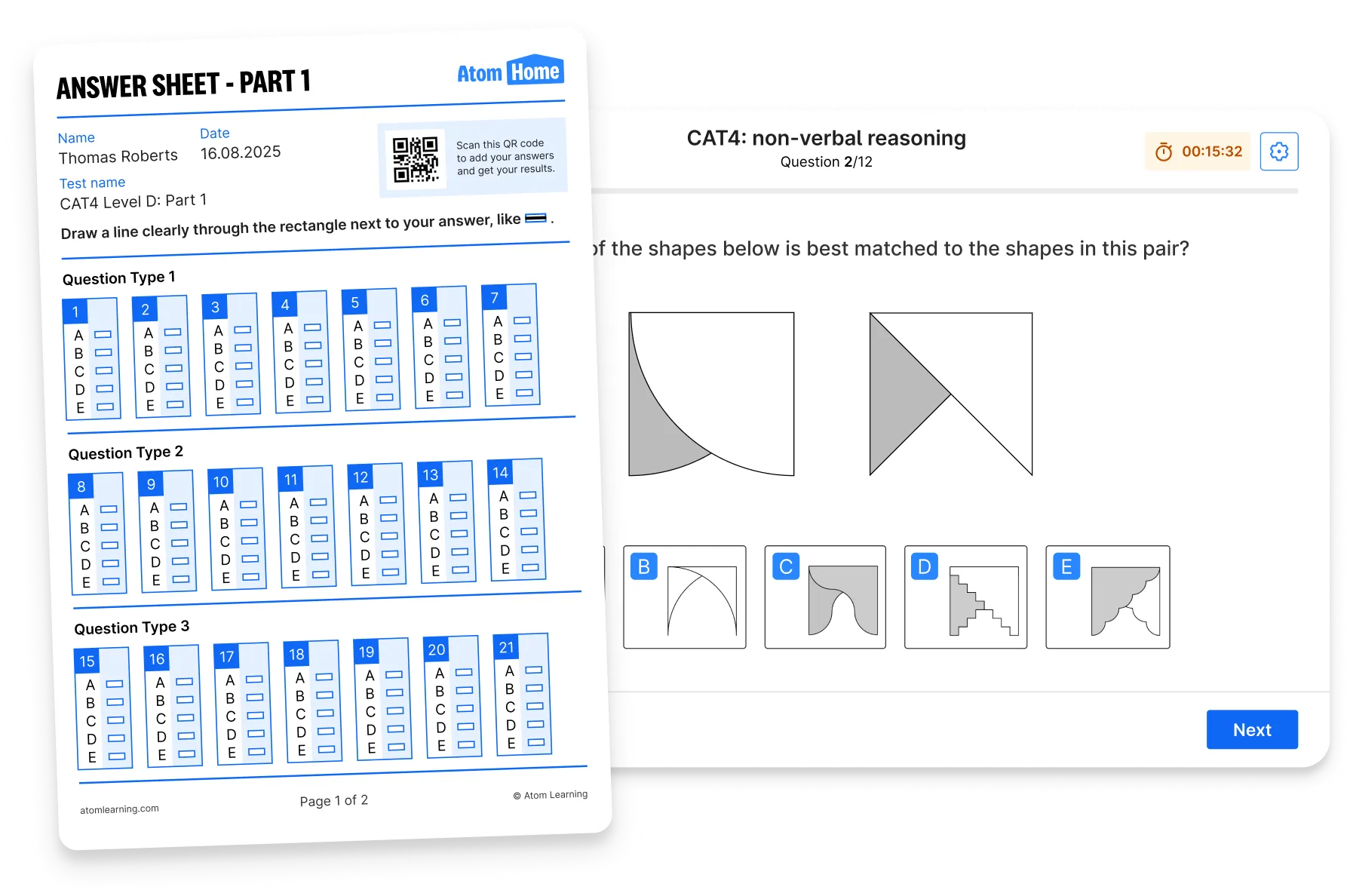
Just like a great tutor, Atom gives instant, exam-aligned feedback.
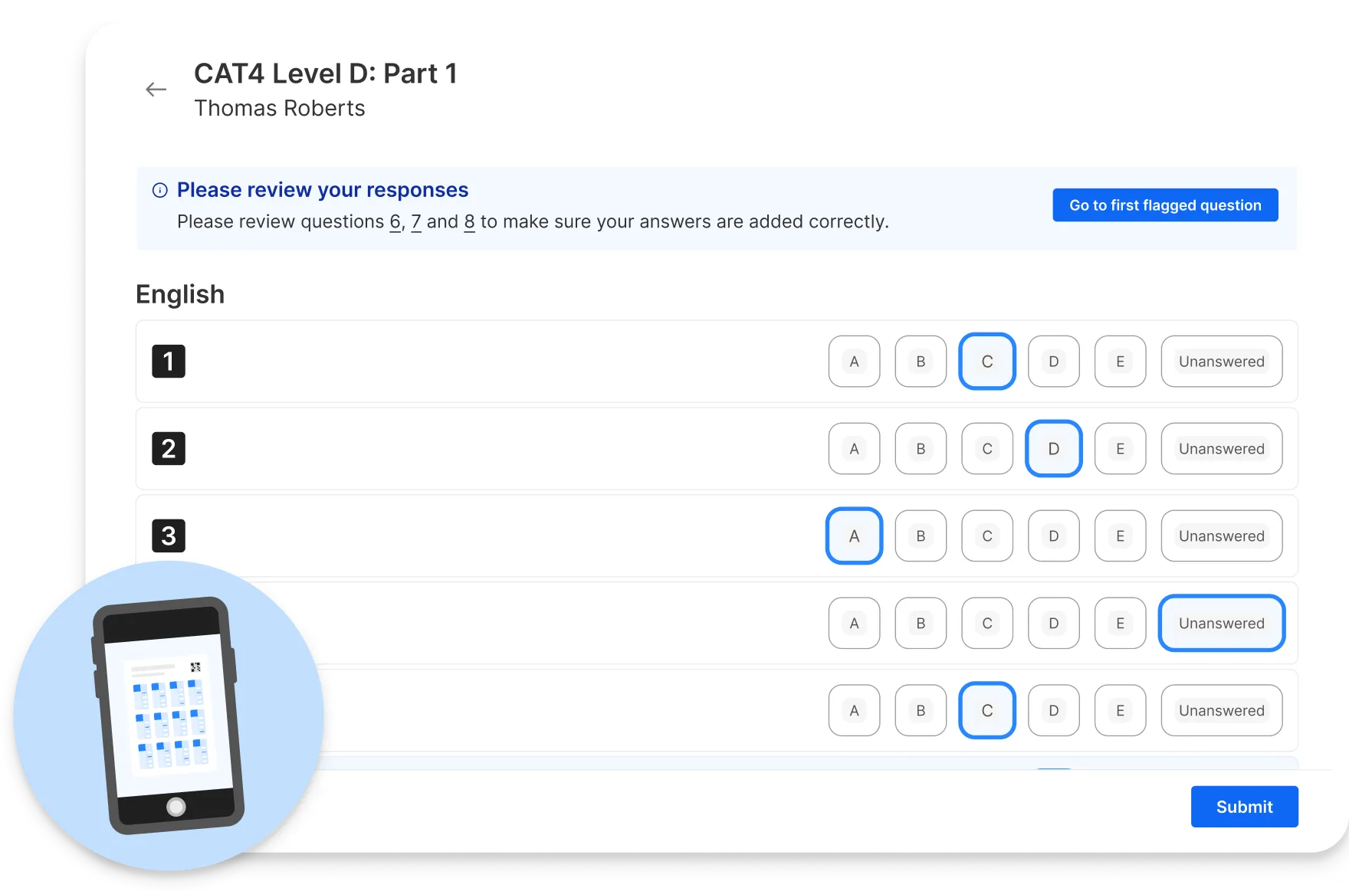
Feel confident that preparation is working.

Three Steps to CAT4 success
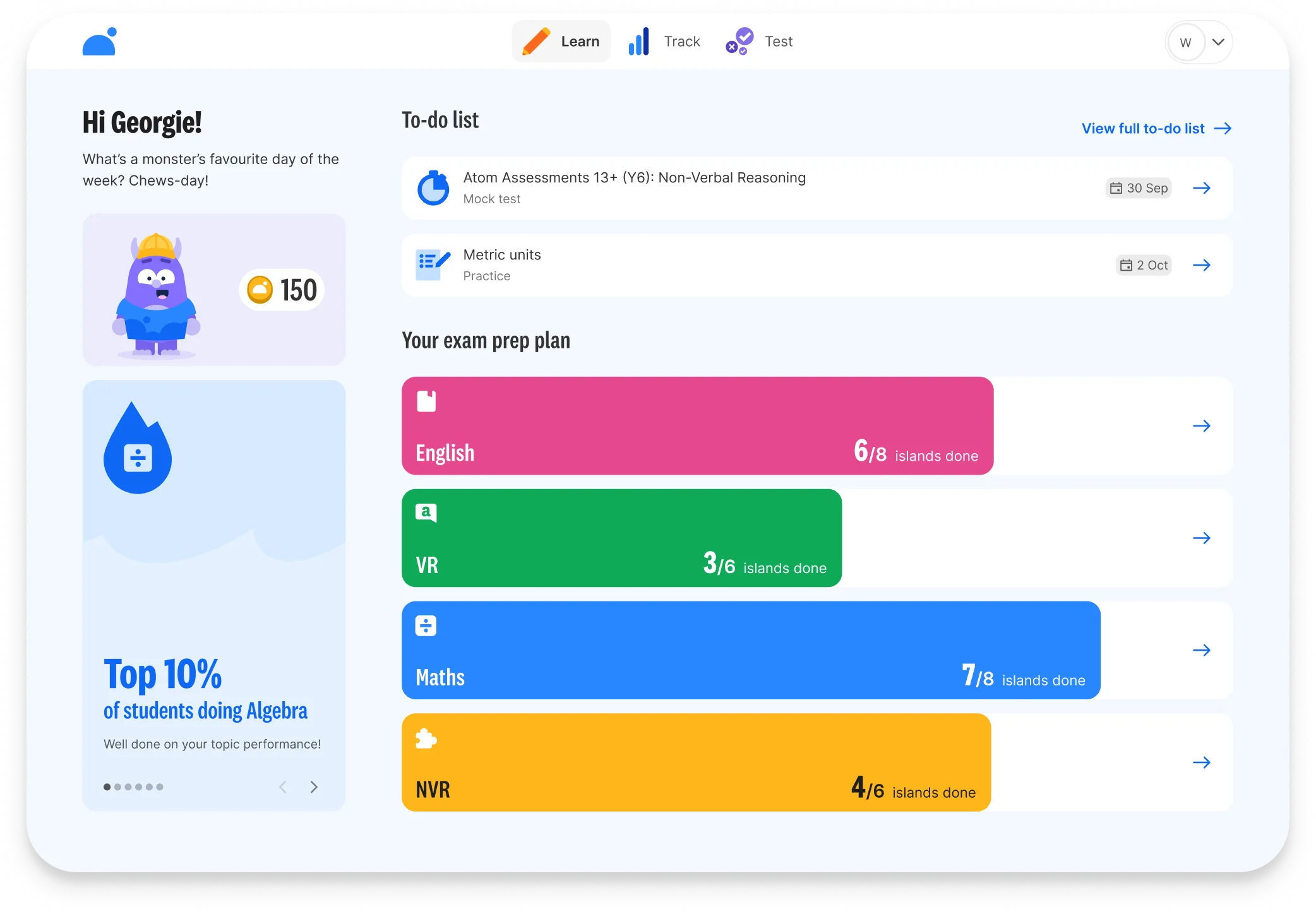
Learn
Build a personalised exam prep plan for your child
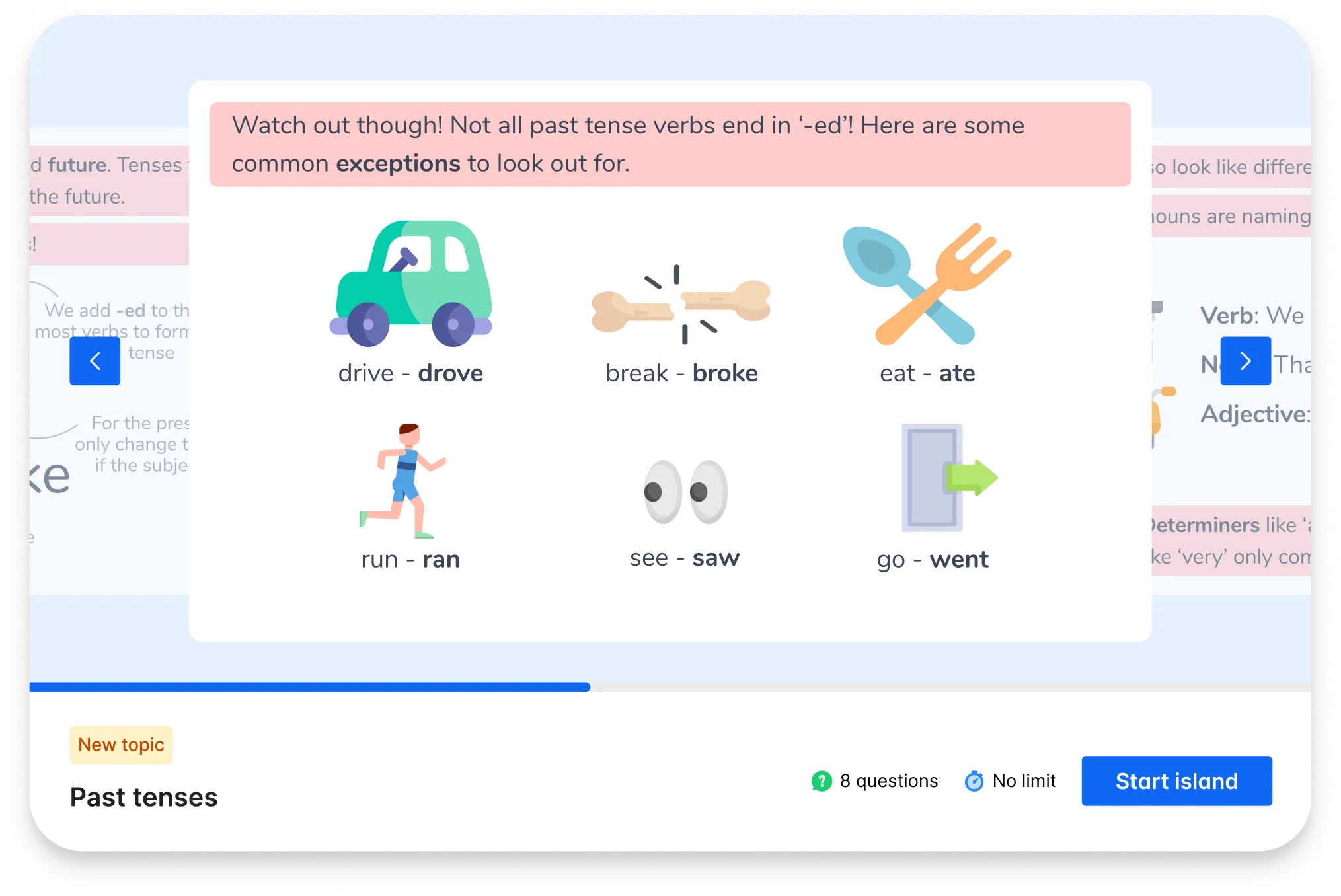
As your child learns, questions adapt to build confidence steadily
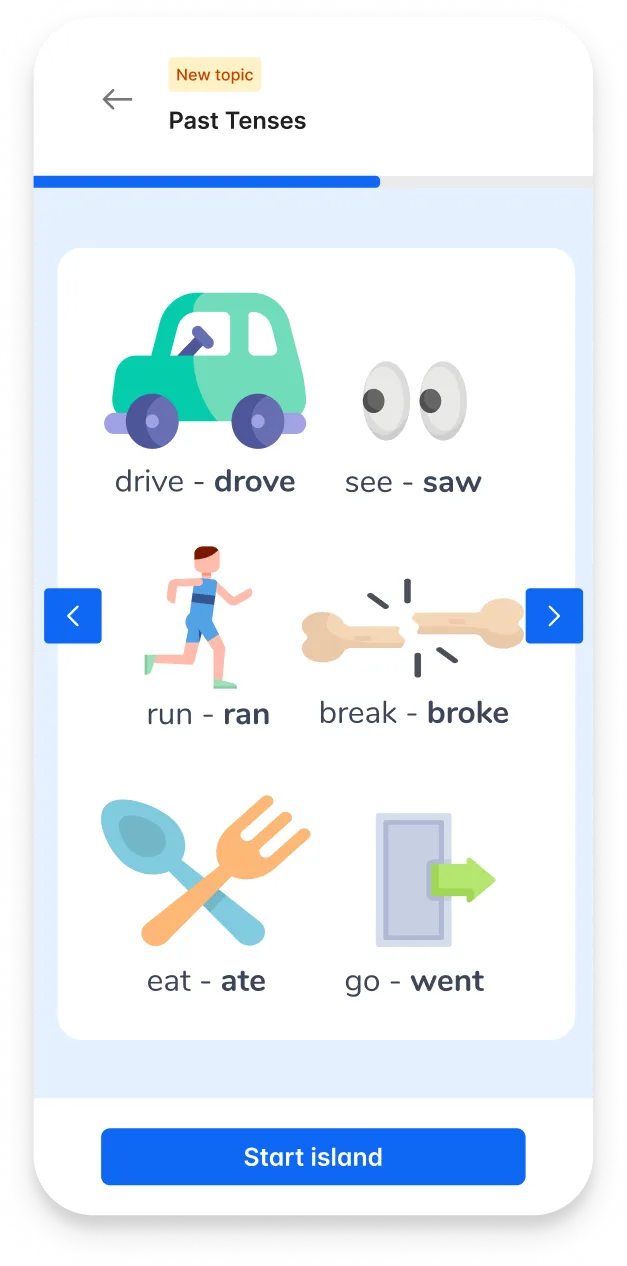
3000+ flashcards, 2000+ helpsheets, 600+ videos and topic lesson library
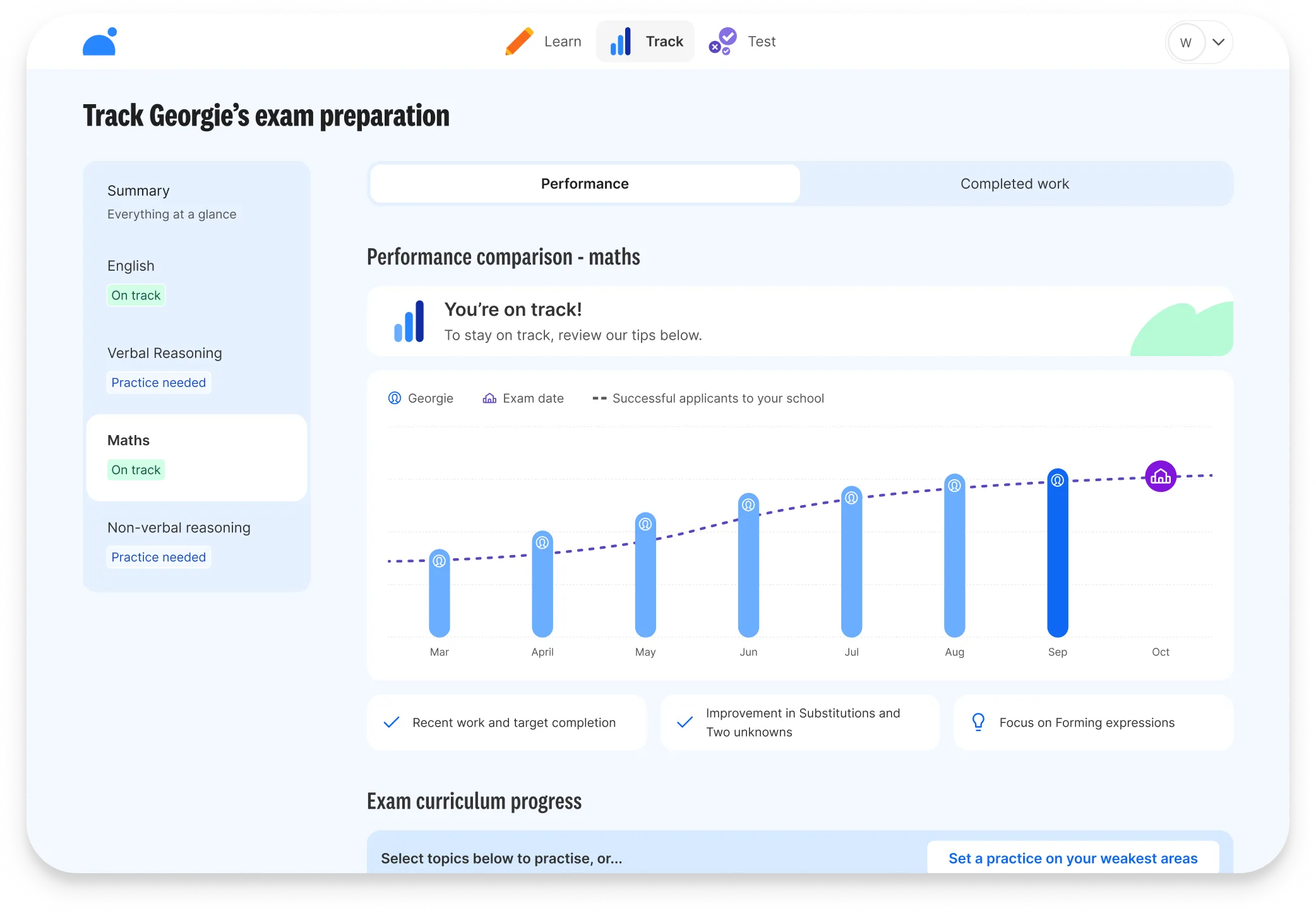
Track
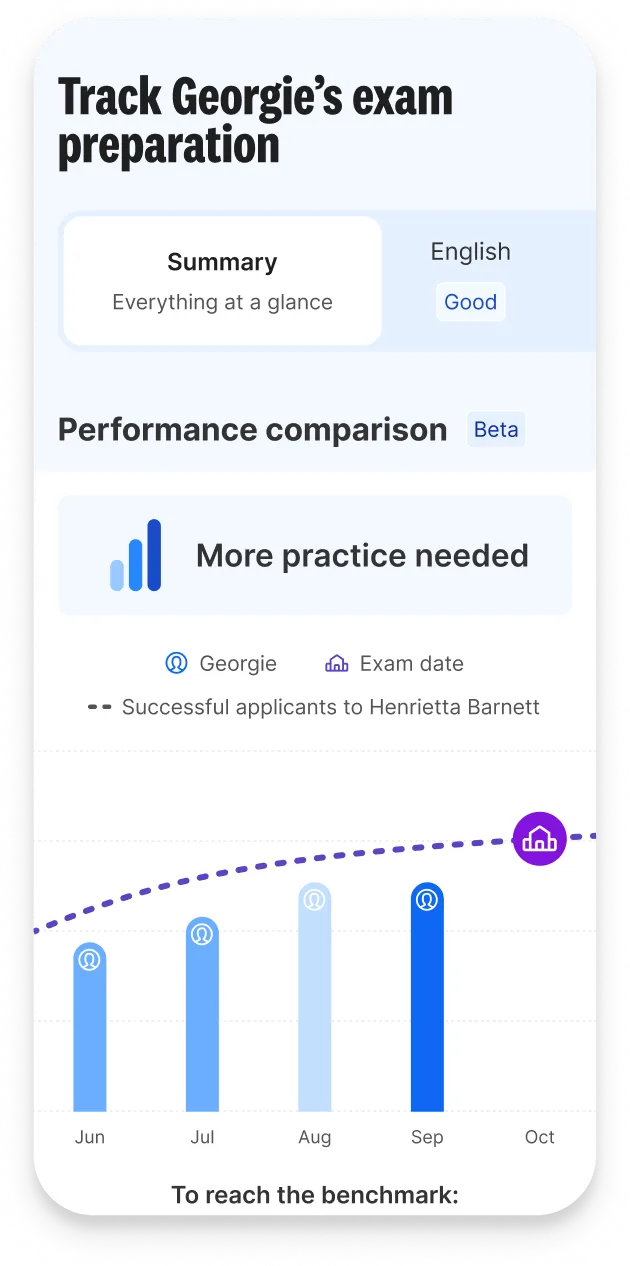
See how your child compares to successful CAT4 students
Identify your child’s strengths and gaps across all CAT4 exam topics
Get targeted practice recommendations based on their performance data
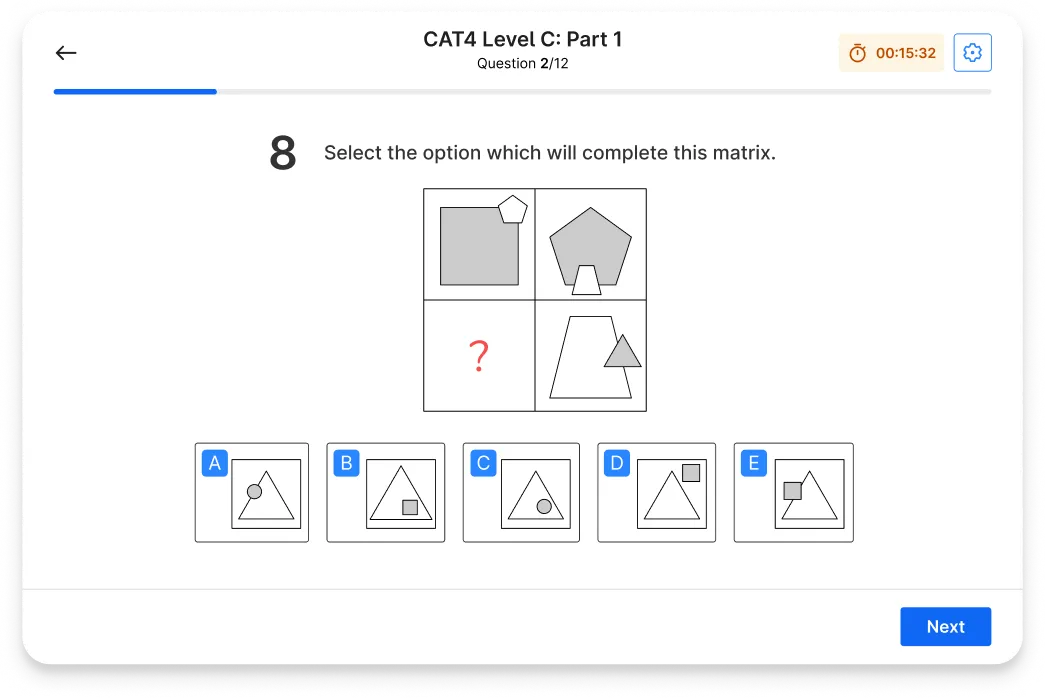
Test
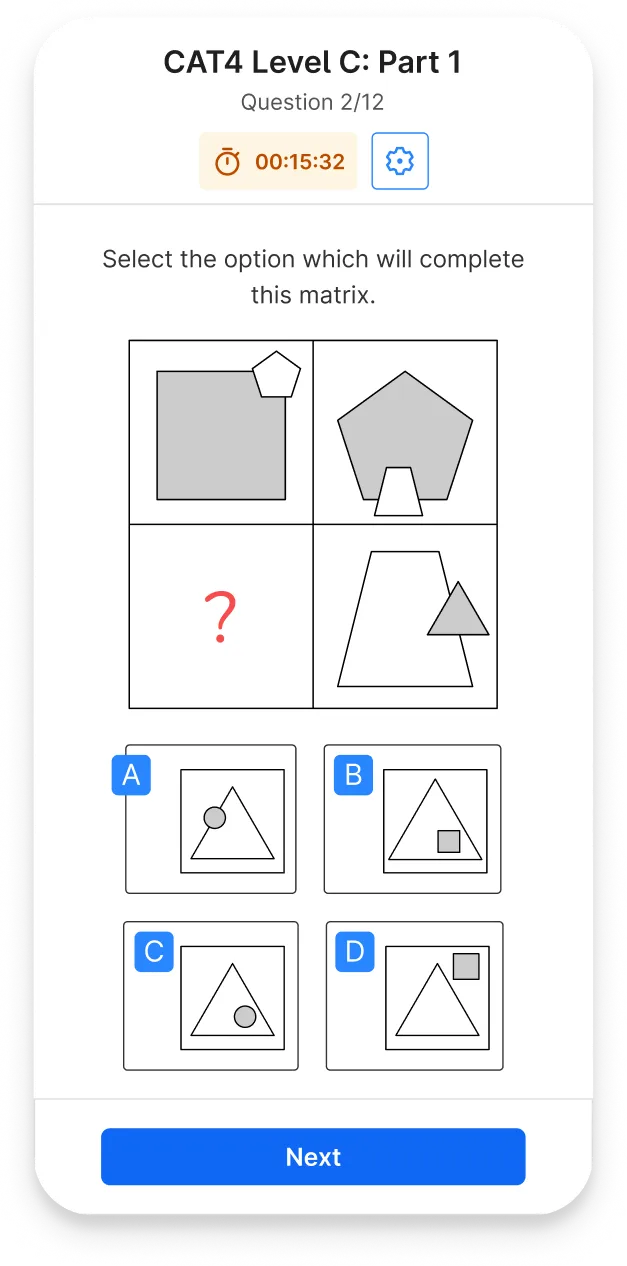
Unlimited, realistic CAT4 mock tests specific to their target school
Available both on paper and online to build exam-day confidence
Instant results and detailed explanations help them learn from every mistake
What is the CAT4 Test?
Unlike curriculum-based tests, the CAT4 focuses on a child's natural reasoning ability. It's a non-adaptive test, which means every child answers the same questions in the same order.
Schools use the results for a range of purposes: selective admissions, streaming pupils into ability sets, predicting future exam performance, and identifying where individual children may need extra challenge or support.
CAT4 Reasoning Batteries Explained
Verbal Reasoning
Tests how your child thinks and solves problems using words. Questions include verbal classification (identifying the odd words out from a group) and verbal analogies (completing word relationships).
Quantitative Reasoning
Assesses number skills and pattern recognition. Questions include number analogies and number series, where children must identify the rule linking a sequence of numbers.
Non-Verbal Reasoning
Uses pictures and diagrams to assess logical thinking. Children work through figure classification and figure matrices questions, no reading required.
Spatial Reasoning
Tests how children mentally manipulate shapes and images. Questions include figure analysis (visualising a folded square unfolded) and figure recognition (spotting a hidden shape within a more complex one).
Each battery is individually timed, and the full test takes 72 minutes to complete.
CAT4 Levels by Year Group
• Pre-A - ages 7–8 (Year 3)
• Level A - ages 8–9 (Year 4)
• Level B - ages 9–10 (Year 5)
• Level C - ages 10–11 (Year 6)
• Level D - ages 11–12 (Year 7)
• Level E - ages 12–13 (Year 8)
• Level F - ages 13–15 (Years 9–10)
• Level G - ages 15+ (Year 11 and above)
Children sitting the CAT4 as part of an 11 plus admissions process typically take Level C or Level D.
How to Prepare for the CAT4
A few things make the biggest difference:
Practise the question types.
Verbal, quantitative, non-verbal, and spatial reasoning all have their own formats. The more familiar your child is with each one, the less time they'll spend working out what's being asked on test day.
Build comfort with timed conditions.
For many children, the CAT4 is one of their first experiences of a formal timed assessment. Practising under realistic conditions helps reduce anxiety and build confidence.
Find and fill the gaps.
Every child has stronger and weaker reasoning areas. Knowing where to focus makes preparation more targeted and more effective.
Atom offers CAT4 practice questions, mock tests, and personalised study plans across all four batteries - so your child knows exactly what to work on next.
The CAT4 (Cognitive Abilities Test) is a reasoning assessment created by GL Assessment. It's used by grammar and independent schools to understand how children think and solve problems, not what they've been taught in class.
Unlike curriculum-based tests, the CAT4 focuses on a child's natural reasoning ability. It's a non-adaptive test, which means every child answers the same questions in the same order.
Schools use the results for a range of purposes: selective admissions, streaming pupils into ability sets, predicting future exam performance, and identifying where individual children may need extra challenge or support.
The CAT4 is made up of four sections, known as batteries. Each one assesses a different type of reasoning ability.
Verbal Reasoning
Tests how your child thinks and solves problems using words. Questions include verbal classification (identifying the odd words out from a group) and verbal analogies (completing word relationships).
Quantitative Reasoning
Assesses number skills and pattern recognition. Questions include number analogies and number series, where children must identify the rule linking a sequence of numbers.
Non-Verbal Reasoning
Uses pictures and diagrams to assess logical thinking. Children work through figure classification and figure matrices questions, no reading required.
Spatial Reasoning
Tests how children mentally manipulate shapes and images. Questions include figure analysis (visualising a folded square unfolded) and figure recognition (spotting a hidden shape within a more complex one).
Each battery is individually timed, and the full test takes 72 minutes to complete.
The CAT4 has ten levels, each designed for a specific age group. Schools select the level that matches their pupils' ages. The most commonly used levels are A to G.
• Pre-A - ages 7–8 (Year 3)
• Level A - ages 8–9 (Year 4)
• Level B - ages 9–10 (Year 5)
• Level C - ages 10–11 (Year 6)
• Level D - ages 11–12 (Year 7)
• Level E - ages 12–13 (Year 8)
• Level F - ages 13–15 (Years 9–10)
• Level G - ages 15+ (Year 11 and above)
Children sitting the CAT4 as part of an 11 plus admissions process typically take Level C or Level D.
Because the CAT4 assesses reasoning ability rather than curriculum knowledge, it can feel unfamiliar - especially for children who haven't encountered this style of question before. Preparation is less about revising what your child knows, and more about getting comfortable with how the test works.
A few things make the biggest difference:
Practise the question types.
Verbal, quantitative, non-verbal, and spatial reasoning all have their own formats. The more familiar your child is with each one, the less time they'll spend working out what's being asked on test day.
Build comfort with timed conditions.
For many children, the CAT4 is one of their first experiences of a formal timed assessment. Practising under realistic conditions helps reduce anxiety and build confidence.
Find and fill the gaps.
Every child has stronger and weaker reasoning areas. Knowing where to focus makes preparation more targeted and more effective.
Atom offers CAT4 practice questions, mock tests, and personalised study plans across all four batteries - so your child knows exactly what to work on next.
Choose the right plan for your child
Exam prep
A structured learning plan across all subjects, including verbal and non-verbal reasoning, with a clear week-by-week path.
Exam prep plus
Everything in Exam Prep, plus unlimited mock tests and detailed feedback on performance. Designed for families preparing for a specific exam.
EMS
Daily maths, English and science practice, personalised to exactly where your child is today. The right foundations, building day by day.
Exam Prep
A structured learning plan that covers every exam subject, builds confidence, and teaches your child how to approach exam questions - one session at a time.
Exam Prep Plus
Everything in Exam Prep, plus unlimited mock tests and clear feedback on exactly what needs work. For parents who want to leave nothing to chance.
Exam prep plus
Everything in Exam Prep, plus unlimited mock tests and clear feedback on exactly what to work on next, so you can see your child's progress as it builds.
Exam prep
A structured learning plan that covers every subject, builds real confidence and ability, and teaches your child how to approach exam questions — one session at a time.
EMS
Daily maths, English and science practice, personalised to exactly where your child is today. The right foundations, building day by day.
Exam prep
A structured learning plan that covers every exam subject, builds confidence, and teaches your child how to approach exam questions - one session at a time.
Exam prep plus
Everything in Exam Prep, plus unlimited mock tests and clear feedback on exactly what needs work. For parents who want to leave nothing to chance.
Exam prep plus
Everything in Exam Prep, plus unlimited mock tests and clear feedback on exactly what to work on next, so you can see your child's progress as it builds.
Exam prep
A structured learning plan that covers every subject, builds real confidence and ability, and teaches your child how to approach exam questions — one session at a time.
Free CAT4 resources to help you get started

CAT4: How to prepare
Non-verbal reasoning guide

CAT4 Baseline Test
Frequently Asked Questions
Looking for CAT4 advice?
We’re here to support you through your child’s CAT4 journey.
Whether you want help building a revision plan, understanding CAT4 exam content, or checking key dates, our team is happy to help.