Reading comprehension plays an important role in most 11+ and independent school entrance exams, and is a key focus in the English paper.
So, what exactly is tested and how can you help your child prepare with confidence?
In this guide, we’ll explain:
- What does reading comprehension mean in the context of the 11+?
- The types of questions your child might see
- How do different exams approach comprehension?
- Practical ways to build your child’s skills at home
What is reading comprehension?
Reading comprehension means being able to read a text and understand it. It’s not just about reading the words - it’s about understanding what they mean, connecting ideas, and thinking about what’s being said.
In exams, children are tested on how well they can find information, read between the lines, and understand the meaning of a text.
Types of reading comprehension questions
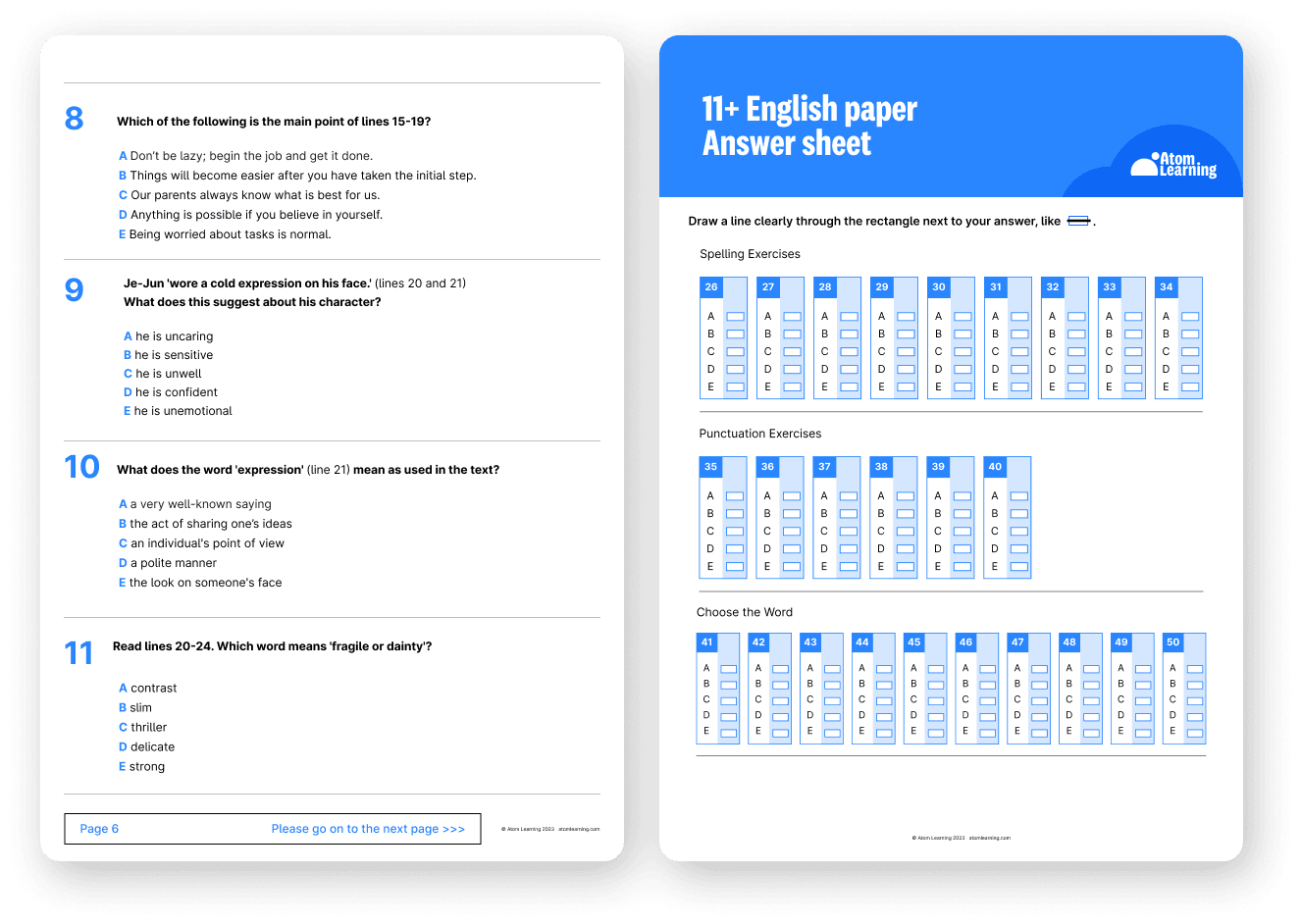
Not all comprehension questions are the same. Helping your child get familiar with the different types can make a big difference in how they approach their exams.
1. Vocabulary questions
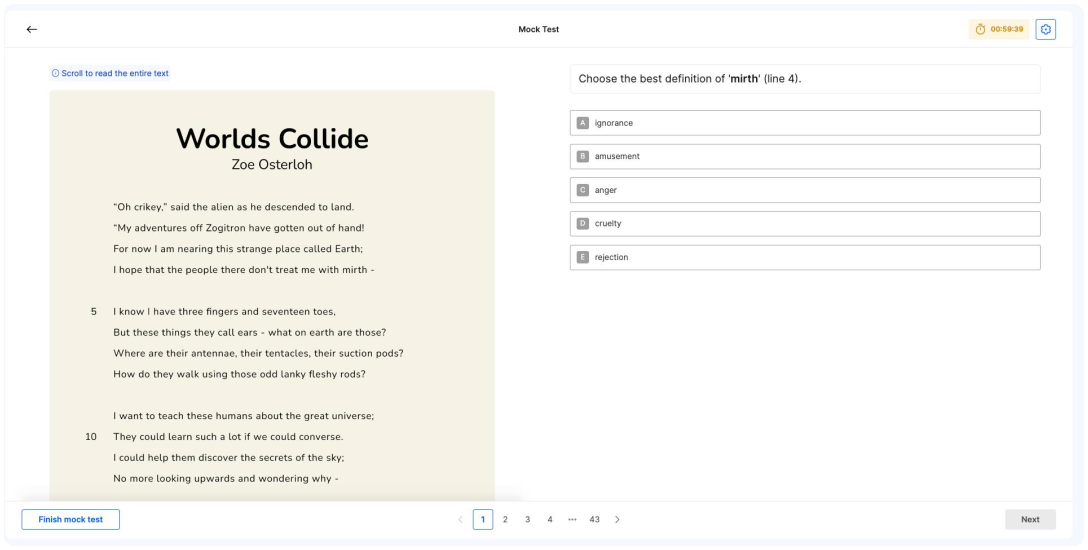
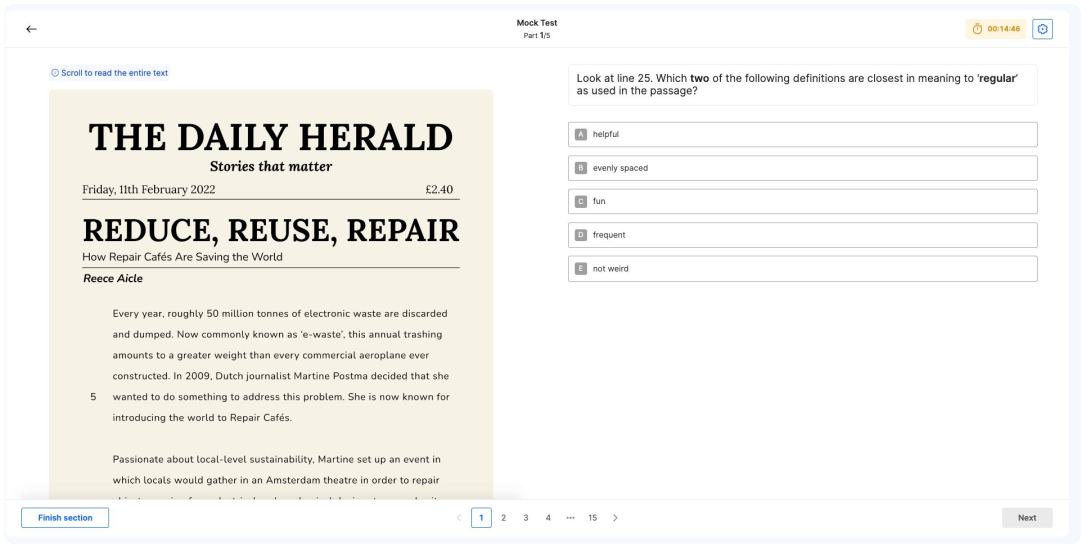
These questions test a child’s understanding of specific words in the text. They might be asked to define a word or choose a synonym (a word with the same meaning) from multiple options.
How to prepare: Encourage your child to read widely and explore our free 11+ vocabulary lists. Each word comes with a clear definition and an example sentence to help build your child’s vocabulary.
2. Retrieval questions
These questions ask your child to find specific details in the text. Rather than finding answers that are stated directly in the text, they need to use clues to work out what’s implied.
How to prepare: Teach your child to scan texts to find key information quickly. Try practising with short extracts and simple tasks to build confidence and accuracy.
3. Inference questions
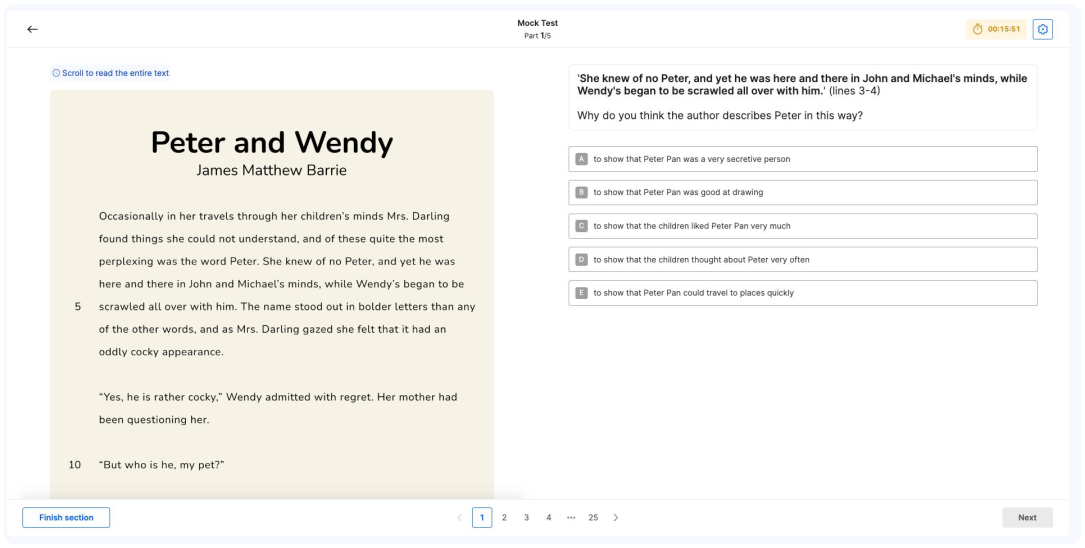
Inference questions require children to read between the lines. Instead of directly stated answers, they have to use clues from the text to understand what’s implied.
How to prepare: Discuss books and passages with your child. Ask open-ended questions like, “Why do you think the character felt that way?” to encourage deeper thinking.
4. Summary questions
These questions assess how well your child can pick out the main ideas and sum up information clearly from a passage.
How to prepare: Ask your child to practise summarising short paragraphs in their own words, focusing on the key points and leaving out extra details.
5. Author’s intent and literary techniques
Some questions focus on why the author wrote the text the way they did. Your child might be asked about tone or purpose, as well as about techniques such as metaphors and similes.
How to prepare: Read a variety of texts together. As you read, point out features like descriptive language, persuasive phrases, or storytelling techniques. Talk about why the author might have used them.