Is your child applying for 11 plus entry to a grammar school or a selective independent school? Most 11 plus exams include a maths test.
Keep reading to find out everything you need to know about 11 plus maths. In this article, we'll cover:
The key topics your child needs to know
The types of maths questions used by major exam boards
How your child can revise and prepare effectively
Plus, sign up for Atom's free 11+ course and get a full-length 11+ maths practice paper!
When are 11 plus maths exams?
If your child is applying to a grammar school, they will take their 11+ exams in September in Year 6.
11 plus exams for entry to independent schools tend to take place a little later – usually between December and January in Year 6. If your child is taking the ISEB Common Pre-Test, they will probably sit the exam in November.
What are the key 11+ maths topics?
Most 11+ maths exams include the topics taught on the national curriculum up to the end of Year 5. Some 11 plus exams include content taught in early Year 6. 11+ tests are meant to be challenging, so it's normal for your child to come across questions they're not familiar with.
Key Stage 2 maths covers these topics:
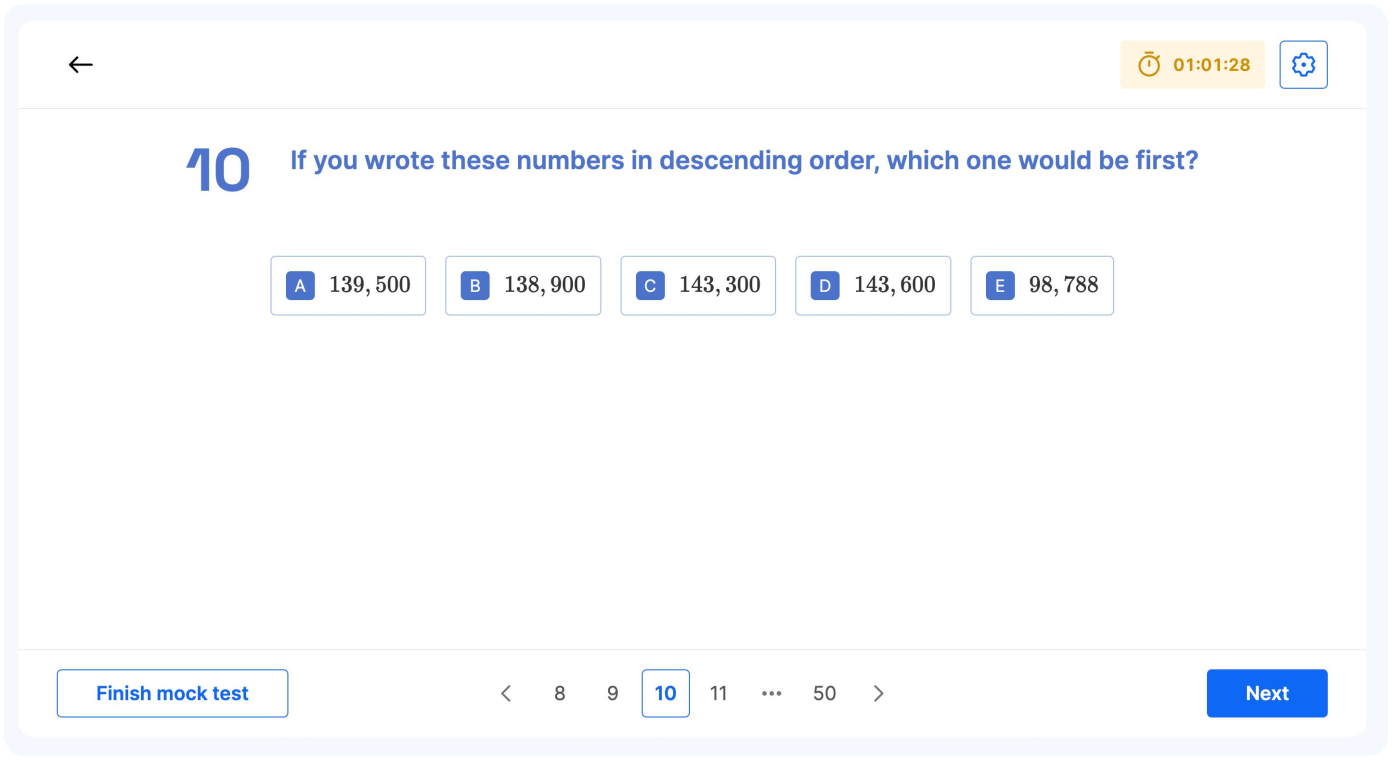
Number – number and place value
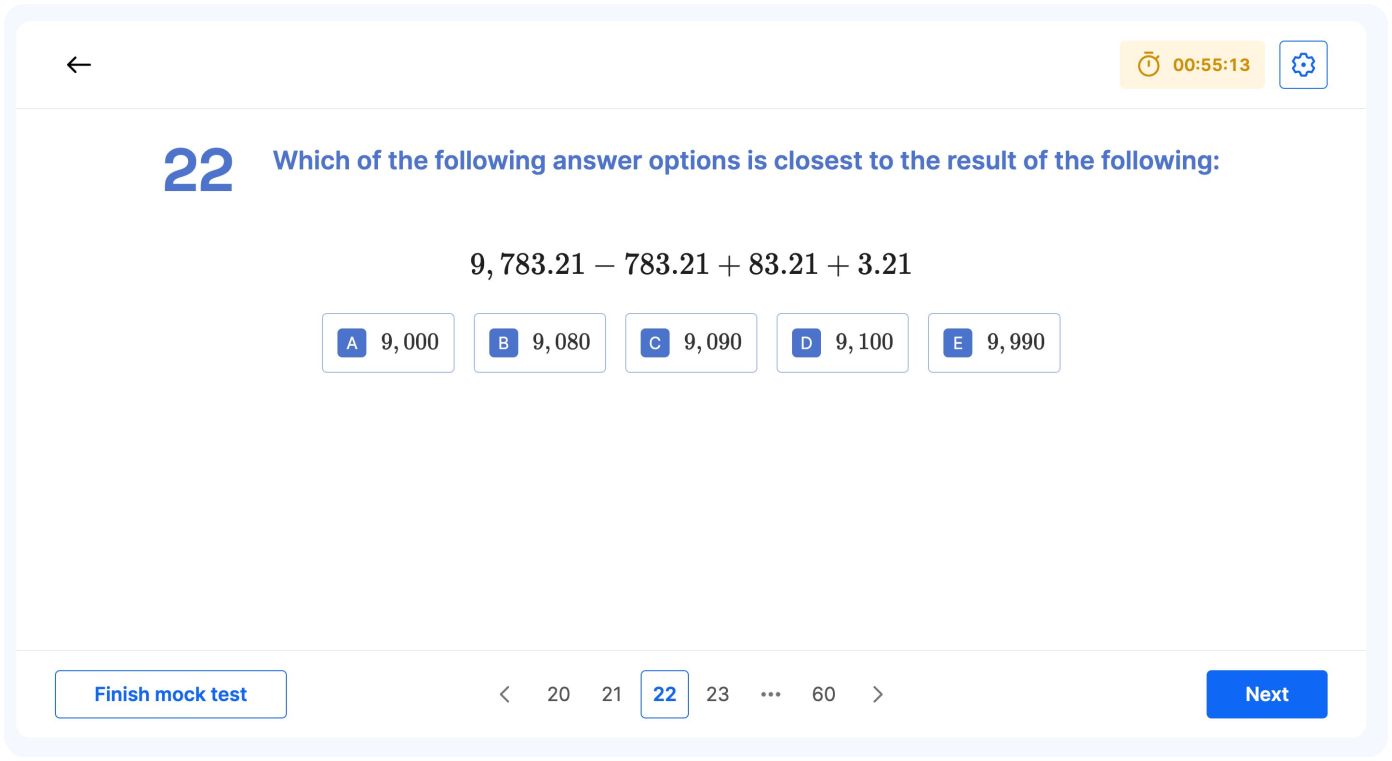
Number – addition and subtraction
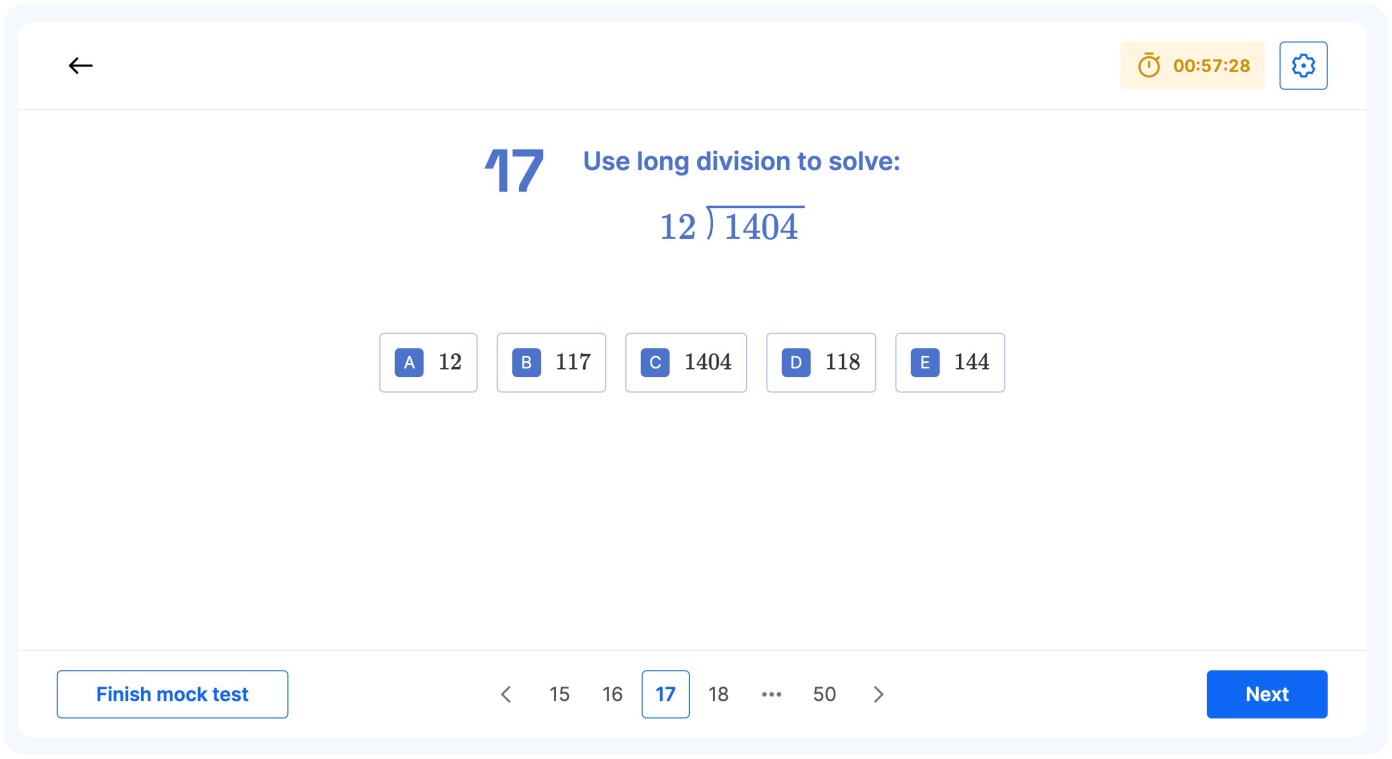
Number – multiplication and division
Number – fractions (including decimals and percentages)
Measurement
Geometry – properties of shape
Geometry – position and direction
Statistics
We've broken down these topics into more detail below.
Is your child ready for the 11+?
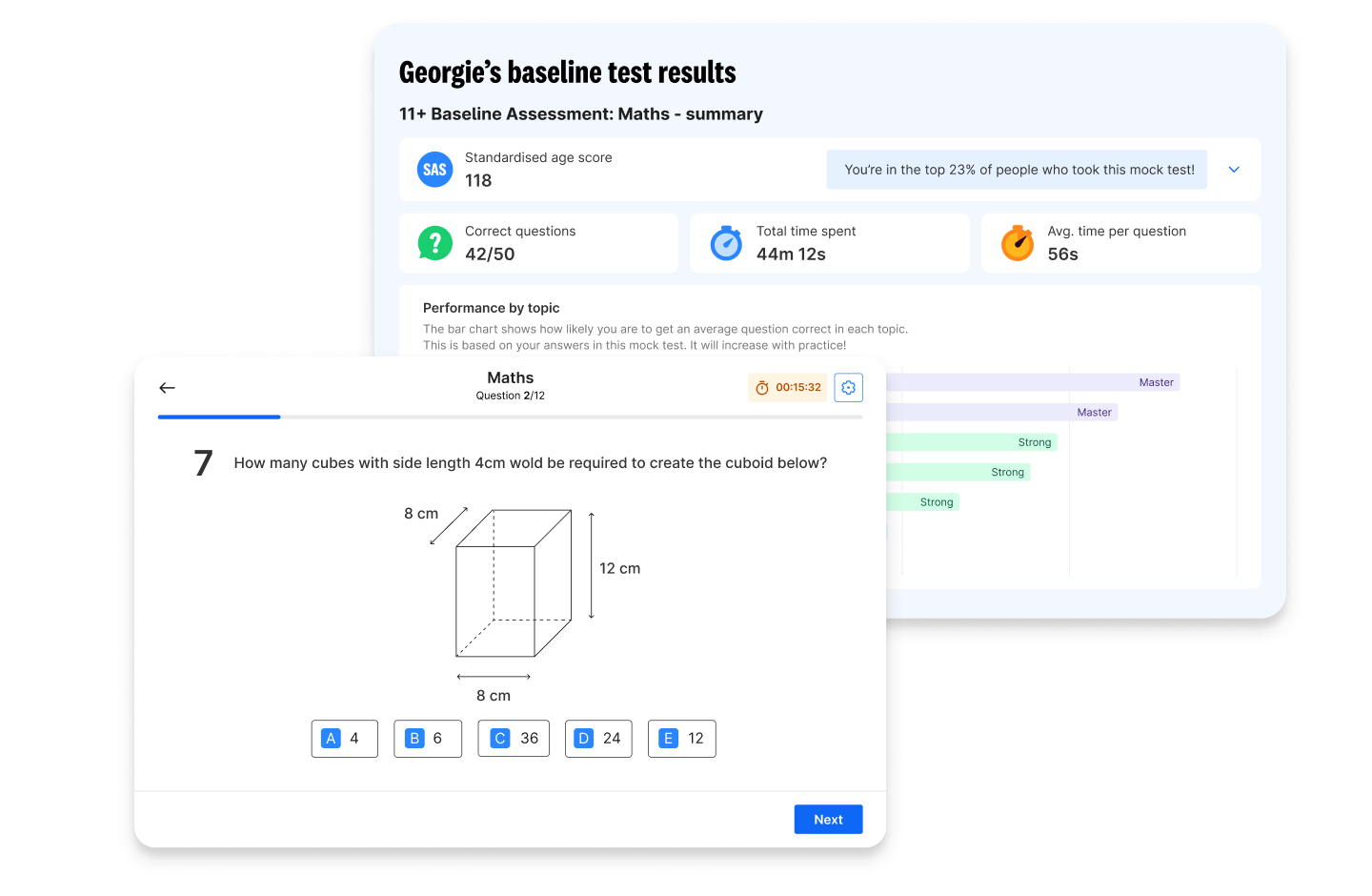
See where they stand in minutes. Atom’s free 11+ baseline tests give you an instant breakdown of their strengths and gaps. Know exactly what to focus on next and start preparing with direction, not uncertainty.
4. Number – fractions (including decimals and percentages)
By the end of Year 5, your child should be able to:
compare and order fractions whose denominators are multiples of the same number
multiply proper fractions and mixed numbers by whole numbers
identify, name and write equivalent fractions
add and subtract fractions with the same denominator(s)
read and write decimals as fractions
compare numbers with up to 3 decimal places, and round numbers with 2 decimal places, to the nearest whole number
recognise mixed numbers and improper fractions and convert from one form to the other
recognise the per cent symbol (%) and write percentages as a fraction with the denominator 100, and as a decimal
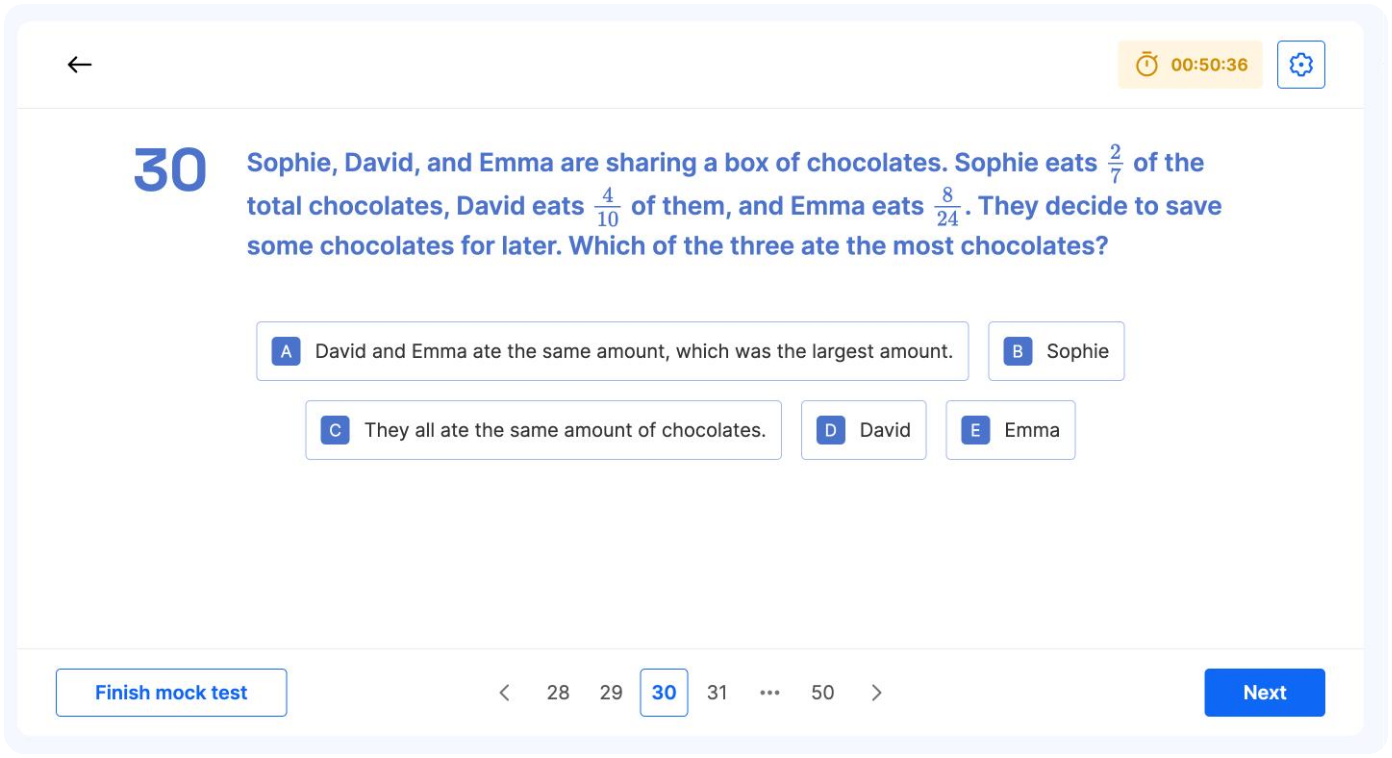
The question below is an example of a multi-step fractions problem your child might see in the 11+ maths test.
5. Measurement
By the end of Year 5, your child should be able to:
convert between different units of metric measure (such as centimetres and metres, or litres and millilitres)
use approximate equivalences between metric and imperial units
measure and calculate the perimeter of rectilinear shapes using metres and centimetres
calculate and compare the areas of rectangles
estimate the area of irregular shapes
estimate volume
use standard units, square centimetres and square metres
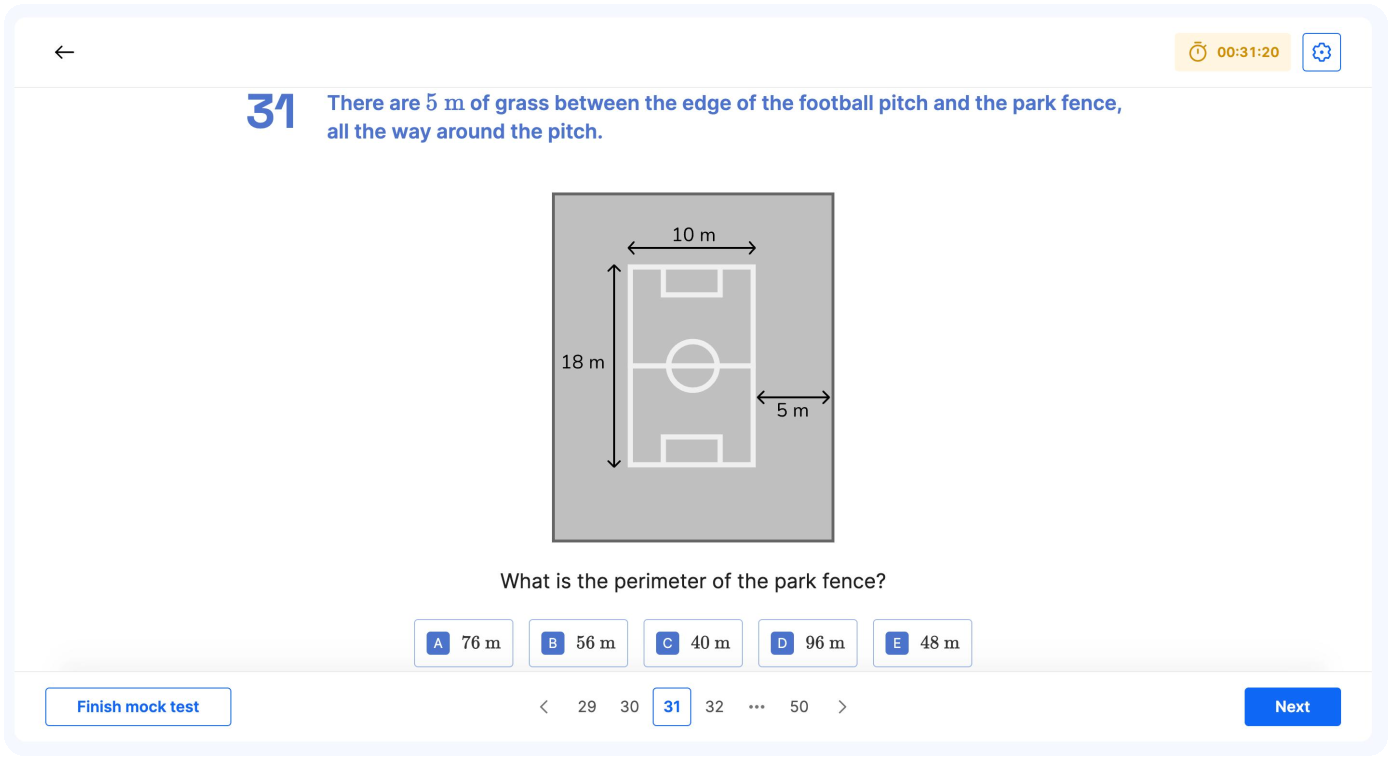
The question below is an example of when your child would need to calculate perimeter.
6. Geometry: properties of shape
By the end of Year 5, your child should be able to:
identify 3D shapes from 2D representations
learn how to compare and estimate acute, obtuse and reflex angles
draw angles and measure them in degrees
understand rectangle properties to deduce facts and find missing lengths and angles
distinguish between regular and irregular polygons
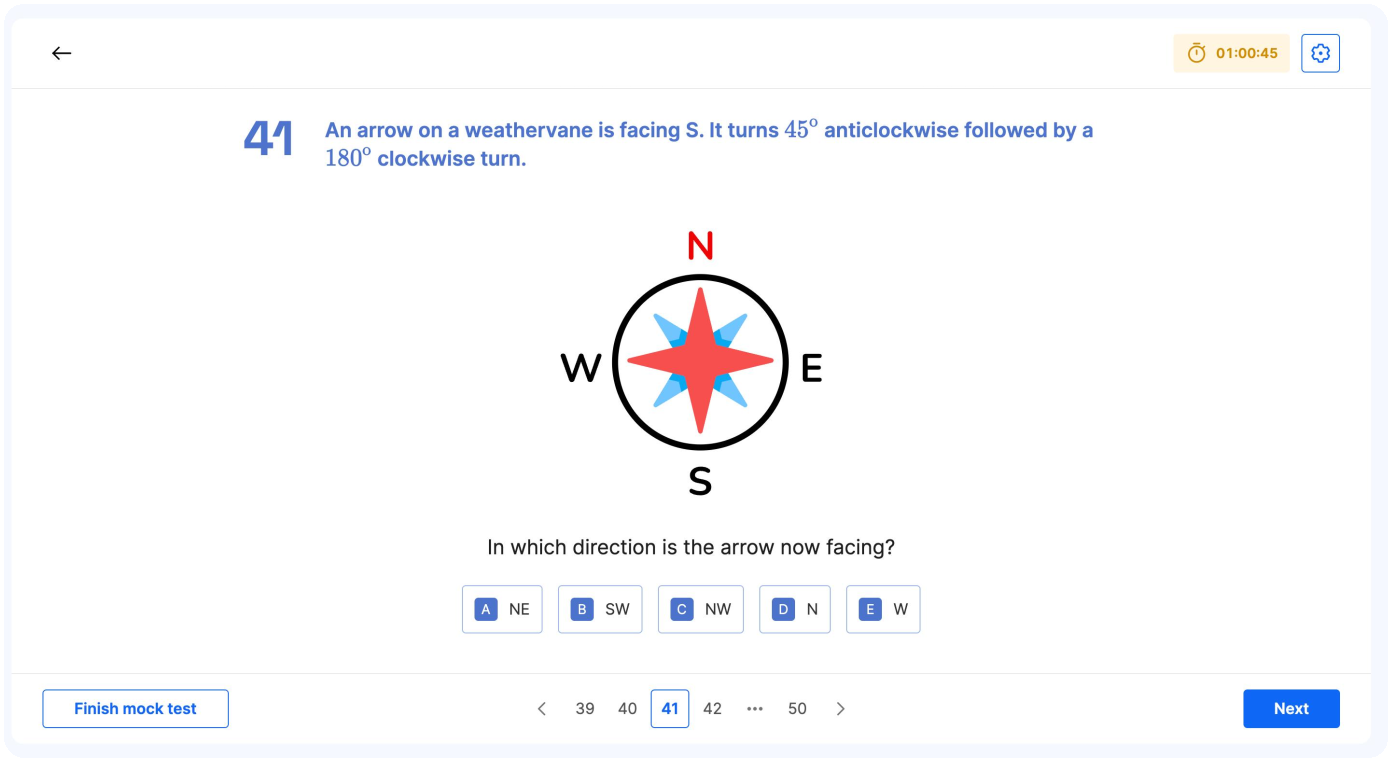
The question below is taken from an 11 plus maths mock test on Atom. Your child would need to use their knowlegde of angles and degrees to solve the problem.
7. Geometry: position and direction
By the end of Year 5, your child should be able to:
reflect shapes and lines
identify, represent and describe the position of shapes following a reflection or translation
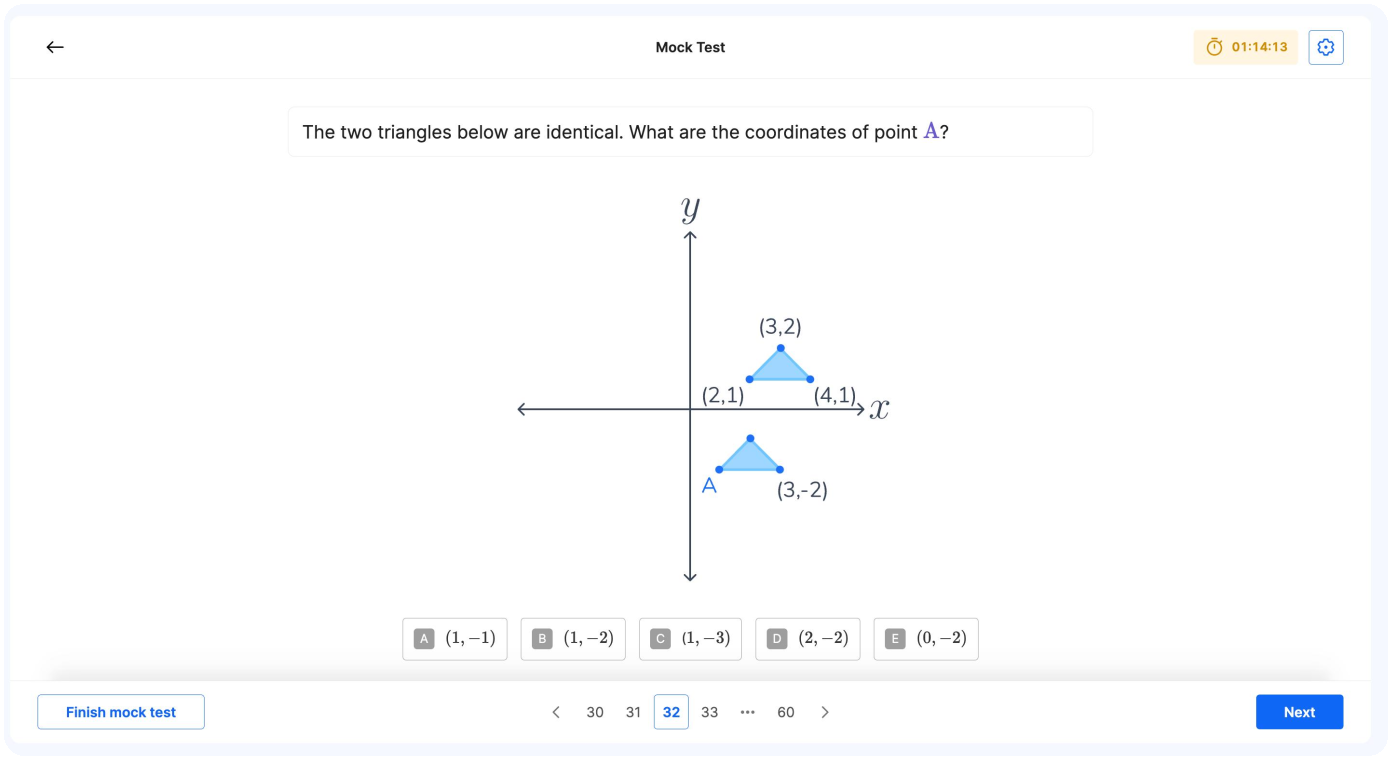
Take a look at the question below. To answer this, your child would need to use their understanding of coordinates and positioning.
8. Statistics
By the end of Year 5, your child should be able to:
complete, read and interpret statistical information in tables (including timetables)
use line graphs to solve comparison, sum and difference problems
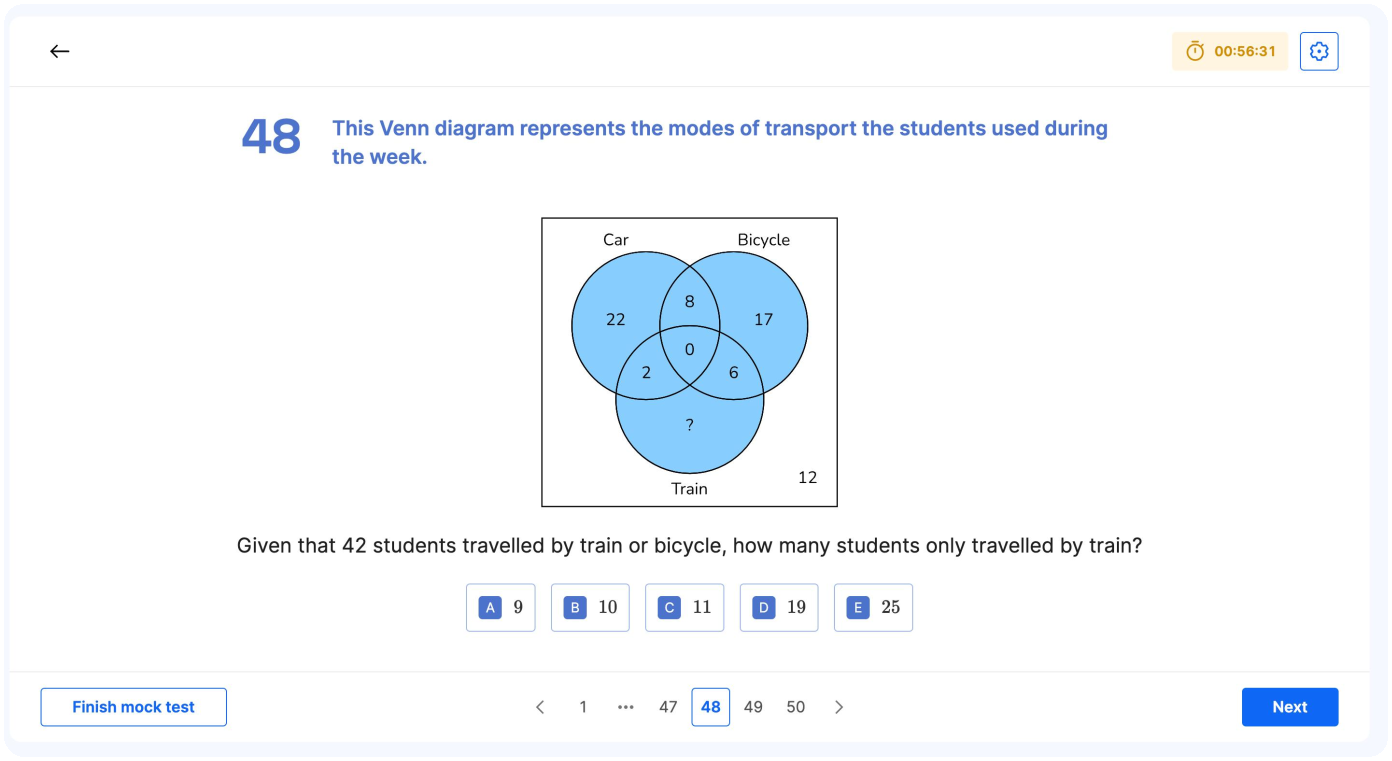
Here's an example of the type of statistics question your child might see on their 11+ maths test.
What is the format of the 11 plus maths exam?
11 plus maths exams look a bit different depending on who creates your child's exam. Some schools use maths tests created by exam providers, while others create their own bespoke tests. 11 plus maths exams are usually non-calculator.
Take a look at the typical structure of 11+ maths exams below.
CAT4
The CAT4 – a cognitive abilities test – is used as an 11 plus exam for entry to some independent schools. State secondary schools also often use the CAT4 to 'stream' pupils into sets in Year 7.
The CAT4 can be taken online or on paper and it is non-adaptive. It consists of three parts, which are broken down into smaller individually-timed sections. The questions are multiple-choice and focus on reasoning and problem-solving.
Cambridge Select Insight
Cambridge Select Insight is used by some independent schools. It is taken online and is non-adaptive. It used to be known as CEM Select.
There are six sections in the Cambridge Select Insight test. The general maths section consists of 30 questions. These are usually in a drag-and-drop or multiple-choice format.
FSCE
FSCE (Future Stories Community Enterprise) supplies 11 plus exams to a few UK grammar schools. This exam is taken on paper and is not adaptive.
The format is similar to GL Assessment exams – your child will have a question booklet, and will need to write their answers on the answer sheet provided. There is a combination of free- response questions and multiple-choice questions.
GL Assessment
GL Assessment 11 plus exams are used by most UK grammar schools and some independent schools. These tests are taken on paper and are not adaptive.
Questions in GL Assessment 11 plus tests are multiple-choice. Your child will be given a question booklet and an answer booklet. They will need to shade in the correct answer for each question in their answer booklet, which is then marked electronically.
ISEB Common Pre-Test
The ISEB Common Pre-Test is used by some independent schools in the UK. This is an online and adaptive test.
There are four sections in the ISEB Pre-Test. The maths section has a time limit of 40 minutes and consists of multiple-choice questions. Your child will be allowed a pen and paper to jot down any calculations or notes that they want to make, but this won't be marked.
Quest Assessments
Many independent schools use entrance exams by Quest Assessments. This is an online and adaptive exam – the questions become more challenging depending on how your child is performing.
It's up to the school to decide whether to include a maths section, and if so, how long it should be. All questions in a Quest Assessment exam are multiple-choice. Your child will have scrap paper and pencils to help them work through the problem.
How is the 11 plus maths test marked?
Each maths question will have a different number of marks. Most 11 plus maths exams have easier 1-mark questions to start, with more challenging questions towards the end. More difficult questions usually involve lots of steps, with more marks available.
Some exam boards reward pupils with marks for showing their workings. It's a good idea to make sure your child gets into the habit of writing down their problem-solving.
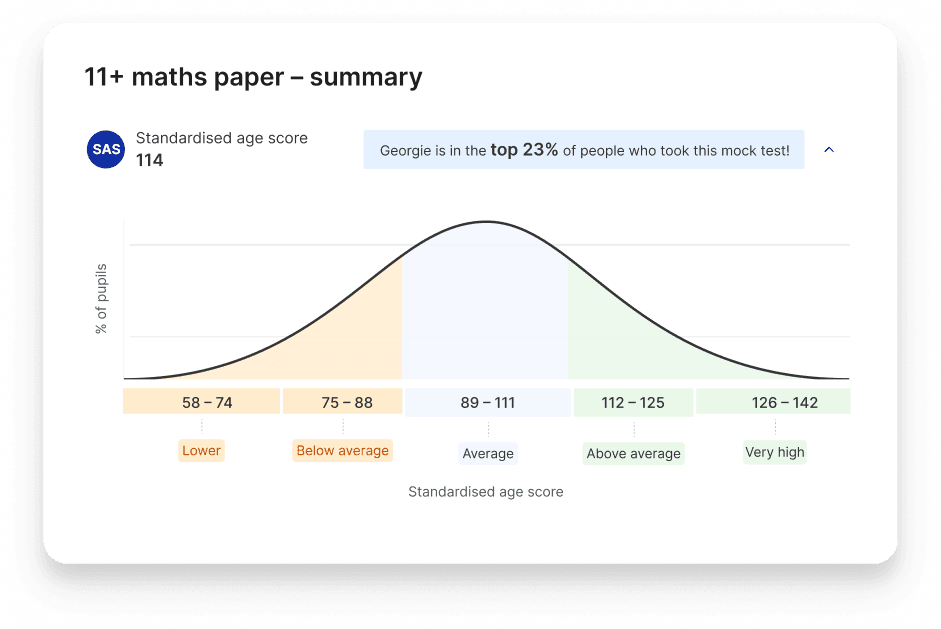
When your child's test is marked, the examiner will add the marks together to create a raw score. Many exam boards then use a process called standardisation to create a 'standardised age score'. This takes into account your child's age in years and months at the time of taking the exam, and the number of correct answers. This process ensures that children born at the end of the school year aren't disadvantaged.
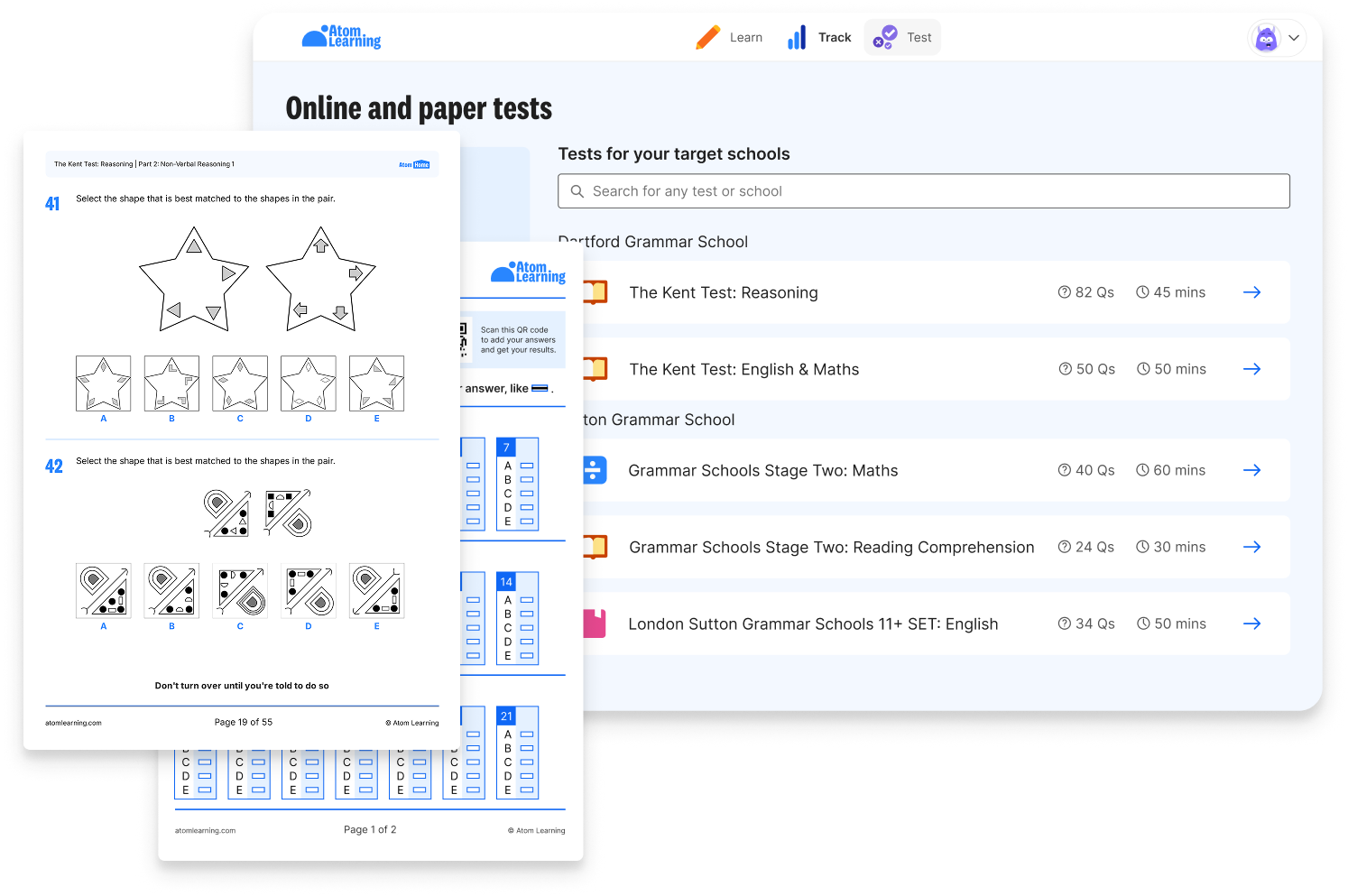
With an Atom Home subscription, your child can take unlimited 11+ practice tests. Get instant data, including their standardised age score, and performance compared to other children applying to the same school!
No items found.
No items found.
No items found.
No items found.
Take control of your child’s 11+ preparation.
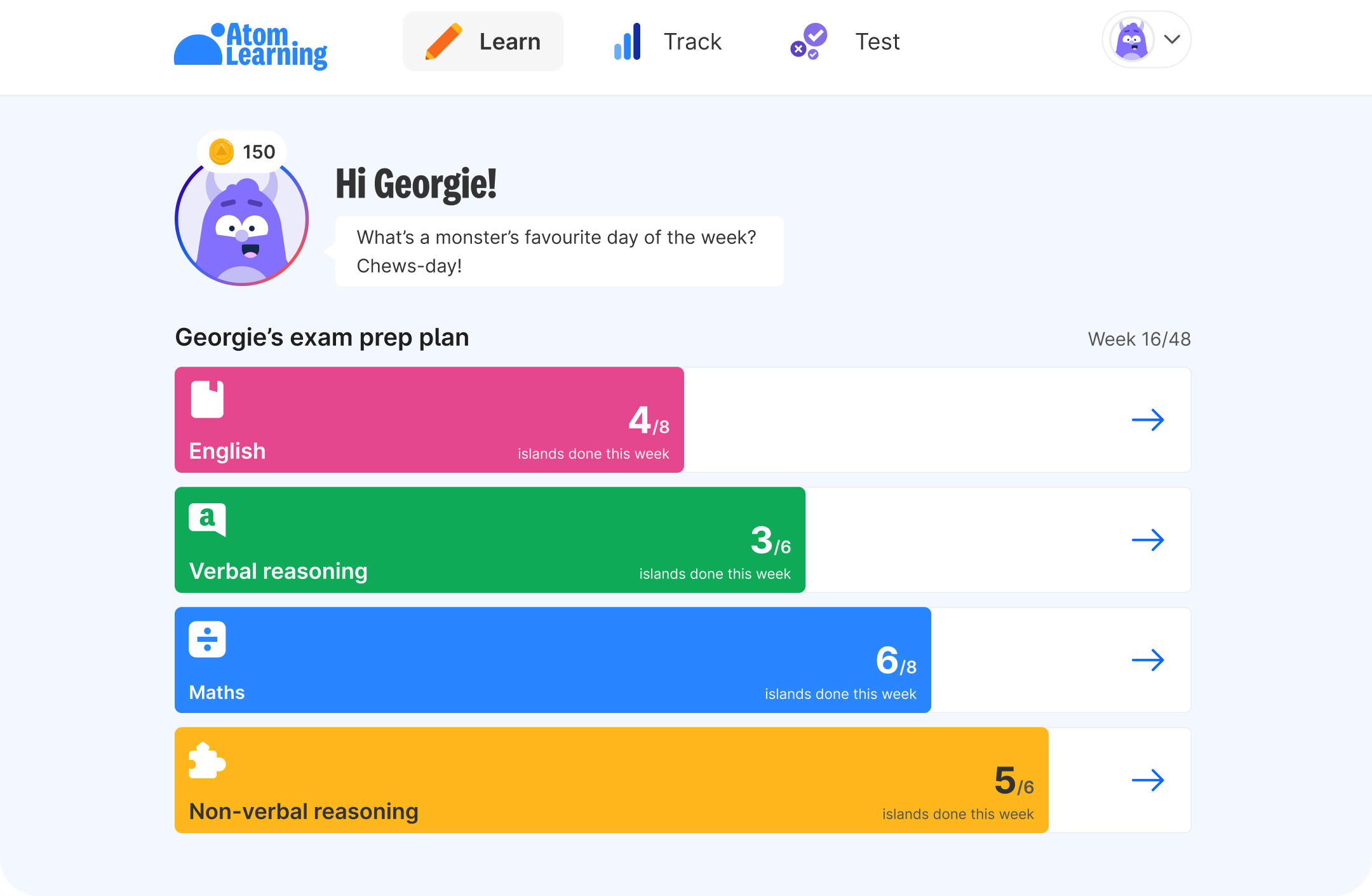
Not sure if your child is on track for the grammar school 11+? You don’t need to guess what to cover or whether they’re ready. Atom shows you exactly what to practise each week and how they’re performing, so you can stay ahead of the process without the stress.