

How are places decided?
Children who perform well in the entrance exam are invited to an interview with a member of teaching staff. The conversation focuses on your child's interests, both in and out of school. They do not need to prepare anything in advance.
Scholarship assessments also take place in January, across a range of subjects including academic, art, drama, design technology, music and sport.
Offers are made in February.
How can I help my child prepare for the test?
Applying to senior school can feel like a big milestone, but preparation doesn't have to be overwhelming. Here's how you can help your child prepare for test day.
Stay on track with a clear plan
One of the hardest parts of exam preparation is knowing what to focus on, when, and how to make steady progress without it taking over family life.
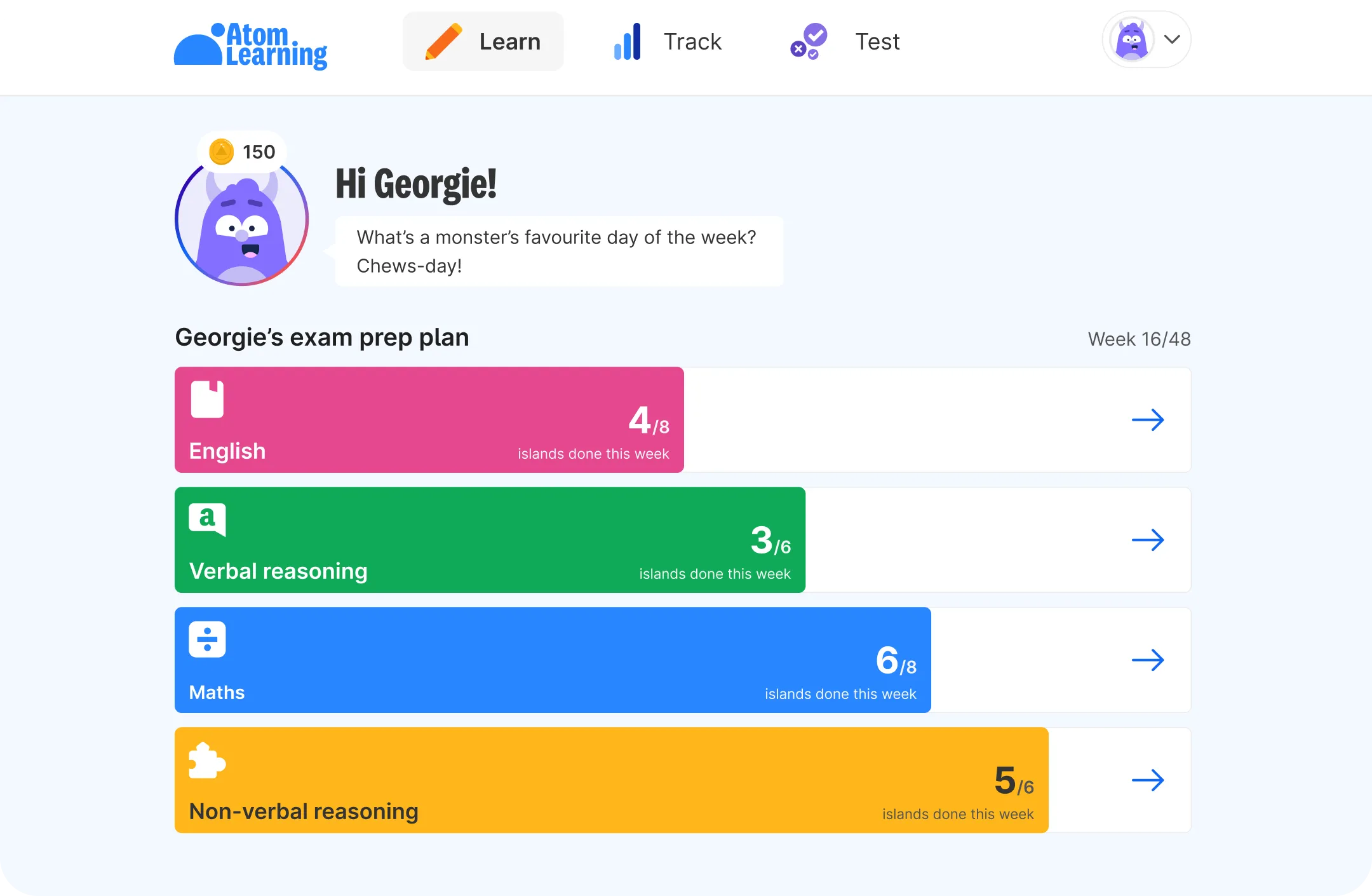
A clear, structured plan helps your child feel less overwhelmed and more in control. It ensures they build skills in the right order, cover everything they need, and avoid last-minute cramming.
Atom's exam plan makes this easier. Enter your child's target schools and exam dates, and we'll create a personalised weekly plan tailored to the topics they'll be tested on. It shows them what to work on and when, adapts as they improve, and helps them build progress in a calm, manageable way — little and often.
That means less guesswork for you, less stress for them, and a clearer path all the way to exam day.
Build smart exam technique
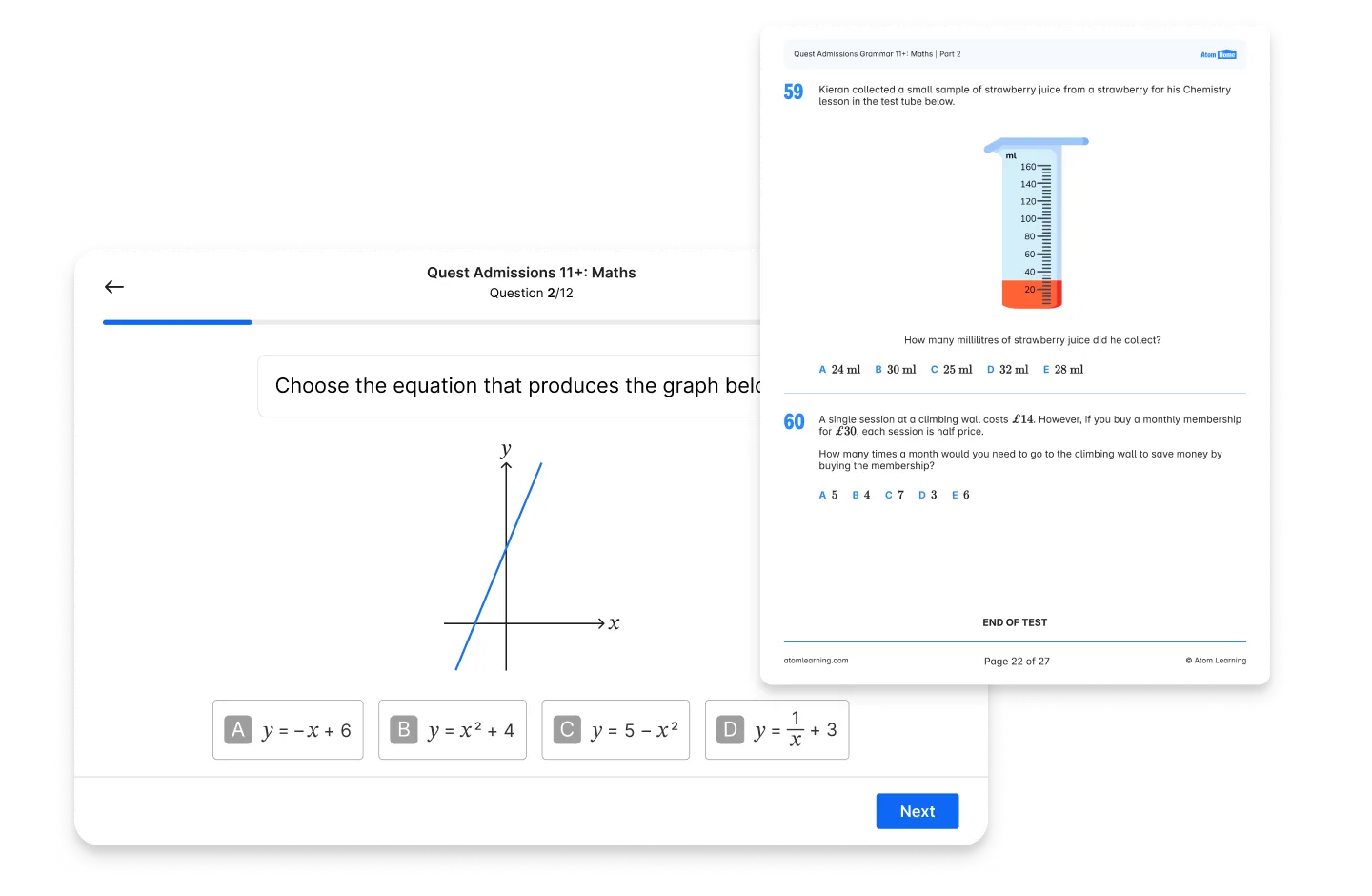
As your child's knowledge grows, practice tests can help them feel more comfortable with the real exam format.
Atom's mock tests are exact replicas of real entrance exams. They're also unlimited — your child can take the same test repeatedly and see new questions each time. This helps them practise without repeating the same content.
Atom's mock tests are automatically marked. You'll see your child's standardised age score (SAS), where they're doing well, and what they should focus on next. You'll also learn how they compare to other children applying to the same school.
Encourage regular reading
Strong reading skills play a big role in preparation for entrance exams.
Encourage your child to read every day, even for just 10–15 minutes. The key is variety. Mix fiction and non-fiction, different genres, and a range of authors. This helps them become more confident in understanding tone, purpose, and meaning across different texts.
Over time, regular reading will:
- broaden their vocabulary
- improve comprehension and inference
- build confidence in tackling unseen texts
And just as importantly, it can help them enjoy reading — not just see it as exam preparation.
Looking for inspiration? Atom's reading and writing starter kit has suggestions spanning fiction and non-fiction for Years 3–6.
Celebrate progress, not just scores
When you're supporting your child through exam preparation, what really matters is knowing they're moving in the right direction — not just how they scored on a single test.
Atom's progress tracking gives you a clear, simple picture of how your child is doing in each topic and the direction they're moving in. You can see where they're on track, where they might need more practice, and spot progress as it happens.
That makes it easier to give meaningful encouragement, keep motivation steady, and focus on what matters most: consistent improvement, not just one-off results.