

Support your child through the
ISEB Common Pre-Test
Atom is partnered with leading independent schools







How Atom turns revision into ISEB exam day success
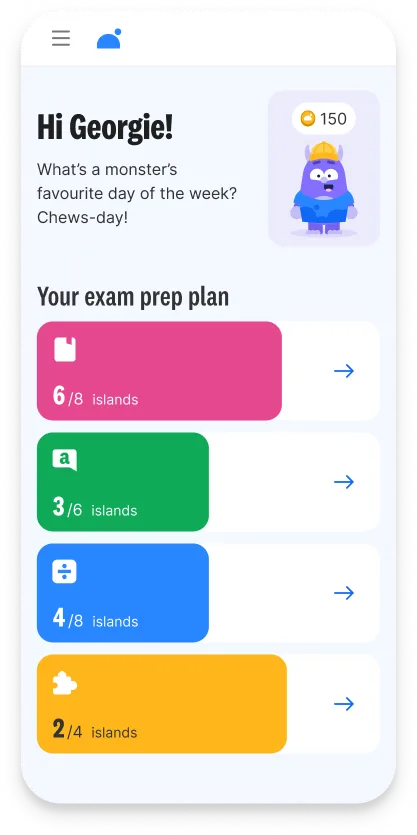
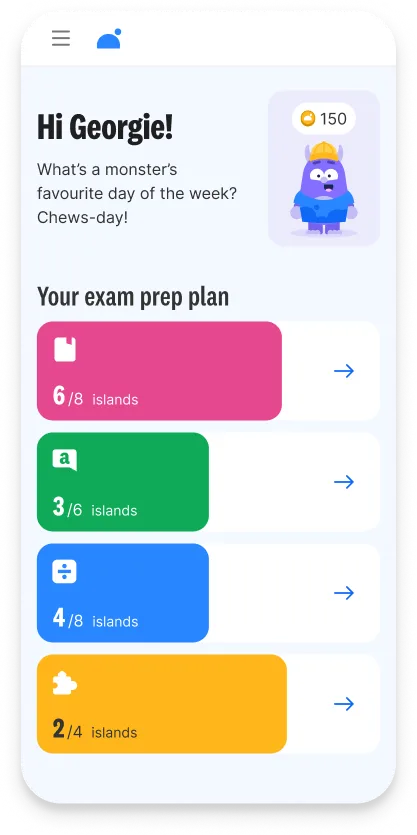
A clear plan, built around your target independent schools.

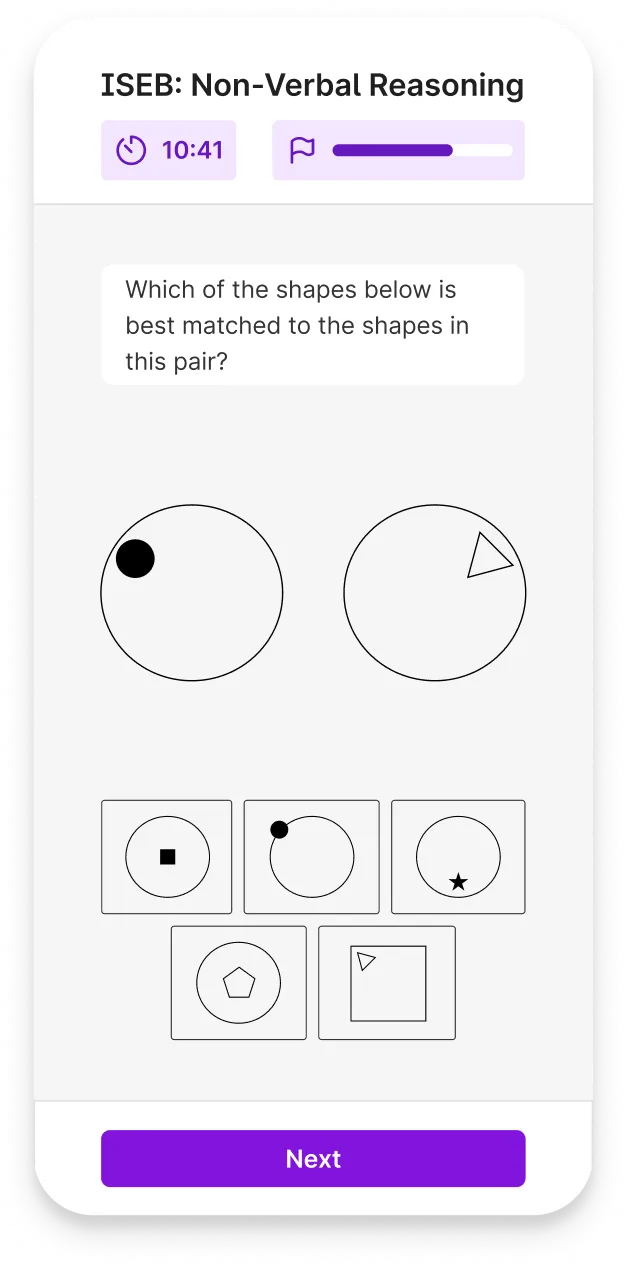
Practice with realistic tests.
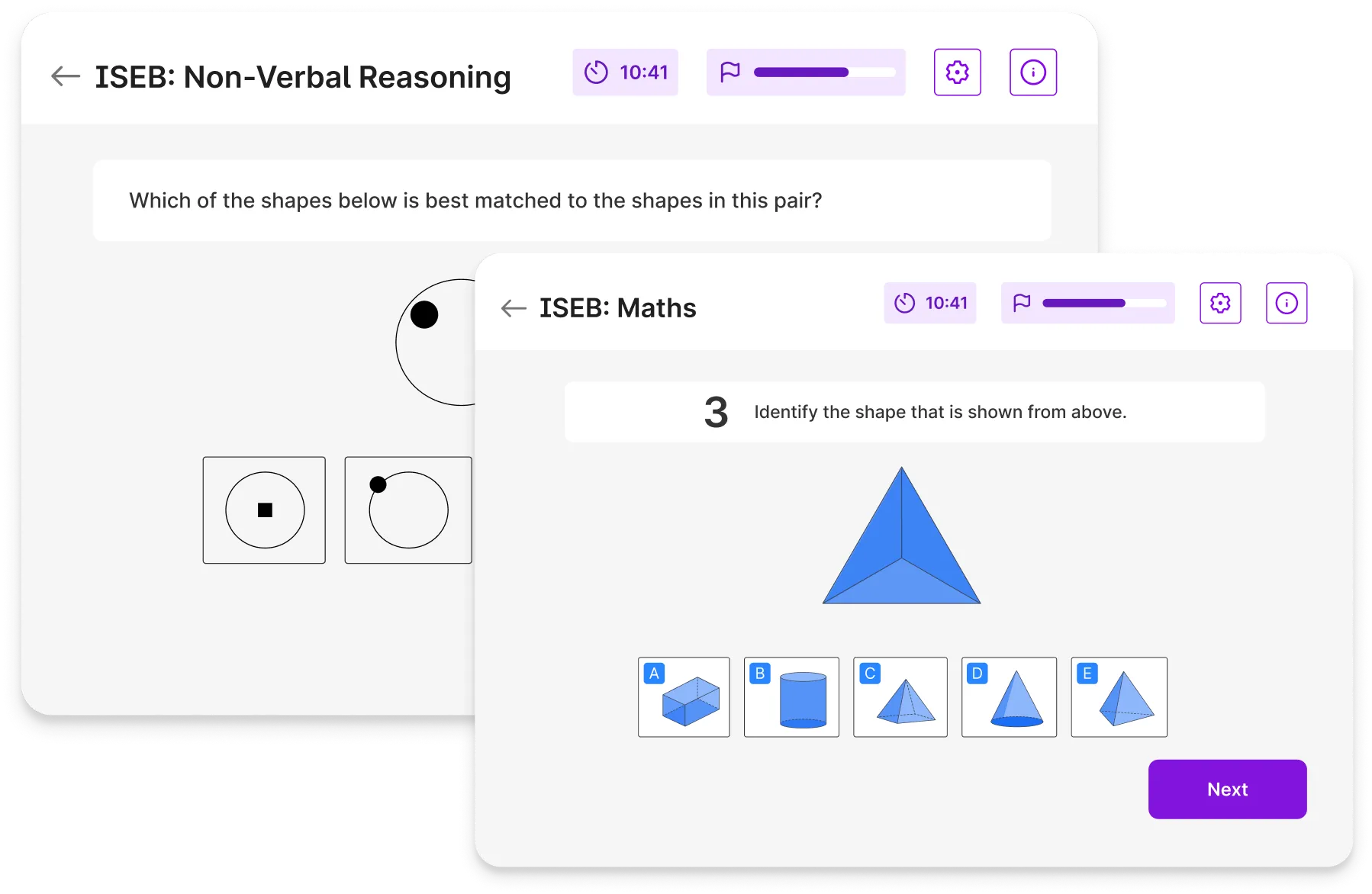
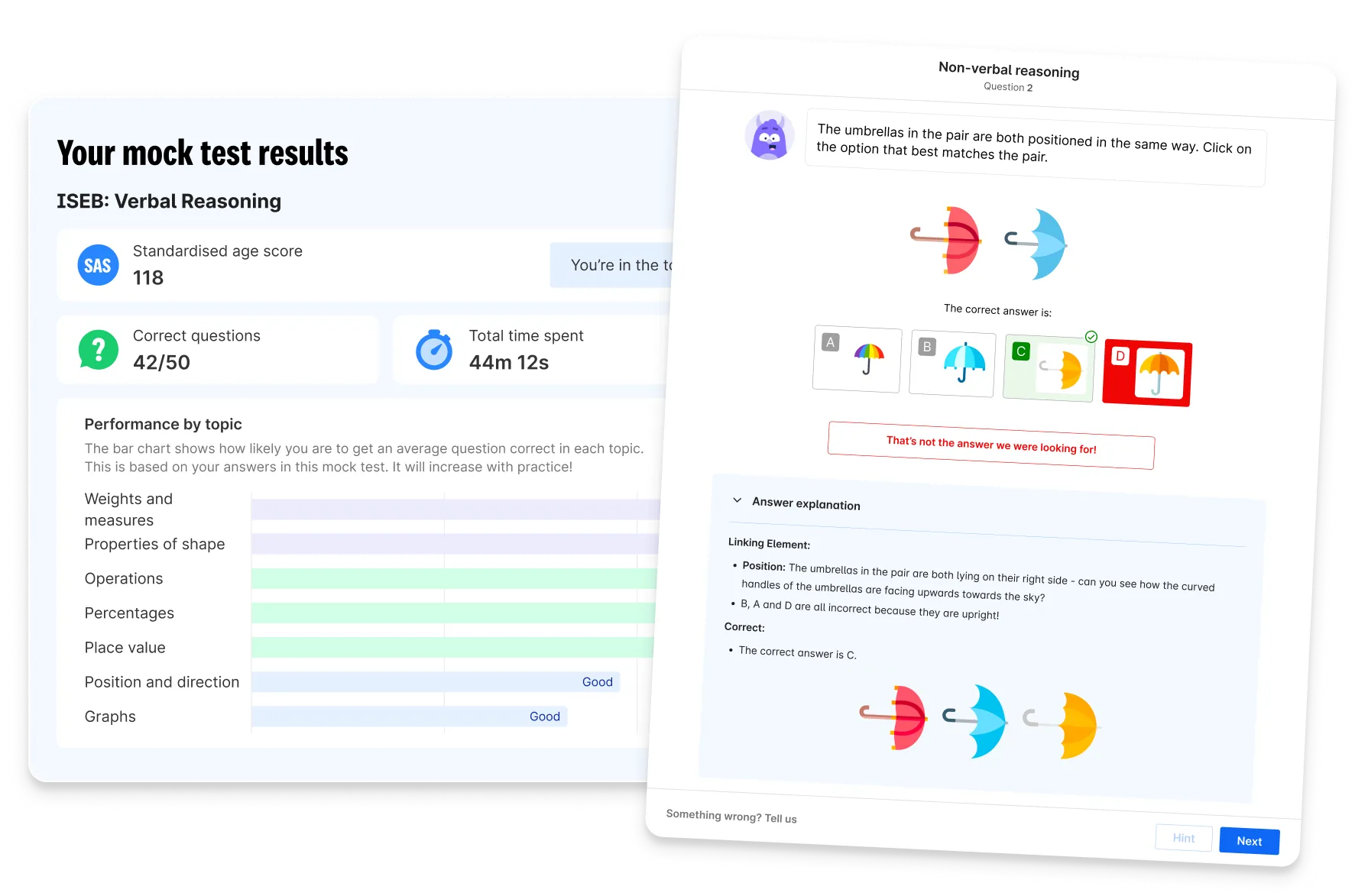
Just like a great tutor, Atom gives instant, exam-aligned feedback
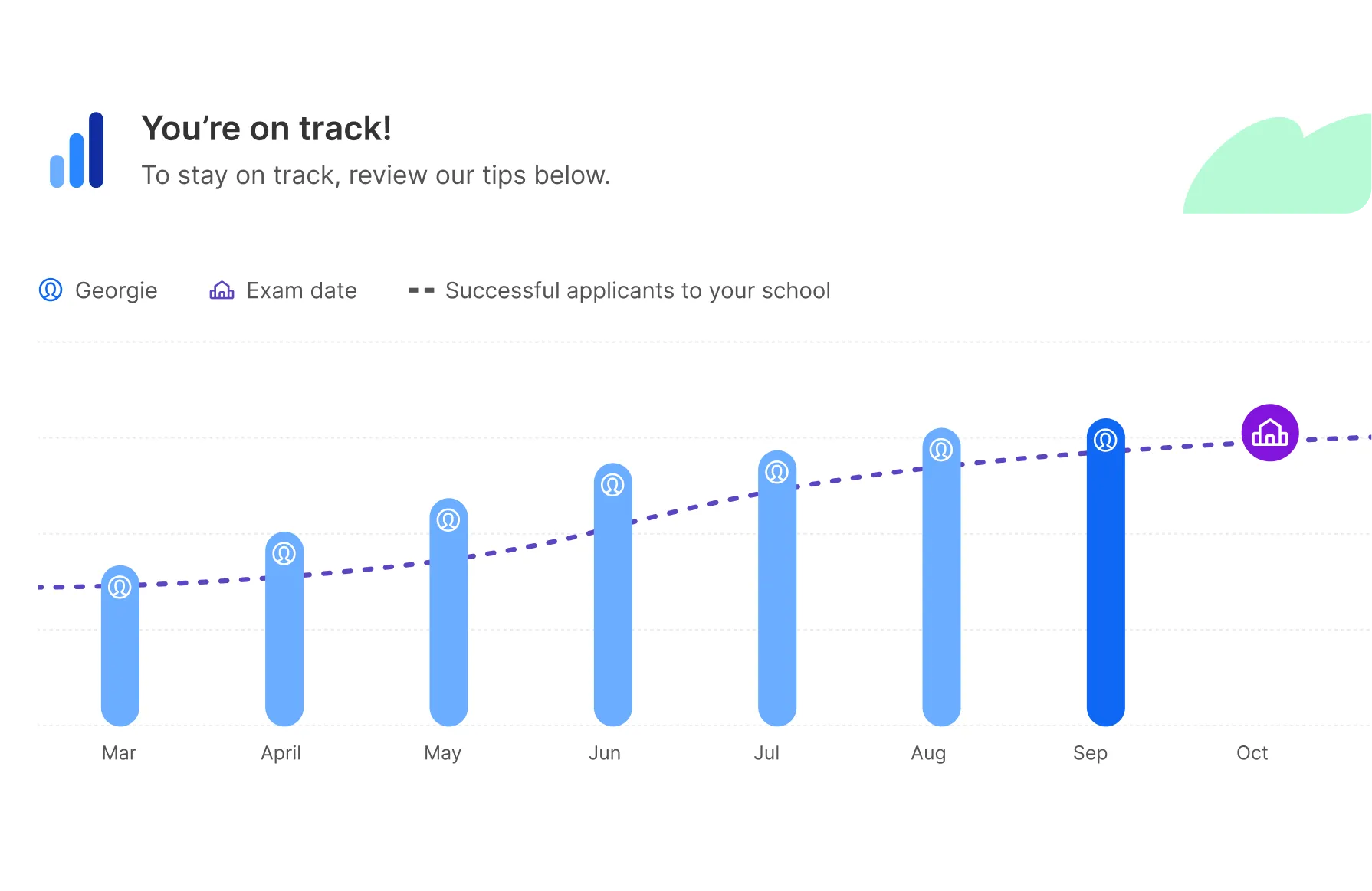
Feel confident that preparation is working.
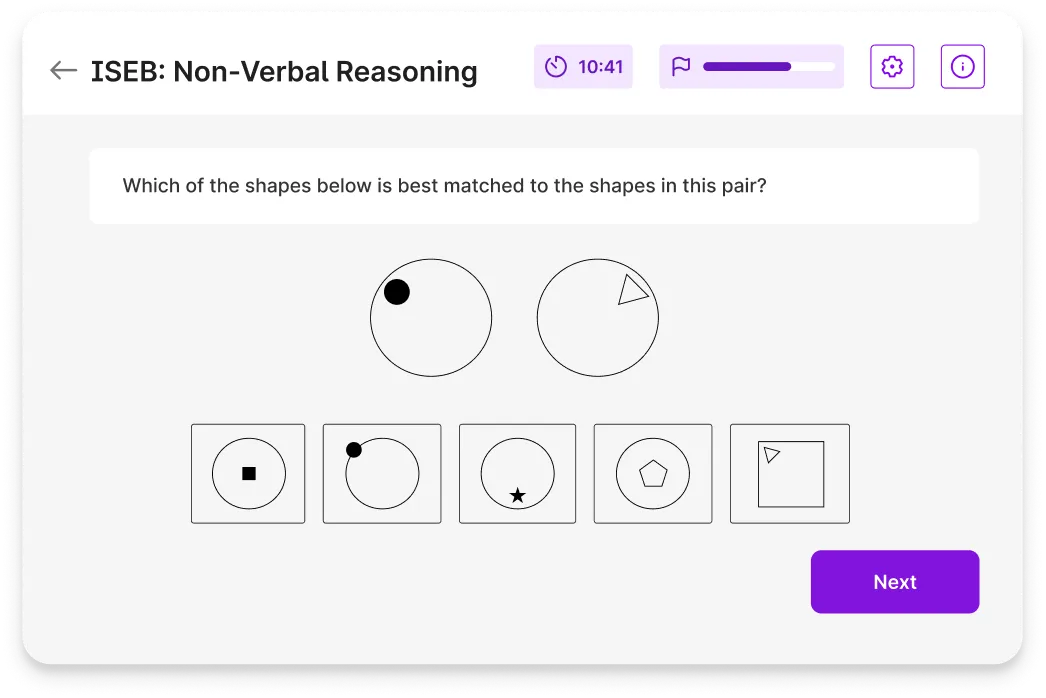
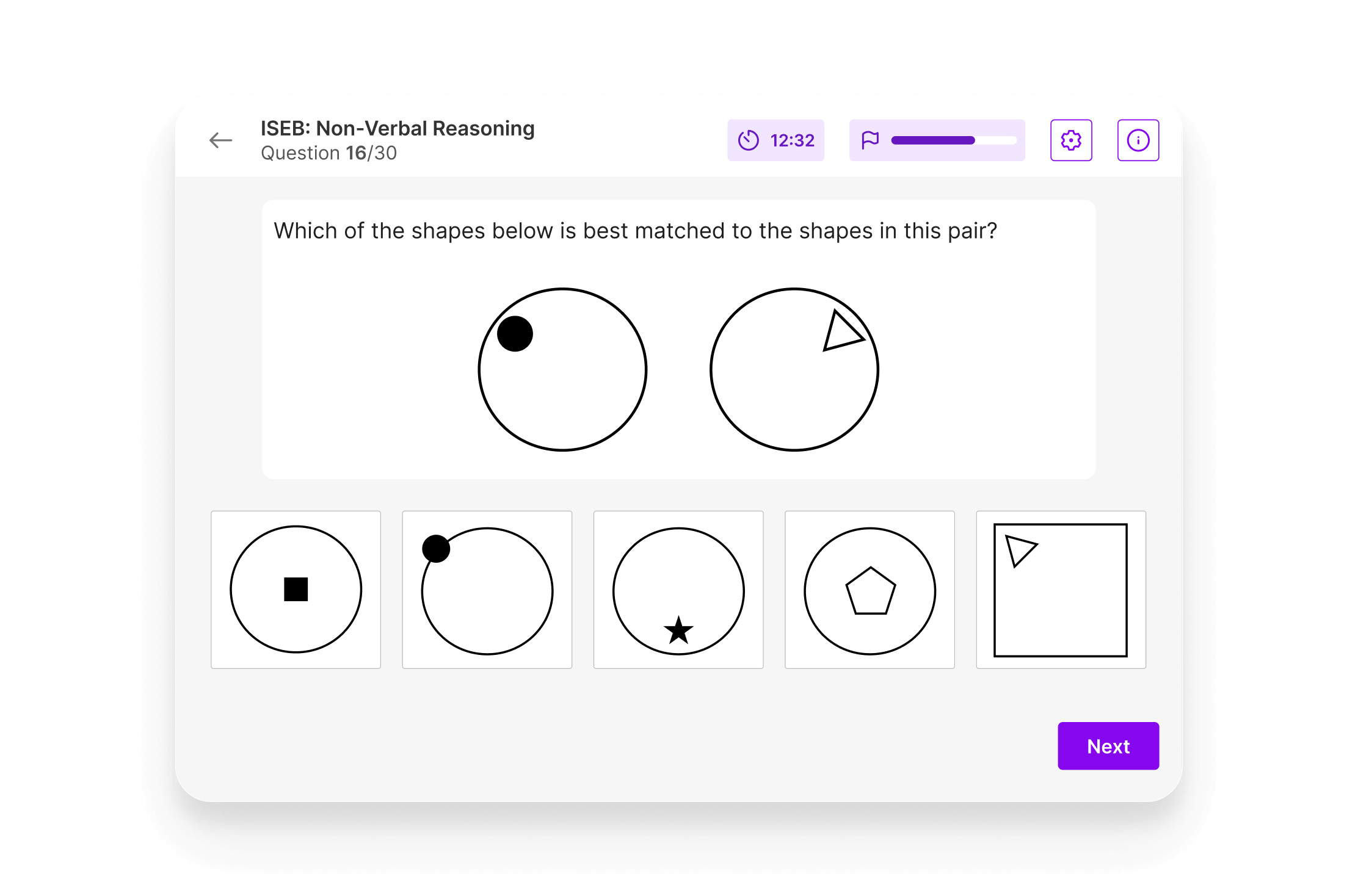
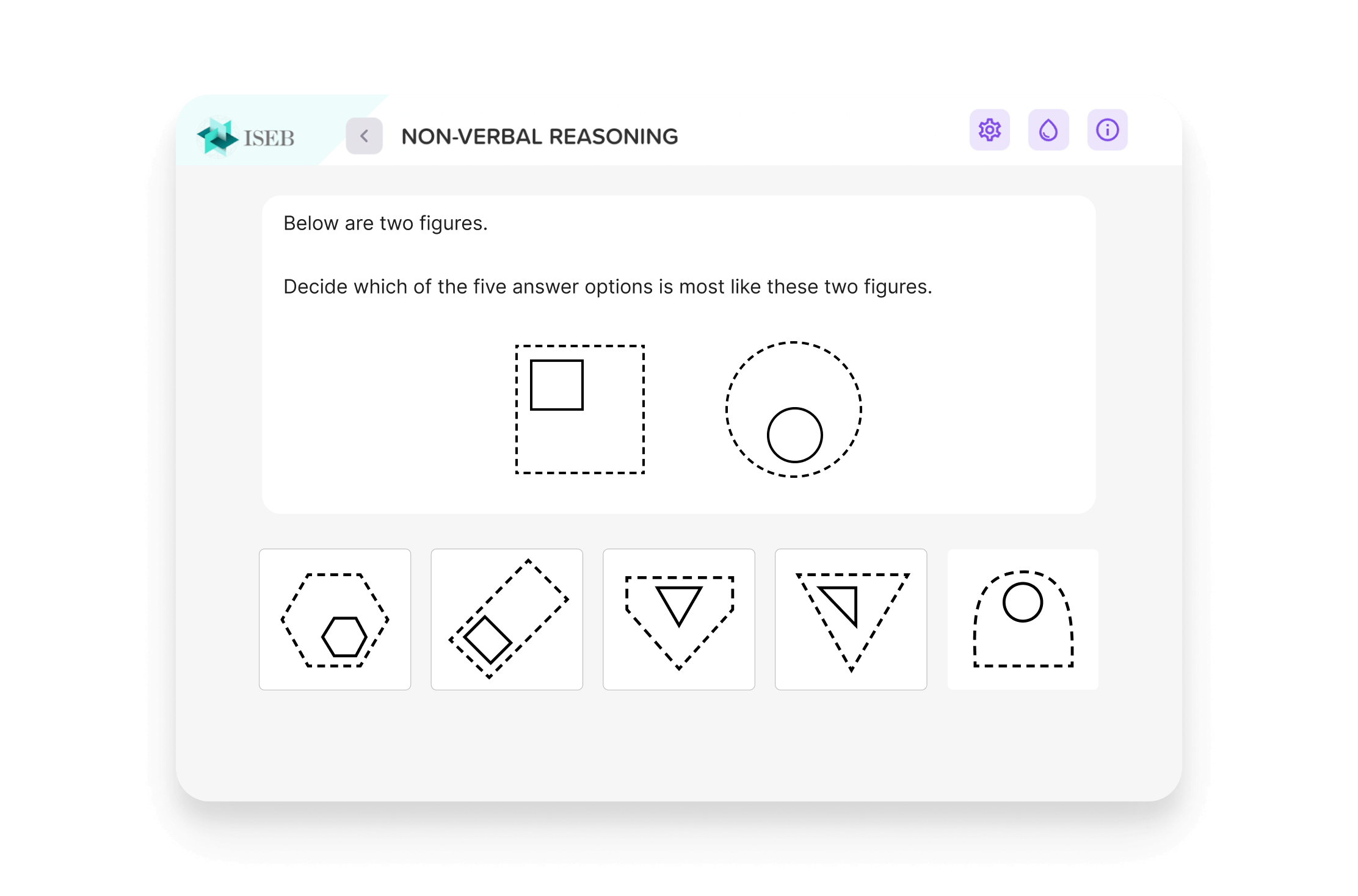
Atom's ISEB mocks = no surprises on test day
The most accurate ISEB mock tests on the market.
Our mock tests mirror the real ISEB. The curriculum, the timings, the controls and even the colours. Familiarity equals confidence.


Three Steps to ISEB success
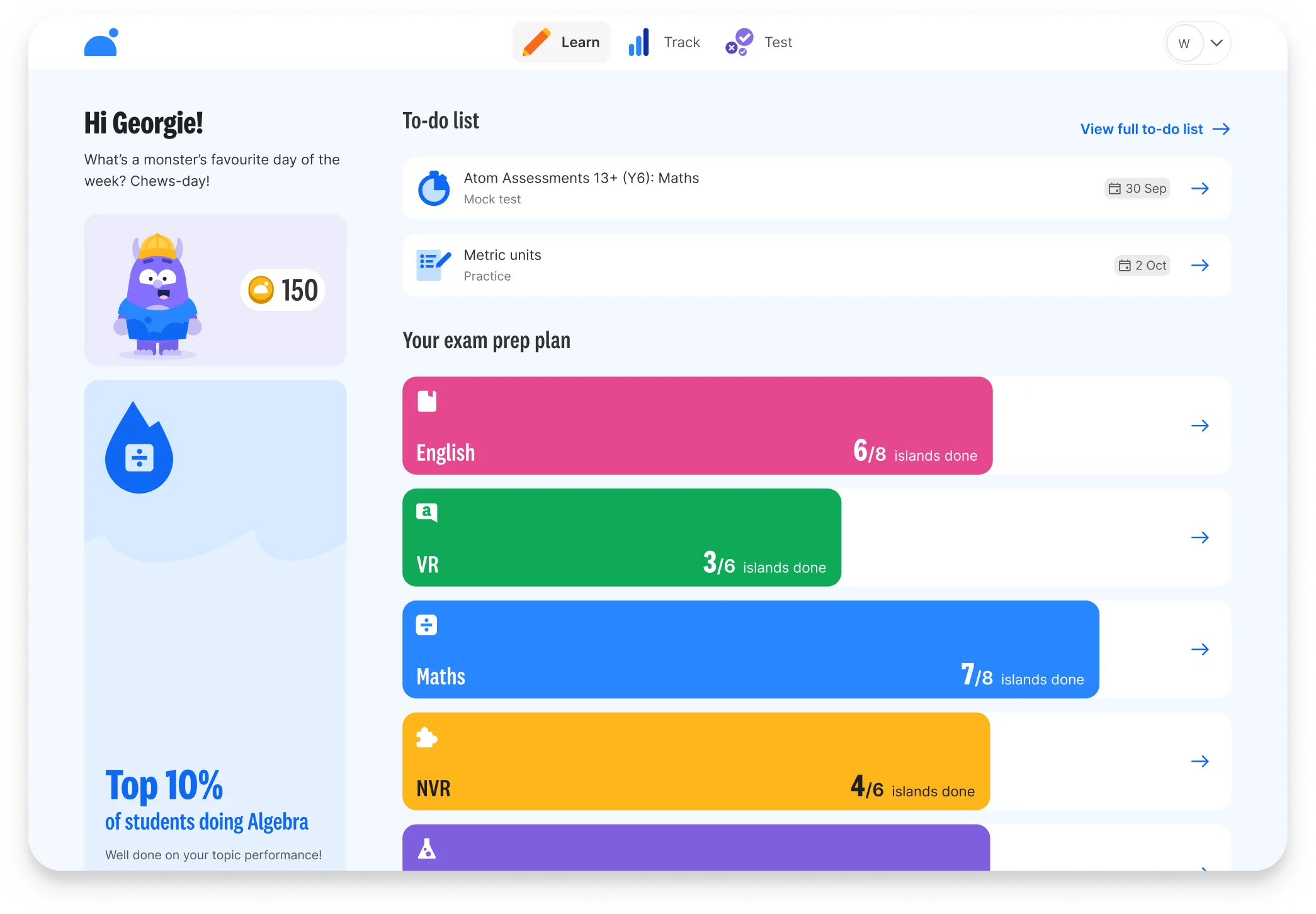
Learn
Your child gets a personalised exam prep plan for their target school
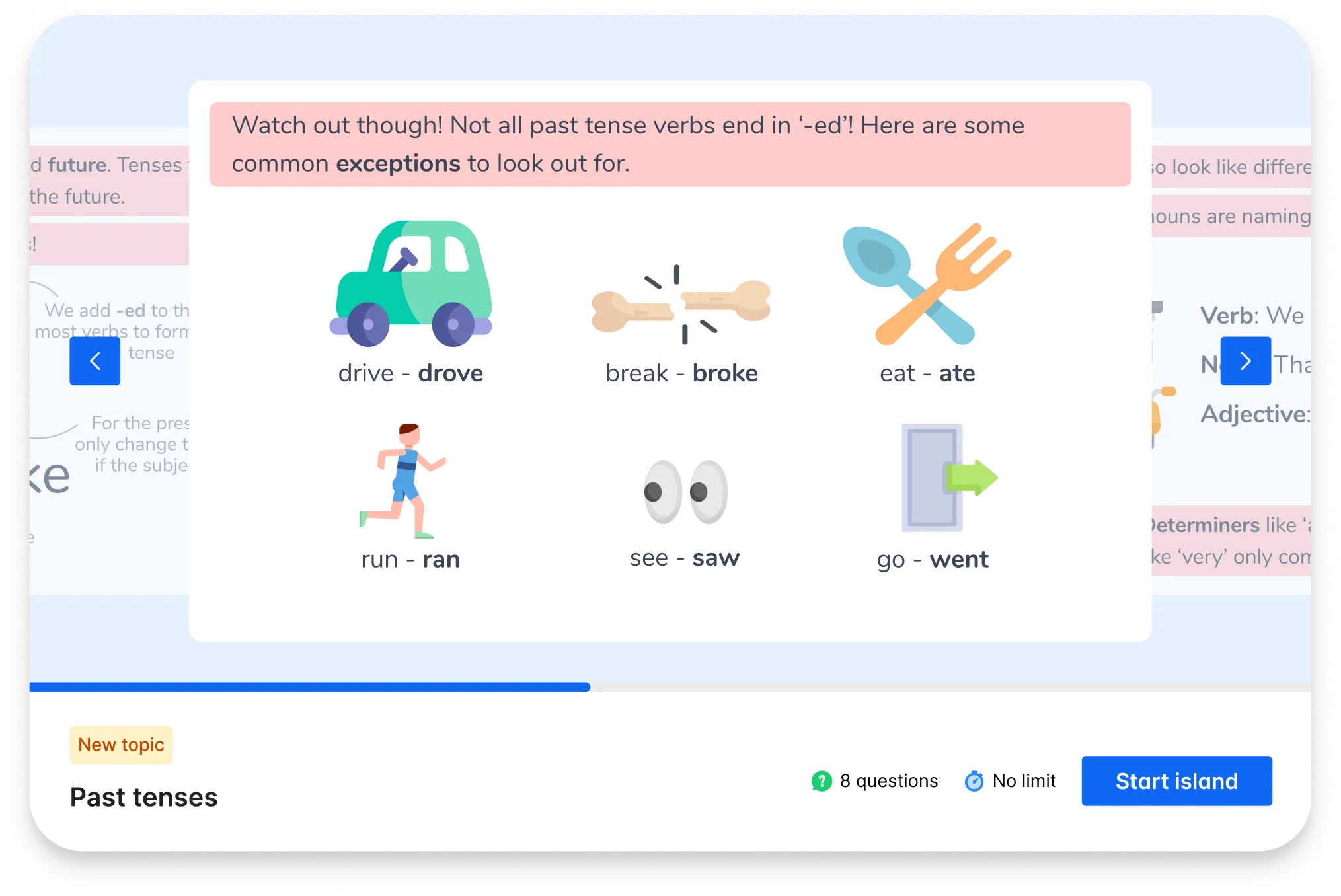
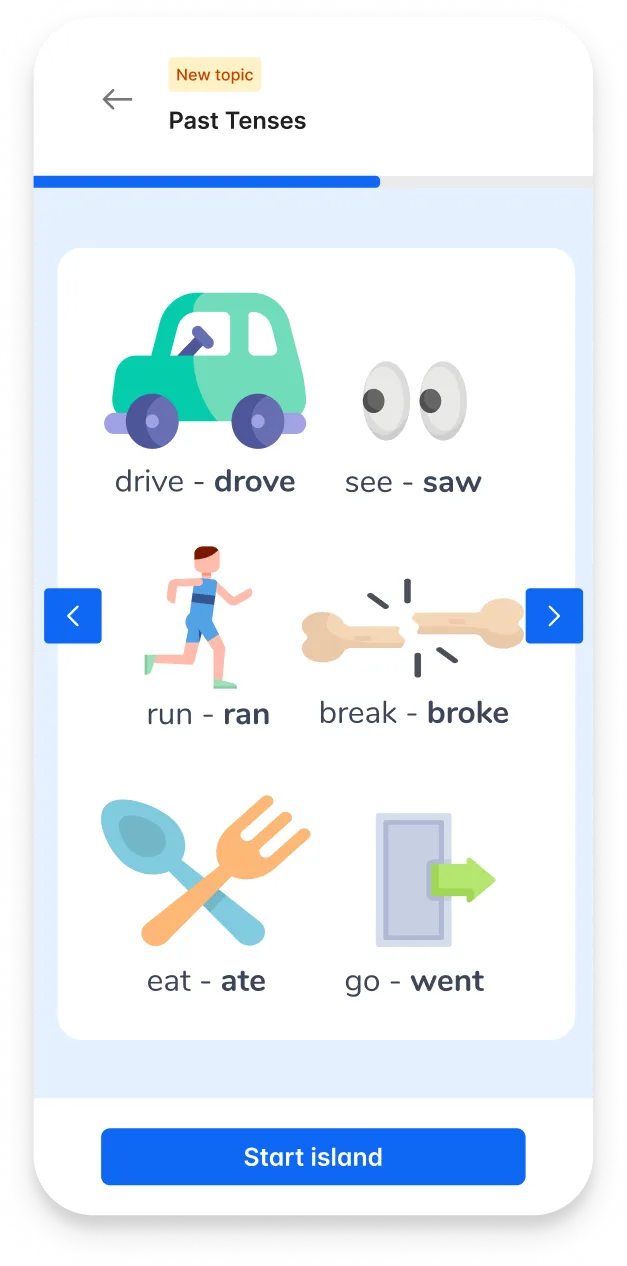
As your child learns, questions adapt to build confidence steadily
3000+ flashcards, 2000+ helpsheets, 600+ videos and topic lesson library
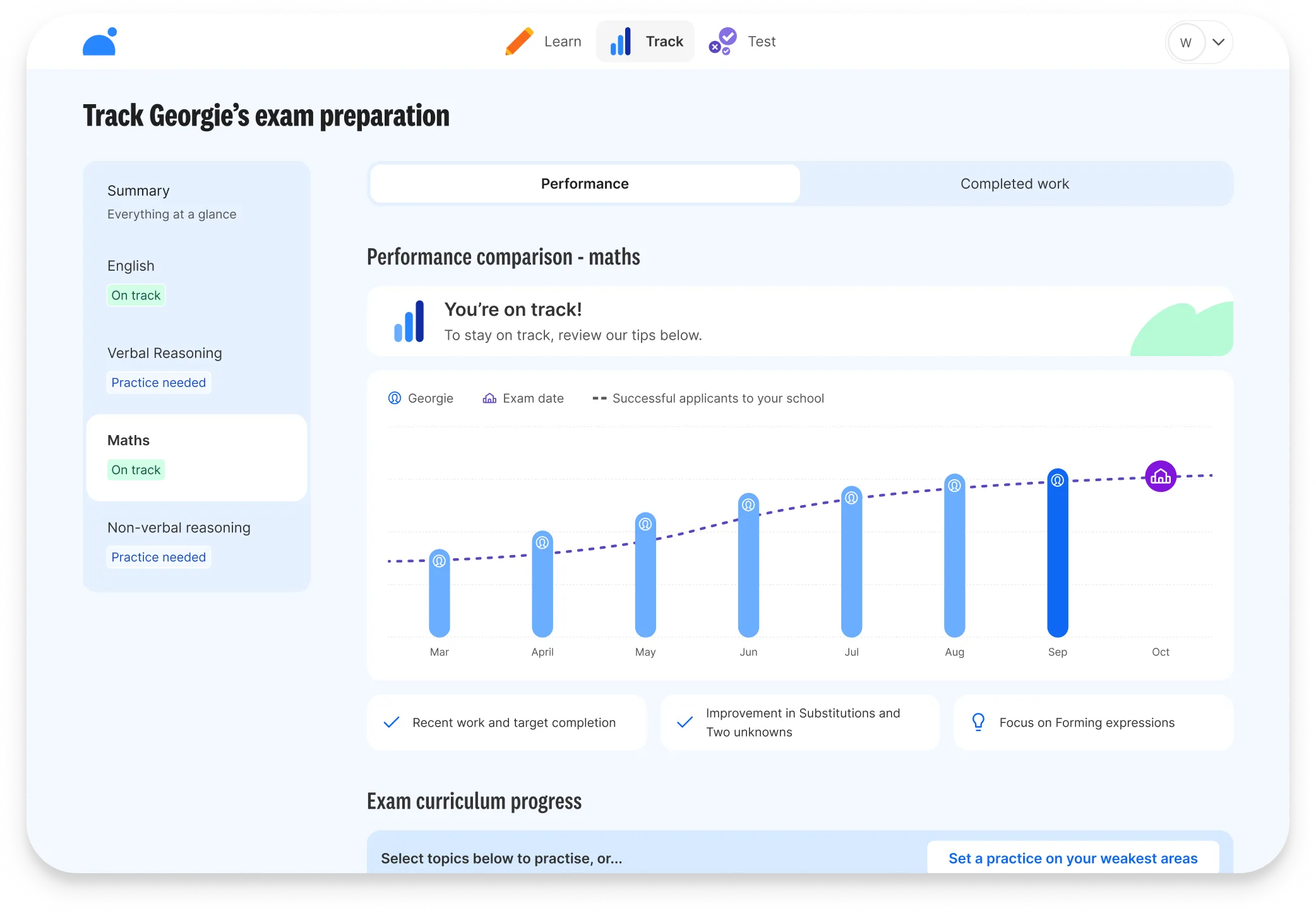
Track
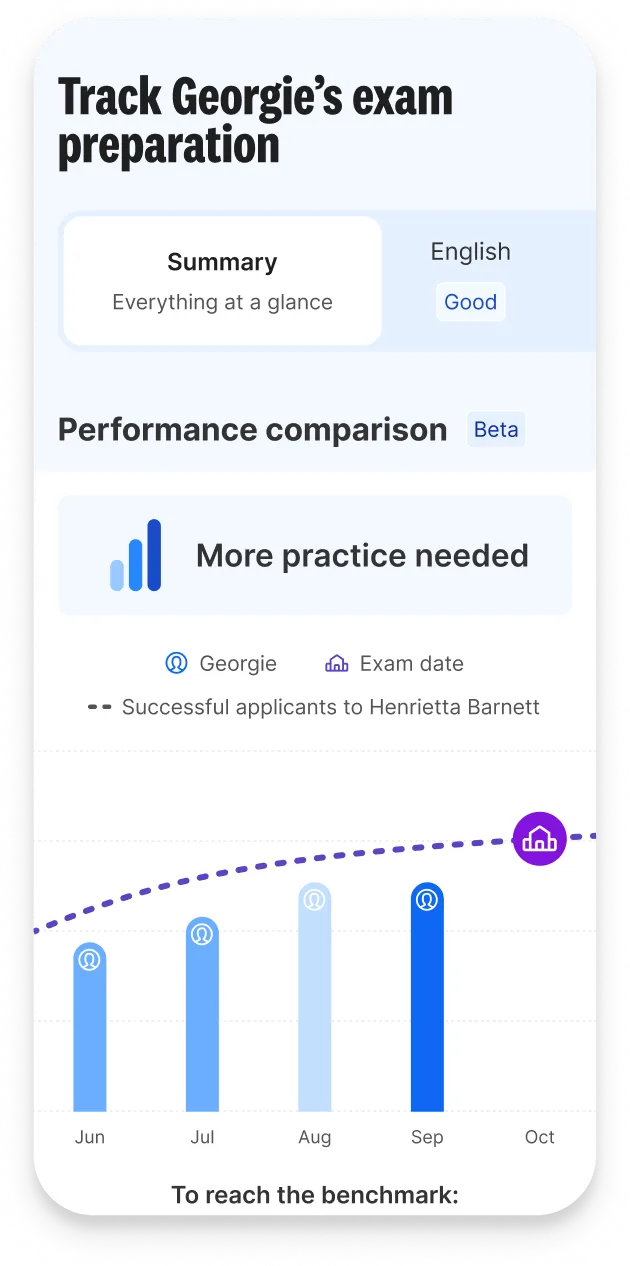
See how your child compares to successful applicants at their target school
Identify your child's strengths and gaps across all ISEB exam topics
Get targeted practice recommendations based on their performance data
Test
Mock tests mirroring real ISEB papers, specific to your target school
Unlimited ISEB practice tests to build exam-day confidence
Instant results and detailed explanations help them learn from every mistake
What is the ISEB Common Pre-Test?
The test covers four subjects: English (reading comprehension and spelling, punctuation and grammar), Maths, Verbal Reasoning, and Non-Verbal Reasoning. Children typically sit the exam in Year 6, either in the autumn or spring term.
Which Schools Use the ISEB Common Pre-Test?
• Eton College
• Harrow School
• Westminster School
• Winchester College
• Radley College
• Cheltenham College
• Marlborough College
• Charterhouse
• Sherborne School
• Bryanston School
• Oundle School
• Rugby School
• Tonbridge School
• Uppingham School
• Stowe School
• Sevenoaks School
• Blundell's School
• Canford School
• Dean Close School
• Monmouth School
The full list of schools that use the ISEB Common pre-test is available here.
Because results are shared across schools, your child only needs to sit the ISEB once, regardless of how many schools on this list they are applying to. Each school then uses the results - alongside interviews, references, and sometimes their own bespoke assessments - to make admissions decisions.If you are unsure whether your target school uses the ISEB, reach out to our admissions experts for support.
ISEB Test Format & Structure
The test is divided into four timed sections:
• Maths - 40 minutes
• English (comprehension and Spelling and Grammar/SPaG) - 40 minutes
• Non-Verbal Reasoning - 30 minutes
• Verbal Reasoning - 25 minutes
All questions are multiple choice. There is no back button; once your child selects an answer and moves on, they cannot return to review it. A next button will not appear until an answer has been selected, so no question can be skipped.
Children can sit all four sections on the same day with short breaks in between, or across separate sessions. They are permitted to use pencil and paper for rough working in all sections, though this is not marked.
The test is usually taken between September and May at the child's current school.
When is the ISEB Common Pre-Test?
Parents register their child directly on the ISEB admissions portal. In recent years, the registration deadline for the autumn sitting has been 1st October, and 1st December for the spring sitting, though it's always worth confirming current dates with your target school(s).
Your child's specific exam date is set by the senior school they are applying to. Results are sent directly to the schools; parents do not receive scores. Schools then decide whether to progress your child to the next stage of their admissions process.
How to Prepare for the ISEB Common Pre-Test
A few things are worth knowing before you start:
Build subject knowledge first. The English and Maths sections are based on the Key Stage 2 curriculum up to the end of Year 5. Your child should feel confident with this content before moving on to timed practice.
Prioritise reasoning early. Verbal and non-verbal reasoning are not taught on the national curriculum. The earlier your child starts practising this style of question types, the less unfamiliar they'll feel under exam conditions.
Practise in the right format. Because the ISEB is adaptive and multiple choice with no back button, practising with past papers and workbooks can’t build format familiarity. Your child needs to practise making decisions and moving forward under time pressure.
Atom is designed specifically for this. Adaptive practice questions, full ISEB mock tests, and personalised weekly study plans help your child build confidence across all four subjects, and show you exactly where they need to focus next.
Start your free trial today.
The ISEB Common Pre-Test is an online entrance exam used by over 160 independent senior schools as part of their admissions process. It was created by the Independent Schools Examination Board (ISEB) to give schools a way to assess applicants.
The test covers four subjects: English (reading comprehension and spelling, punctuation and grammar), Maths, Verbal Reasoning, and Non-Verbal Reasoning. Children typically sit the exam in Year 6, either in the autumn or spring term.
The following independent senior schools currently use the ISEB Common Pre-Test as part of their admissions process. If your child is applying to any of these schools, they will need to sit the ISEB:
• Eton College
• Harrow School
• Westminster School
• Winchester College
• Radley College
• Cheltenham College
• Marlborough College
• Charterhouse
• Sherborne School
• Bryanston School
• Oundle School
• Rugby School
• Tonbridge School
• Uppingham School
• Stowe School
• Sevenoaks School
• Blundell's School
• Canford School
• Dean Close School
• Monmouth School
The full list of schools that use the ISEB Common pre-test is available here.
Because results are shared across schools, your child only needs to sit the ISEB once, regardless of how many schools on this list they are applying to. Each school then uses the results - alongside interviews, references, and sometimes their own bespoke assessments - to make admissions decisions.If you are unsure whether your target school uses the ISEB, reach out to our admissions experts for support.
The ISEB Common Pre-Test is taken entirely online and uses an adaptive format, meaning the difficulty of questions adjusts in real time based on your child's responses.
The test is divided into four timed sections:
• Maths - 40 minutes
• English (comprehension and Spelling and Grammar/SPaG) - 40 minutes
• Non-Verbal Reasoning - 30 minutes
• Verbal Reasoning - 25 minutes
All questions are multiple choice. There is no back button; once your child selects an answer and moves on, they cannot return to review it. A next button will not appear until an answer has been selected, so no question can be skipped.
Children can sit all four sections on the same day with short breaks in between, or across separate sessions. They are permitted to use pencil and paper for rough working in all sections, though this is not marked.
The test is usually taken between September and May at the child's current school.
The ISEB Common Pre-Test is taken in Year 6, most commonly in the autumn term. Some schools schedule it in the spring term instead.
Parents register their child directly on the ISEB admissions portal. In recent years, the registration deadline for the autumn sitting has been 1st October, and 1st December for the spring sitting, though it's always worth confirming current dates with your target school(s).
Your child's specific exam date is set by the senior school they are applying to. Results are sent directly to the schools; parents do not receive scores. Schools then decide whether to progress your child to the next stage of their admissions process.
Preparation for the ISEB Common Pre-Test requires a different approach to most school exams. Because the test is adaptive and there's no back button, familiarity with the format matters just as much as subject knowledge.A few things are worth knowing before you start:
Build subject knowledge first. The English and Maths sections are based on the Key Stage 2 curriculum up to the end of Year 5. Your child should feel confident with this content before moving on to timed practice.
Prioritise reasoning early. Verbal and non-verbal reasoning are not taught on the national curriculum. The earlier your child starts practising this style of question types, the less unfamiliar they'll feel under exam conditions.
Practise in the right format. Because the ISEB is adaptive and multiple choice with no back button, practising with past papers and workbooks can’t build format familiarity. Your child needs to practise making decisions and moving forward under time pressure.
Atom is designed specifically for this. Adaptive practice questions, full ISEB mock tests, and personalised weekly study plans help your child build confidence across all four subjects, and show you exactly where they need to focus next.
Start your free trial today.
Free ISEB resources to help you get started

The ultimate ISEB guide
The ultimate ISEB guide
How to choose the right independent school
Guide to senior school interviews
Bursaries explained
Applying to UK schools from abroad
Atom or Century Bond? How to choose
Non-verbal reasoning guide
The ISEB Pre-Test explained
What is verbal reasoning?
Choose the right plan for your child
Exam prep
A structured learning plan across all subjects, including verbal and non-verbal reasoning, with a clear week-by-week path.
Exam prep plus
Everything in Exam Prep, plus unlimited mock tests and detailed feedback on performance. Designed for families preparing for a specific exam.
EMS
Daily maths, English and science practice, personalised to exactly where your child is today. The right foundations, building day by day.
Exam Prep
A structured learning plan that covers every exam subject, builds confidence, and teaches your child how to approach exam questions - one session at a time.
Exam Prep Plus
Everything in Exam Prep, plus unlimited mock tests and clear feedback on exactly what needs work. For parents who want to leave nothing to chance.
Exam prep plus
Everything in Exam Prep, plus unlimited mock tests and clear feedback on exactly what to work on next, so you can see your child's progress as it builds.
Exam prep
A structured learning plan that covers every subject, builds real confidence and ability, and teaches your child how to approach exam questions — one session at a time.
EMS
Daily maths, English and science practice, personalised to exactly where your child is today. The right foundations, building day by day.
Exam prep
A structured learning plan that covers every exam subject, builds confidence, and teaches your child how to approach exam questions - one session at a time.
Exam prep plus
Everything in Exam Prep, plus unlimited mock tests and clear feedback on exactly what needs work. For parents who want to leave nothing to chance.
Exam prep plus
Everything in Exam Prep, plus unlimited mock tests and clear feedback on exactly what to work on next, so you can see your child's progress as it builds.
Exam prep
A structured learning plan that covers every subject, builds real confidence and ability, and teaches your child how to approach exam questions — one session at a time.
Free ISEB resources to help you get started
The ultimate ISEB guide
How to choose the right independent school
The ISEB Pre-Test explained
Frequently Asked Questions
Looking for
ISEB advice?
We’re here to support you through your child’s ISEB journey.
Whether you want help building a revision plan, understanding ISEB exam content, or checking key dates, our team is happy to help.