Are you considering a grammar school in Buckinghamshire for your child? We’ve collated everything you need to know about admissions in 2025–2026. Keep reading to:
- Find out more about grammar schools in Buckinghamshire
- Learn about the Buckinghamshire Secondary Transfer Test – the local 11 plus exam
- Discover which subjects your child will be tested on
- Plus, get exclusive resources to help your child prepare!
Which schools use the Buckinghamshire Secondary Transfer Test?
The Secondary Transfer Test is used by 13 grammar schools. These are known as The Buckinghamshire Grammar Schools (TBGS).
- Aylesbury Grammar School (boys)
- Aylesbury High School (girls)
- Beaconsfield High School (girls)
- Burnham Grammar School (co-educational)
- Chesham Grammar School (co-educational)
- Dr Challoner’s Grammar School (boys)
- Dr Challoner’s High School (girls)
- John Hampden Grammar School (boys)
- Royal Grammar School (boys)
- Royal Latin School (co-educational)
- Sir Henry Floyd Grammar School (co-educational)
- Sir William Borlase’s Grammar School (co-educational)
- Wycombe High School (girls)
Dates for your diary
- Friday 2nd May 2025: registration opens for the Buckinghamshire Secondary Transfer Test
- Friday 13th June 2025: registration closes for the Buckinghamshire Secondary Transfer Test
- Tuesday 9th September 2025: Buckinghamshire Practice Test
- Thursday 11th September 2025: Buckinghamshire Secondary Transfer Test
- Friday 10th October 2025: parents receive results from the Buckinghamshire Secondary Transfer Test
- Friday 31st October 2025: secondary school common application deadline
- Monday 2nd March 2026: national school offers day
Dates can vary, so always check with your target schools!
What is the Buckinghamshire Secondary Transfer Test?
The Buckinghamshire Secondary Transfer Test is an 11 plus exam used by grammar schools in Buckinghamshire. All 13 grammar schools in Buckinghamshire use the Secondary Transfer Test. This means that your child will only need to take the test once, regardless of how many grammar schools in the county they're applying to.
The Buckinghamshire Secondary Test takes place in September in Year 6. All children who attend a Buckinghamshire primary school are automatically entered for the test, so there’s no need to register.
If your child goes to a primary school outside of the local Buckinghamshire authority but you’re applying to a Buckinghamshire grammar school, you will need to register your child to take the test. Registration is open on the Buckinghamshire Council website between Friday 2nd May and Friday 13th June 2025.
Children at Buckinghamshire primary schools take the test in their own schools. Children applying from outside of Buckinghamshire will be invited to take the test at one of the grammar schools in the county.
Note that if your child is applying for a grammar school outside of Buckinghamshire, they will take a separate exam. Find out more information about other 11 plus exams nearby:
What's on the Buckinghamshire Secondary Transfer Test?
The Buckinghamshire Secondary Transfer Test consists of two one-hour papers. These papers are supplied by GL Assessment. Your child takes both papers on the same day with a short break in between.
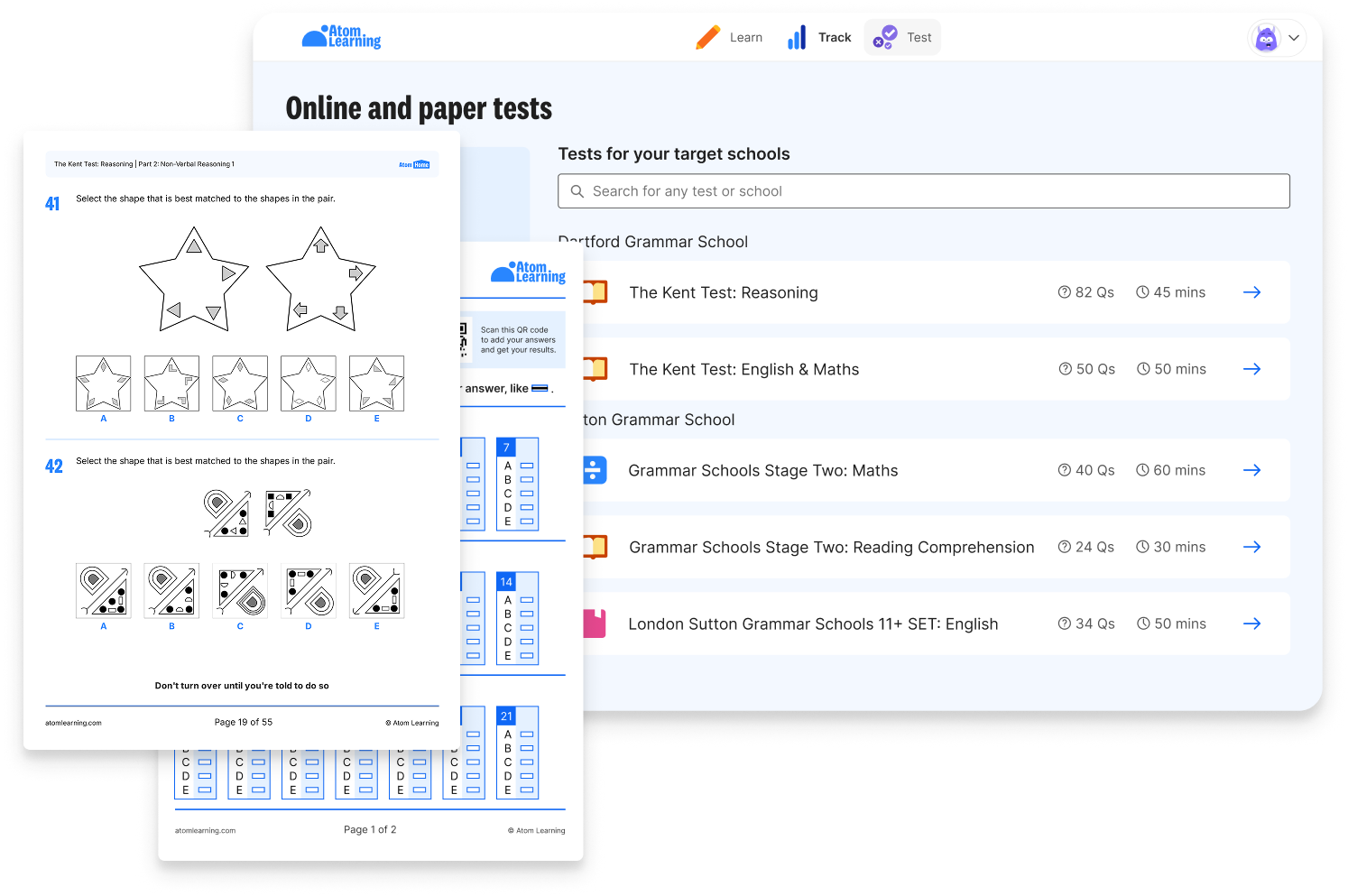
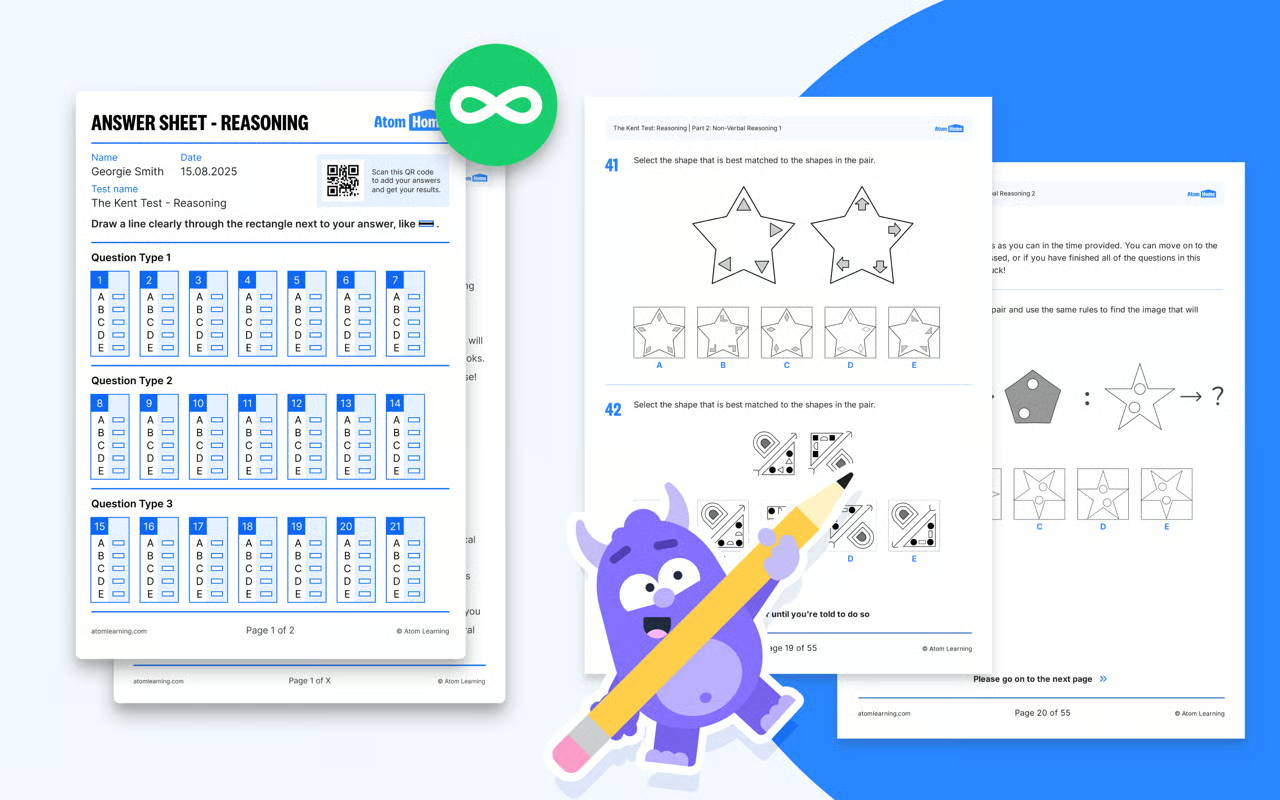
Your child will have a question booklet and separate answer sheets. All the questions in the test are multiple-choice, so your child needs to mark the answer options they think are correct on the answer sheets.
Both papers start with an introduction and practice examples. About 15 minutes is allocated for these, followed by 45 minutes of test questions.
Verbal paper
In this paper, your child is tested on verbal skills. This includes:
- English comprehension: how well your child can understand and analyse written text
- Technical English: grammar, punctuation and spelling – all based on national curriculum content
- Verbal reasoning: using logic and reasoning to solve problems with written information, like letters, words and numbers
Mathematical and non-verbal paper
In this paper, your child will be tested on maths and non-verbal skills. This includes:
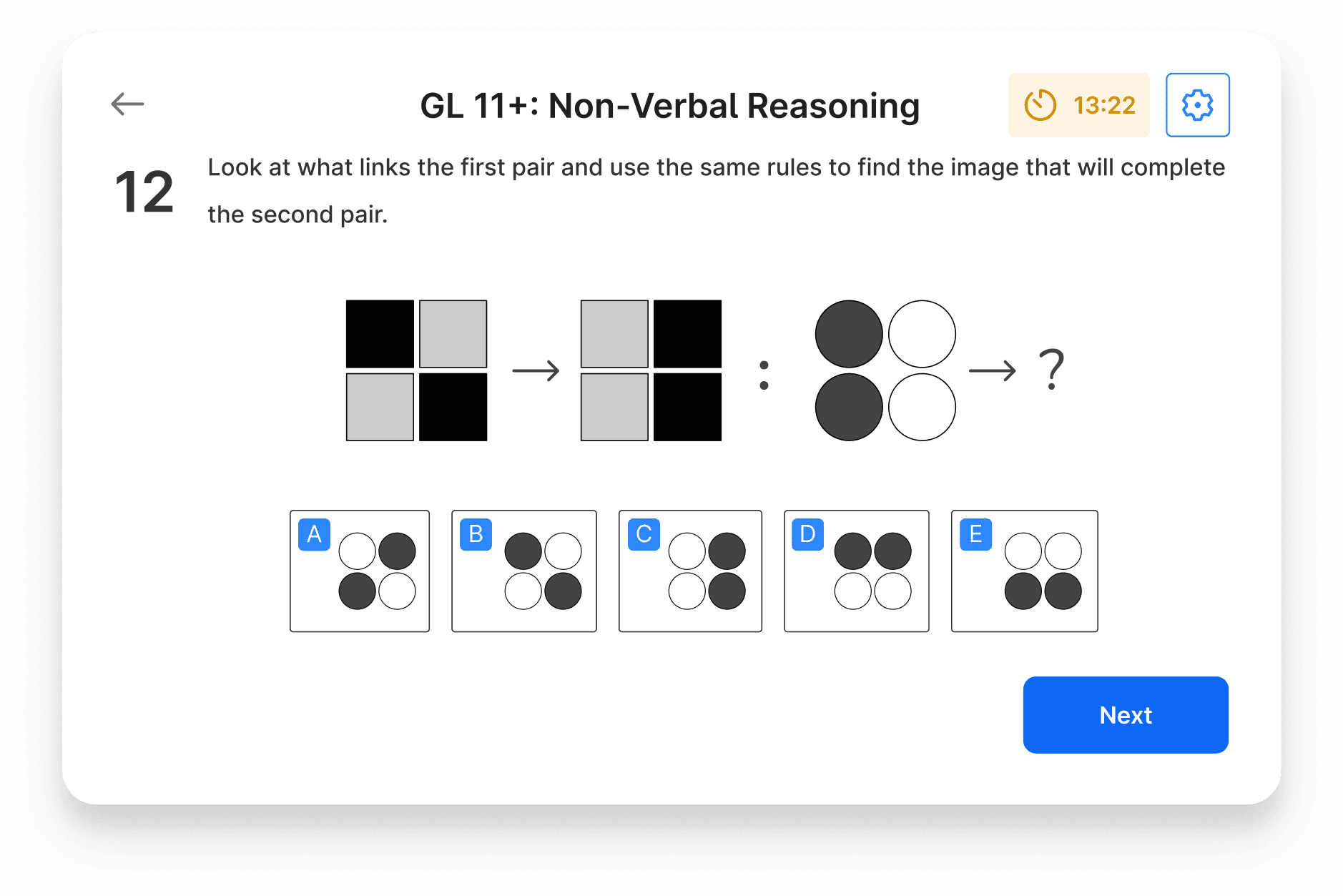
- Non-verbal reasoning: using logic and reasoning to solve problems with visual information, like shapes, diagrams and pictures
- Spatial reasoning: tests how well your child can manipulate shapes and spaces in their head
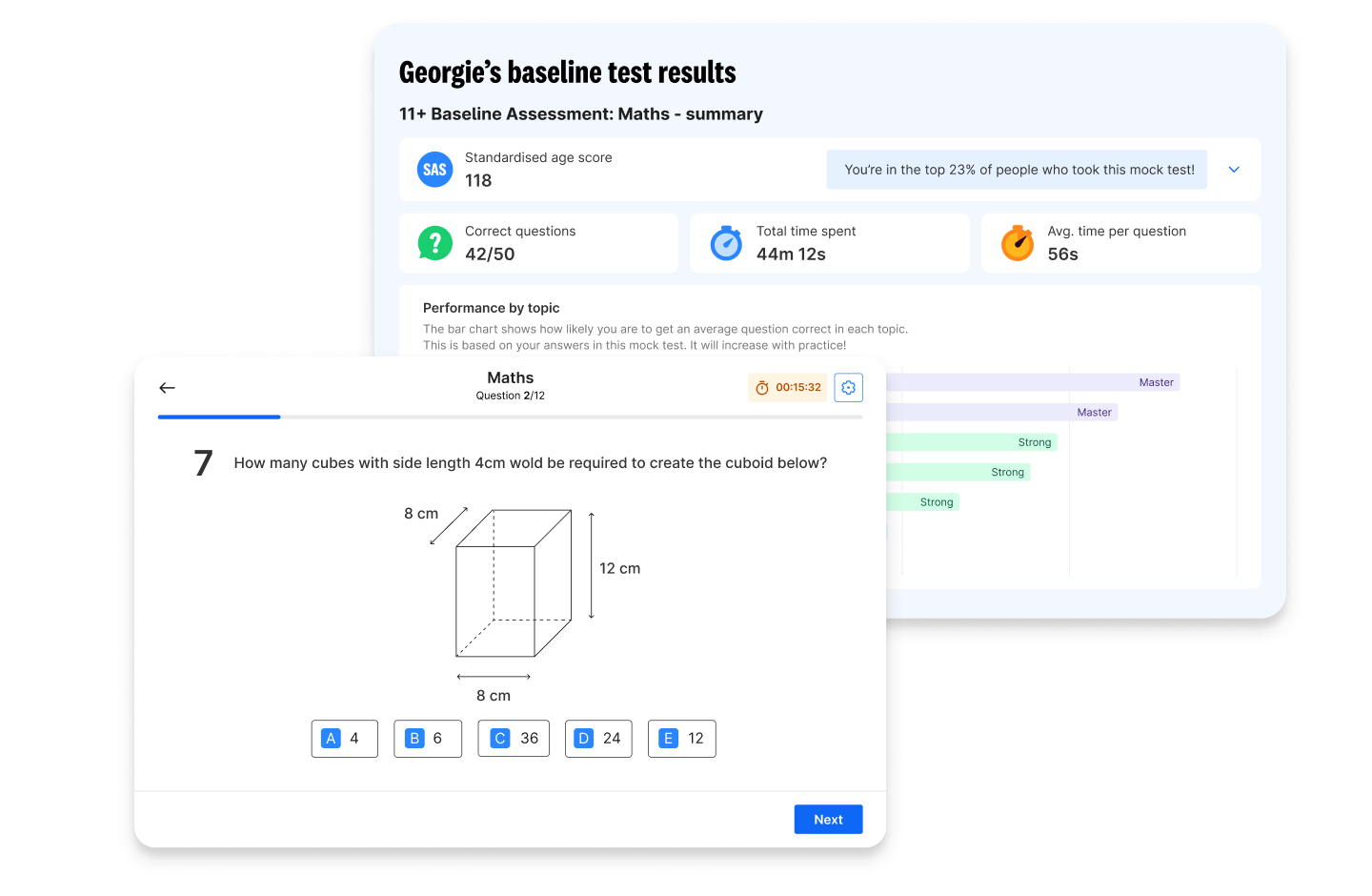
- Maths: covers key topics taught on the Key Stage 2 maths curriculum